

 Front End Development
  Back End Development
  CMS / ECommerce Development
  Mobile Apps Development
  Cloud Services
  Fullstack Services
  Solution


Diet and Nutrition Apps Market: Size, Trends, Growth, and Opportunities
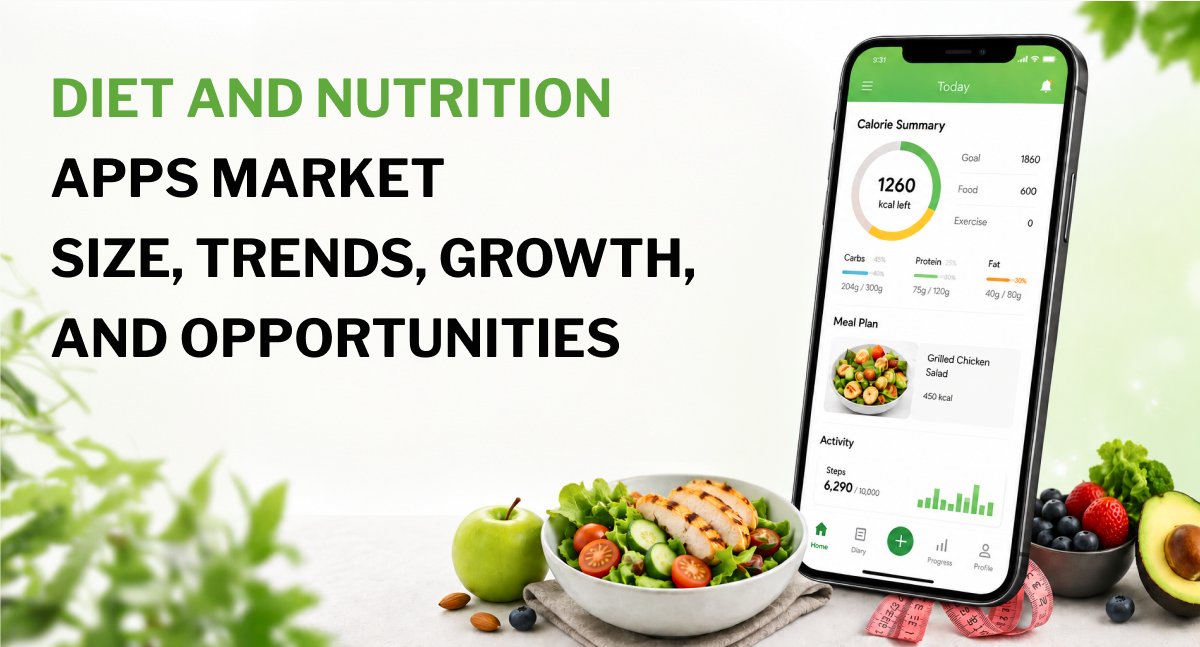
The global diet and nutrition apps market is valued at approximately $5.76 billion in 2025 and is projected to reach $10.15 billion by 2030, growing at a CAGR of 11.97% (Mordor Intelligence). Chronic disease rates are climbing, smartphones are in almost every pocket, and people want real-time answers about what they eat, not a doctor's appointment two weeks from now. These three facts explain most of what is happening in this market right now.
Key players include MyFitnessPal, Noom, Lifesum, and Cronometer. Startups are attracting serious venture funding. Employers are adding nutrition apps to corporate wellness packages. And the technology behind these apps is getting smarter every year. If you are trying to understand where this market stands, where it is going, and what the real opportunities look like, this article covers all of it with current data.
What Is the Diet and Nutrition Apps Market?
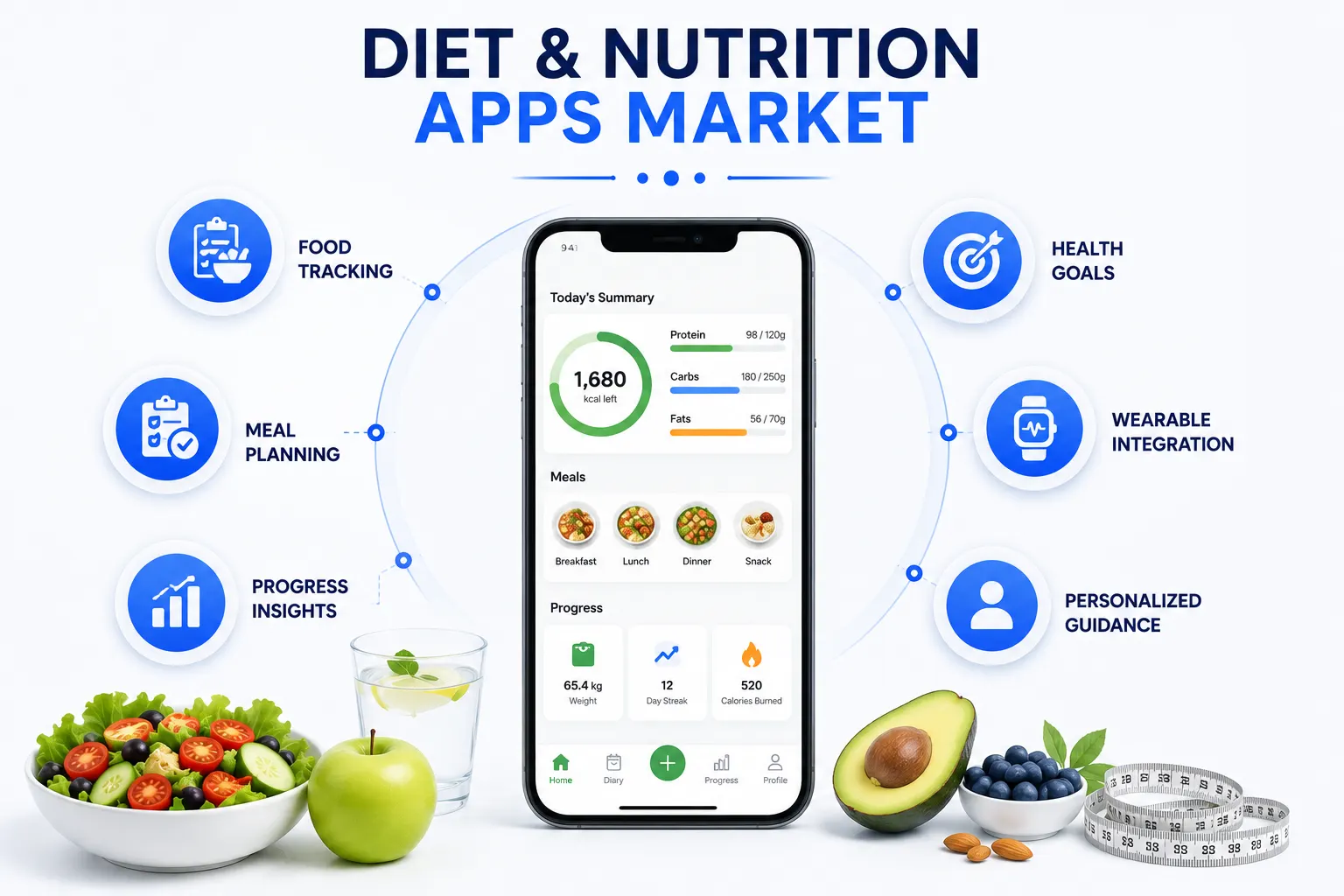
The diet and nutrition apps market covers digital tools that help people track food intake, manage calorie and macronutrient targets, follow structured meal plans, and receive personalized dietary guidance.
This is not a single product category. It includes consumer-facing apps people download from the App Store or Google Play, B2B platforms sold to employers and gyms, and clinical nutrition tools used by registered dietitians and healthcare providers.
Some apps focus on logging what you ate. Others plan what you should eat next. A growing category uses AI to connect both adapting recommendations based on behavior, biometric data, and health goals over time.
The market is large, growing fast, and nowhere near its ceiling.
Diet and Nutrition Apps Market Snapshot
| Metric | Value |
| Market Size (2025) | $5.76 Billion |
| Projected Market Size (2030) | $10.15 Billion |
| CAGR (2025–2030) | 11.97% |
| Largest Regional Market | North America |
| Fastest-Growing Region | Asia-Pacific |
| Leading Platform by Revenue | iOS |
| Largest App Category | Calorie & Macro Tracking Apps |
| Fastest-Growing Segment | Condition-Specific Nutrition Apps |
| Leading Revenue Model | In-App Purchases |
| Fastest-Growing Revenue Model | Enterprise B2B Licensing |
Diet and Nutrition Apps Market Size and Revenue Data (2024–2030)
The numbers vary depending on which research firm you look at and how they define the segment, but the directional story is consistent: the market is big and growing quickly.
Mordor Intelligence puts the market at $5.76 billion in 2025, reaching $10.15 billion by 2030 at an 11.97% CAGR.
Grand View Research values the market at $2.14 billion in 2024, projecting $4.56 billion by 2030 at a 13.4% CAGR. Their methodology focuses more narrowly on pure-play diet and nutrition apps rather than the broader digital health and wellness category, which accounts for the difference.
Healthcare projects even stronger growth from $5.95 billion in 2025 to $27.73 billion by 2035, at a 16.64% CAGR factoring in the accelerating role of AI and condition-specific platforms.
The variation across sources comes down to segment definitions. Some include fitness tracking and meal planning tools. Others count only dedicated nutrition apps. What all three agree on is the trajectory.
| Year | Market Size (Mordor Intelligence) |
| 2025 | $5.76 Billion |
| 2030 | $10.15 Billion |
Platform breakdown (2024): iOS holds 52.5% of the market share by revenue, though Android is the faster-growing platform and holds a larger share by total user volume.
Revenue model breakdown: Paid in-app purchases led with 52.2% revenue share in 2024. Enterprise B2B licensing is now the fastest-growing sub-segment, advancing at a 15.37% CAGR through 2030.
Deployment: Smartphones account for 67% of the market. Tablet usage is secondary and mostly tied to professional or clinical contexts.
Key Growth Drivers Pushing This Market Forward
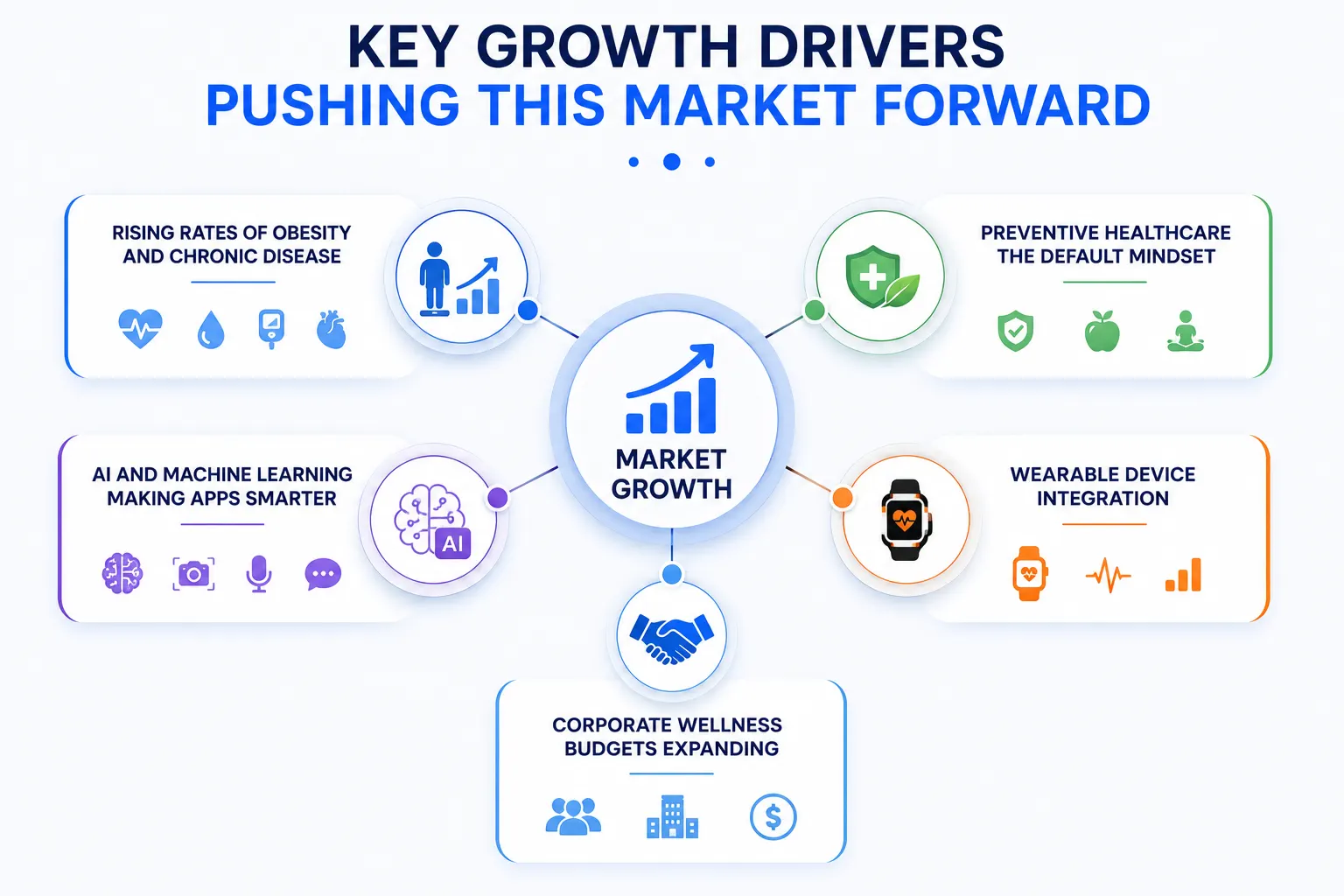
Several forces are working together to drive demand in this market. Understanding them separately makes it easier to identify where the real opportunity sits.
Rising Rates of Obesity and Chronic Disease
Global obesity prevalence is expected to rise from 14% to 24% between 2020 and 2035, affecting nearly 2 billion people (World Obesity Atlas 2023, cited by Grand View Research).
People managing type 2 diabetes, hypertension, PCOS, and cardiovascular disease increasingly need daily dietary management, not just periodic clinical guidance. A nutrition app that works every day costs less than a hospital visit and scales in a way that traditional care cannot.
This shift in health burden is one of the most reliable demand signals in the market.
Preventive Healthcare Becoming the Default Mindset
Peer-reviewed research cited by Mordor Intelligence found that 52% of smartphone nutrition applications succeed in fostering healthier eating, particularly among people managing chronic conditions.
People are not waiting to get sick to think about what they eat. The cultural shift toward prevention has been building for years, and the pandemic accelerated it. Users who track their nutrition are often doing so proactively, not reactively.
This changes the profile of who uses these apps and what they expect from them.
AI and Machine Learning Making Apps Smarter
AI-driven portion-sizing technology is reducing logging friction and improving calorie-tracking accuracy across the market (Mordor Intelligence).
The older model: open the app, type in what you ate, close the app was always too much friction for long-term use. AI changes that. Photo-based food logging, voice input, barcode scanning with AI-enhanced nutrient data, and conversational diet coaches all reduce the effort required to stay consistent.
Approximately 40% of nutrition apps are expected to include conversational AI coaches or virtual dietitians by the end of 2026. Apps that still rely on manual logging alone are already losing ground.
Wearable Device Integration
Apple Watch, Fitbit, Garmin, and continuous glucose monitors (CGMs) generate real-time biometric data that users now expect their nutrition app to understand and act on.
When someone burns 600 calories in a workout, they want their food plan to adjust accordingly without having to manually update anything. That expectation is now standard.
Wearable integration raises both engagement and retention. Users who connect a device use the app more consistently and stay subscribed longer which matters enormously in a market where churn is one of the biggest business challenges.
Corporate Wellness Budgets Expanding
Enterprise adoption is accelerating as employers deploy nutrition app subscriptions to reduce healthcare costs (Mordor Intelligence). Enterprise B2B licensing is advancing at a 15.37% CAGR making it the single fastest-growing revenue model in the segment.
This matters for anyone thinking about building in this space. The consumer market is crowded and acquisition costs are high. The B2B market reaches employees through a single contract, delivers predictable recurring revenue, and has dramatically higher lifetime customer value per account.
Market Segmentation - How the Market Breaks Down
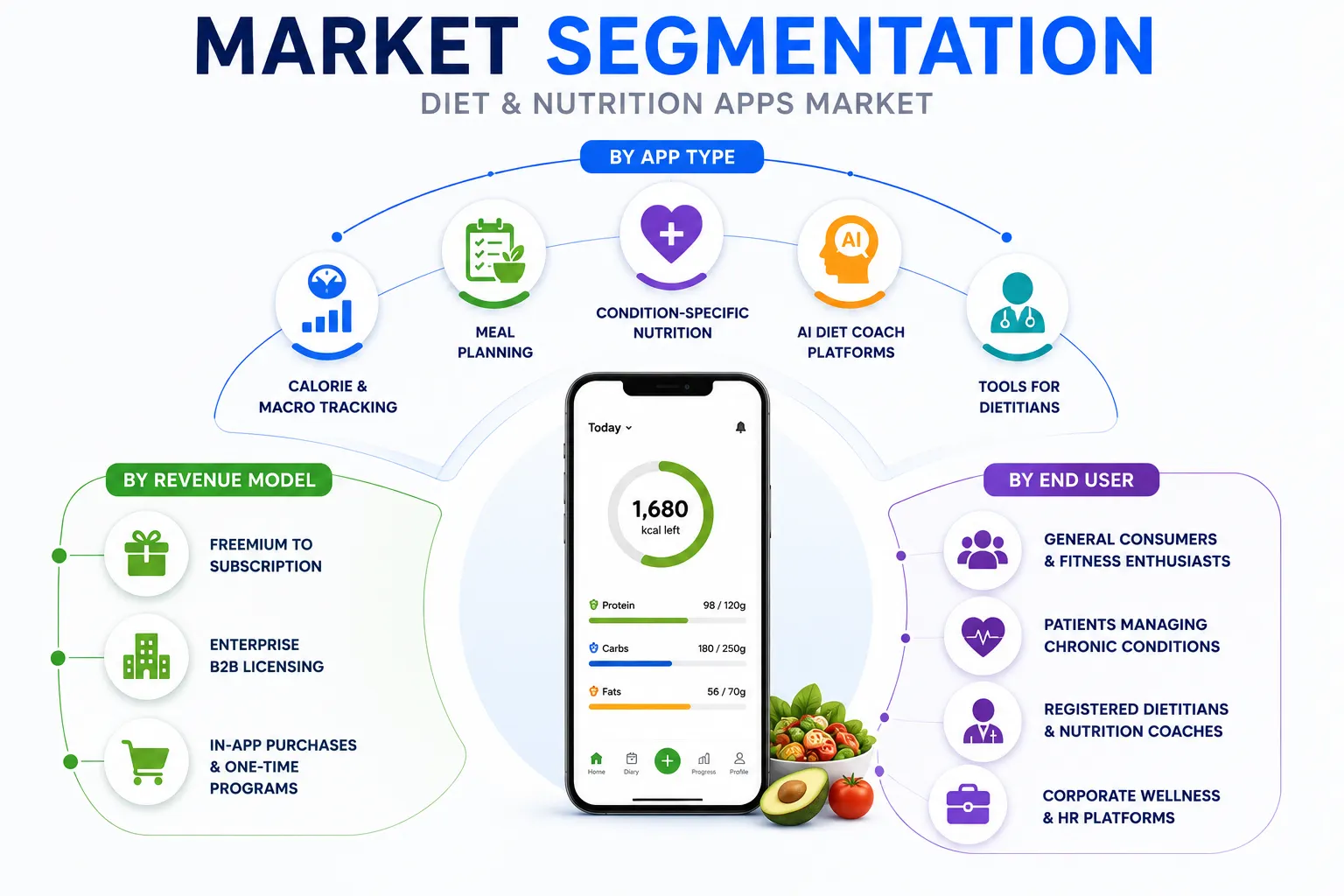
By App Type
Calorie and macro tracking apps are the largest category, holding 39.13% of the market in 2024. These are the apps most people think of when they picture a nutrition tool.
Condition-specific nutrition apps are growing the fastest. The chronic-disease patient segment is advancing at a 14.44% CAGR through 2030 outpacing the general population segment by a meaningful margin. Diabetic meal management, cardiac recovery nutrition, PCOS-specific diet planning, and bariatric post-surgery meal tracking all fall here.
Other categories include meal planning apps, AI-powered diet coach platforms, and professional tools designed for registered dietitians managing multiple clients.
By Revenue Model
- Freemium-to-subscription: The most common model, used by MyFitnessPal, Lifesum, and Noom. The free tier drives downloads. The paid tier captures users who see results and want more.
- Enterprise B2B licensing: Sold to employers, gyms, and healthcare systems. Higher contract value, lower churn.
- In-app purchases and one-time programs: 12-week plans, specialty diet guides, expert-led programs. Works well as a layer on top of a subscription model.
By End User
- General consumers and fitness enthusiasts
- Patients managing chronic conditions
- Registered dietitians and nutrition coaches
- Corporate wellness programs and HR platforms
Each of these end-user groups has different feature priorities, different willingness to pay, and different expectations around data privacy and compliance.
Regional Market Breakdown
North America
North America held a 36.4% revenue share in 2024 and remains the dominant region (Grand View Research). The U.S. leads, driven by high smartphone penetration, mature health-tech infrastructure, and a consumer base with established willingness to pay for health tools.
The regulatory environment, while complex, is relatively clear. FDA Digital Health Advisory guidance has encouraged hybrid models prescription medications bundled with app-based nutrition coaching, a direction WW International has already moved with its Wegovy program.
Asia-Pacific
Asia-Pacific is set to record a 14.03% CAGR through 2030 the fastest of any region worldwide (Mordor Intelligence).
Rising middle-class health awareness, rapid smartphone adoption, and local players scaling fast are all contributing. India's HealthifyMe, which secured $45 million to expand its AI-powered coaching platform, is one example. China, Japan, and South Korea are also drafting streamlined digital therapeutics pathways that will make market entry faster for compliant apps.
The Asia-Pacific opportunity is still in an early phase compared to North America. That gap is closing.
Europe
Europe's growth is steadier, shaped by GDPR data compliance requirements and a more cautious regulatory stance on health claims. However, demand is real.
Partnerships between nutrition apps and national health services are emerging, particularly in the UK and Germany. Apps that can demonstrate clinical value and handle user health data responsibly will have an advantage here
Major Players and Recent Market Moves
The competitive landscape in this market is shifting quickly. A few data points illustrate where things stand.
MyFitnessPal has surpassed 200 million users globally as of 2024 and in February 2025, it acquired Intent, a personalized meal planning platform, and launched a Premium+ subscription at $100 per year with AI-powered meal planning features.
In April 2025, Nourish raised $70 million in Series B funding led by J.P. Morgan Growth Equity to scale its AI-powered virtual nutrition care platform and expand its registered dietitian network.
In February 2025, Fay raised $50 million in Series B funding led by Goldman Sachs at a $500 million valuation, focused on expanding its AI-driven dietitian network.
Also in February 2025, Alma launched as an AI-powered nutrition companion app, backed by Menlo Ventures and informed by research from Harvard T.H. Chan School of Public Health.
The pattern in all of these moves is consistent: investment is flowing toward AI-first platforms that connect app-based tracking with credentialed human nutrition expertise. The standalone calorie counter without personalization or professional backing is not where the market is investing.
Other established players include Cronometer, Lose It!, HealthifyMe, and WW International each occupying a distinct niche within the broader market.
Trends Shaping the Next Phase of This Market
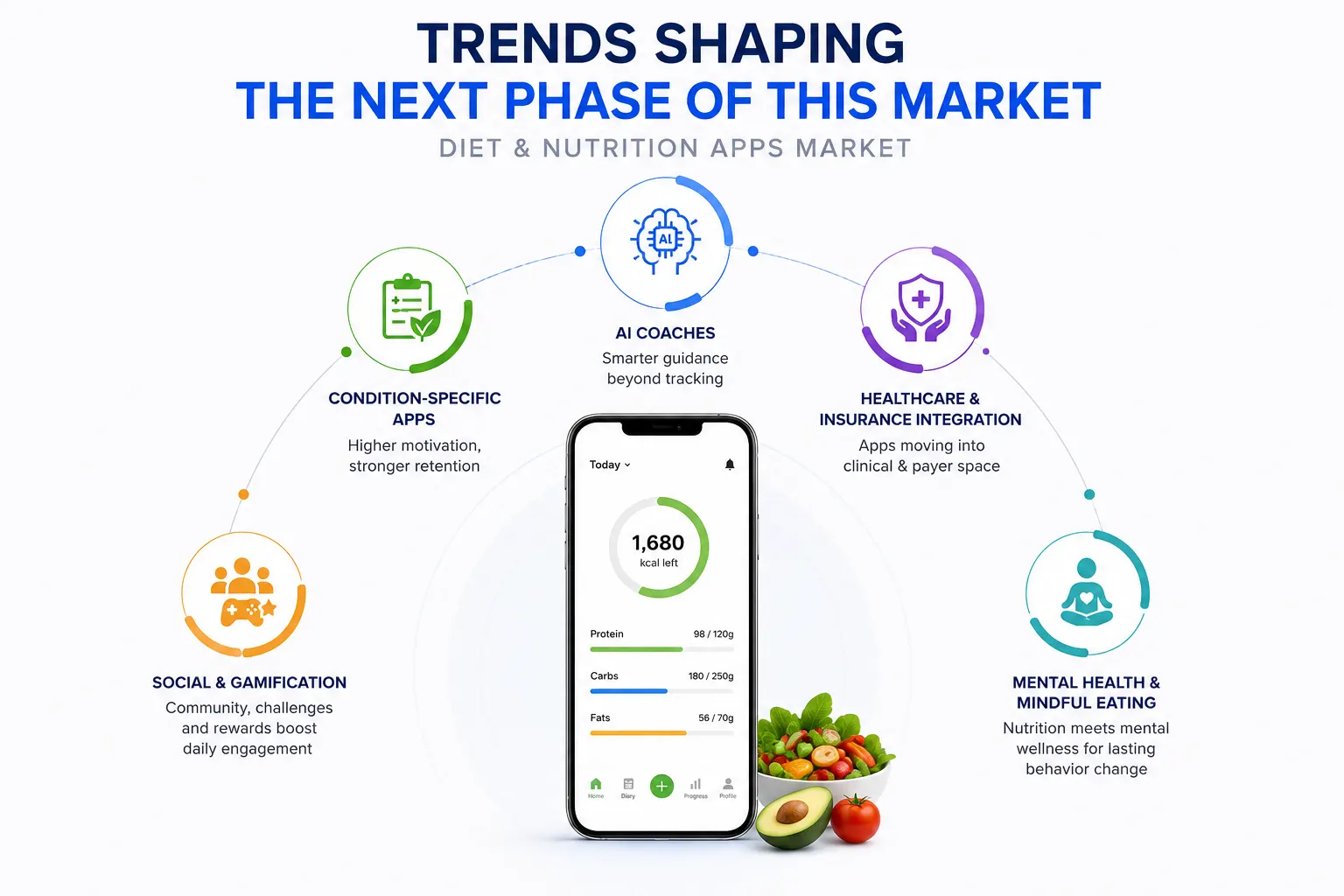
AI Coaches Replacing Basic Calorie Counters
The logging-only era of nutrition apps is ending. Users want a tool that tells them what to do, not just records what they did. AI coaches that adjust meal recommendations based on sleep quality, workout output, and past behavior are becoming the baseline expectation for premium apps.
This is not a future trend, it is already happening. Apps that haven't built this layer are already losing premium subscribers to those that have.
Condition-Specific Apps Growing Faster Than General Wellness
The general wellness market is crowded. The diabetic meal planning market, the PCOS nutrition market, and the cardiac recovery nutrition market are not.
Condition-specific apps attract users who genuinely need the product, have stronger motivation to stay consistent, and are often willing to pay more because the value is clinical, not aspirational. Retention is higher. Churn is lower.
This is where a significant amount of the next phase of market growth is being built.
Integration with Healthcare Providers and Insurance
Apps are moving from the consumer tier into the clinical tier. Dietitian-connected platforms where the app feeds data into a registered dietitian's workflow and the dietitian adjusts recommendations through the same platform are growing fast.
Insurance coverage for nutrition app subscriptions as a preventive care benefit is also expanding, particularly in the U.S. This creates a third-party payer model that removes the consumer's price sensitivity from the equation entirely.
Social Features and Gamification Driving Retention
Community challenges, streak rewards, shared goals with friends, and group accountability programs all measurably increase daily active usage.
This is not a gimmick. The data on social accountability in habit formation is clear. Apps that treat retention as a product design problem not just a marketing problem consistently outperform those that don't.
Mental Health and Mindful Eating Entering the Nutrition Space
Emotional eating, stress-triggered food choices, and the psychological relationship with food are being incorporated into a new generation of nutrition apps.
Apps expanding their definition of "nutrition" beyond calories and macros to include mental wellness signals are finding an underserved audience and building stronger long-term engagement than apps focused only on numbers.
Challenges and Risks in This Market
A balanced picture of this market requires acknowledging what makes it hard.
User retention is the biggest challenge. Most people who download a diet app stop using it within three weeks. Building an app is relatively straightforward. Building one that users open six months after download is not.
Data privacy and compliance add real complexity. Health data is sensitive. HIPAA in the U.S., GDPR in Europe, and evolving frameworks in Asia all impose requirements that generic app developers are not always equipped to handle. A data breach in a health app destroys user trust in a way that is very hard to recover from.
Nutritional misinformation is a credibility risk. Apps that surface inaccurate dietary guidance whether from poor data sources or inadequately trained AI face both user backlash and potential regulatory scrutiny. The credibility of the content layer matters as much as the product design.
The freemium conversion problem. The free tier of most nutrition apps is good enough for a large portion of users. Converting free users to paying subscribers requires demonstrating value that the free experience cannot replicate which is a real product design challenge.
Opportunities in the Diet and Nutrition Apps Market
Despite growing competition, significant opportunities remain across multiple segments of the diet and nutrition app market. Businesses that focus on solving specific user problems rather than targeting a broad audience are often seeing the strongest results.
For Startups
AI-powered nutrition coaching, personalized meal planning, and condition-specific nutrition apps continue to attract both users and investors. Startups that focus on a clearly defined audience, such as individuals managing diabetes, PCOS, weight loss goals, or sports nutrition requirements, often achieve higher retention rates than general-purpose nutrition apps.
For Healthcare Providers
Hospitals, clinics, and registered dietitians are increasingly adopting digital nutrition tools to improve patient engagement outside traditional consultations. Apps that support remote monitoring, personalized nutrition plans, and ongoing communication can help healthcare providers deliver more continuous care while improving patient outcomes.
For Corporate Wellness Programs
Employers are investing more in employee wellness initiatives as healthcare costs continue to rise. Nutrition apps integrated into corporate wellness programs can help employees develop healthier habits while giving organizations a scalable solution to support workforce well-being.
For Fitness Businesses and Wellness Brands
Gyms, fitness coaches, and wellness companies can expand their services through nutrition-focused mobile applications. Combining workout programs with personalized meal planning, nutrition tracking, and coaching creates a more complete user experience and increases long-term engagement.
For App Development Companies
The demand for AI-powered nutrition apps, wearable integrations, telehealth-connected platforms, and white-label nutrition solutions continues to grow. Businesses entering the market are increasingly looking for development partners who can build scalable, secure, and data-driven nutrition applications tailored to specific user needs.
The strongest opportunities today are not in generic calorie-counting apps but in personalized, condition-specific, and AI-powered nutrition platforms that deliver measurable value to users.
Opportunities for Businesses, Startups, and Healthcare Providers
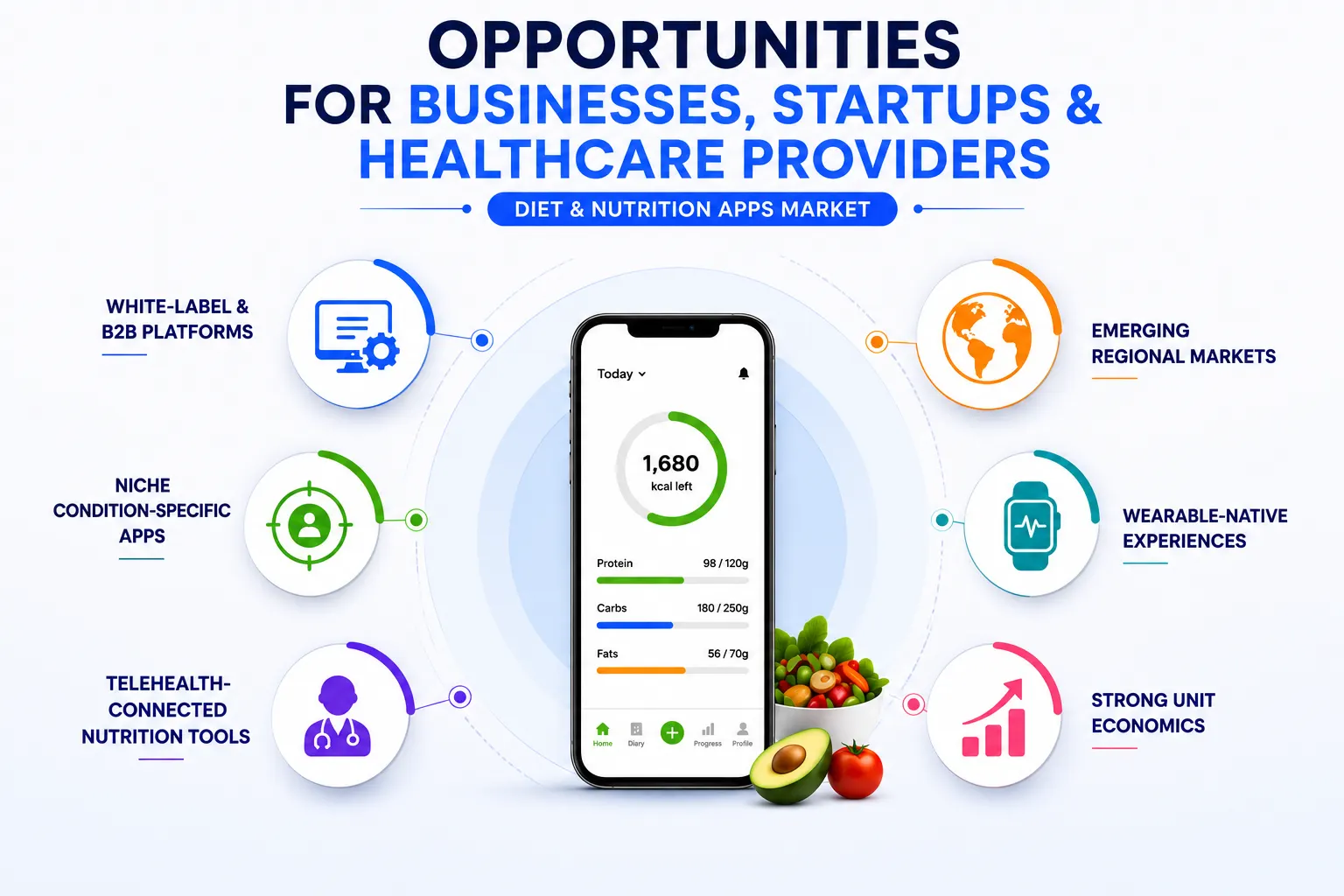
The growth data tells you the market is real. The segmentation data tells you where the opportunity is most accessible.
White-label and B2B nutrition platforms are a path that bypasses the cost of consumer acquisition entirely. Gyms, corporate wellness programs, and telehealth providers all need nutrition tools and many would rather license a well-built platform than build their own.
Niche condition-specific apps offer smaller total addressable markets but dramatically better unit economics. A diabetic meal management app with 50,000 paying users at $15/month outperforms a general calorie counter with 500,000 free users every time.
Telehealth-connected nutrition tools are filling the gap between self-service apps and clinical care. Users want a human in the loop but they also want 24/7 access and personalized data. Apps that deliver both are finding strong demand.
Emerging regional markets particularly across Asia-Pacific and the Middle East still have significant white space relative to their population size and rising middle-class health awareness.
Wearable-native apps designed from the ground up to work with CGMs, smartwatches, and connected scales are a distinct product category that most existing apps handle as an afterthought. Building it as the core architecture, not an add-on, creates meaningful product differentiation.
If you are exploring what app types work best in this space, the detailed breakdown in our guide on top fitness app ideas for startups covers several of these categories with revenue model analysis.
What This Market Growth Means for App Development
Market growth data tells you where demand is heading. It does not tell you whether a specific product will work.
The diet and nutrition apps that are capturing market share right now share a few common traits. They have a clearly defined user not "anyone who wants to eat healthier," but a specific person with a specific problem. They use AI to reduce friction, not just to add a feature. They treat retention as a product design challenge from day one, not a marketing problem to solve after launch. And they handle health data with a level of care that builds user trust rather than eroding it.
The technical decisions behind a well-built nutrition app, AI personalization, wearable API integrations, HIPAA-compliant data architecture, food database quality, and user engagement mechanics are more complex than they appear from the outside.
Understanding the full development process, feature set, and cost structure is worth doing before committing to a build scope. Our detailed guide on how to develop a diet and nutrition app covers all of this, including what an MVP looks like and how the build scope changes as you add condition-specific or AI-powered features.
Teams thinking about integrating AI specifically into their health platform will also find the breakdown of how AI agents power personalized fitness apps useful it covers the architecture behind the features users now expect.
FAQs
1. How large is the global diet and nutrition apps market?
The global diet and nutrition apps market is valued at billions of dollars and is expected to continue growing steadily through 2030, driven by increasing health awareness, smartphone adoption, and demand for personalized nutrition solutions.
2. What is driving the growth of the diet and nutrition apps market?
Key growth drivers include rising obesity rates, increasing focus on preventive healthcare, advancements in AI-powered nutrition coaching, wearable device integration, and growing corporate wellness initiatives.
3. Which region dominates the diet and nutrition apps market?
North America currently holds the largest market share due to strong health-tech adoption, high smartphone usage, and consumer willingness to pay for digital health solutions.
4. What is the fastest-growing region in the diet and nutrition apps market?
Asia-Pacific is one of the fastest-growing regions, supported by rapid smartphone adoption, increasing health awareness, and expanding digital healthcare ecosystems.
5. What are the most popular types of diet and nutrition apps?
Calorie tracking apps, meal planning apps, weight management apps, nutrition coaching platforms, and condition-specific nutrition apps are among the most widely used categories.
6. How is artificial intelligence changing nutrition apps?
AI helps nutrition apps deliver personalized meal recommendations, automate food logging, provide virtual coaching, analyze user behavior, and improve long-term engagement through customized experiences.
7. Why are condition-specific nutrition apps becoming more popular?
Apps designed for diabetes, PCOS, cardiovascular health, weight management, and other health conditions offer targeted guidance, making them more valuable and effective for users with specific dietary needs.
8. What business opportunities exist in the diet and nutrition apps market?
Opportunities include AI-powered nutrition coaching, corporate wellness platforms, telehealth-integrated nutrition solutions, wearable-connected apps, and condition-specific nutrition applications.
9. What challenges do companies face in the diet and nutrition apps market?
Common challenges include user retention, data privacy compliance, competition from established brands, maintaining nutritional accuracy, and converting free users into paying subscribers.
10. What is the future of the diet and nutrition apps market?
The future of the market is expected to be shaped by AI-driven personalization, wearable integrations, preventive healthcare initiatives, digital therapeutics, and stronger connections between nutrition apps and healthcare providers.
Conclusion
The diet and nutrition apps market is large, well-funded, and growing steadily across multiple segments and regions. The data is clear on that.
What the data also shows, if you read it carefully, is that the market is maturing. General-purpose calorie counters without AI personalization are losing ground. Condition-specific platforms, telehealth-connected tools, and enterprise wellness solutions are gaining it. The next wave of market share will go to products built around specific users, not broad audiences.
For businesses and startups looking to enter this market or healthcare providers looking to extend their services digitally the opportunity is real. But execution determines whether you capture it.
Nyusoft has worked on diet and nutrition app development projects across the spectrum from early-stage MVPs to full-featured platforms with AI personalization and wearable integrations. If you are moving from market research to product decisions, that experience is worth having on your side.