

 Front End Development
  Back End Development
  CMS / ECommerce Development
  Mobile Apps Development
  Cloud Services
  Fullstack Services
  Solution


Sleep Tracking App Development: Cost, Features & Tech Stack
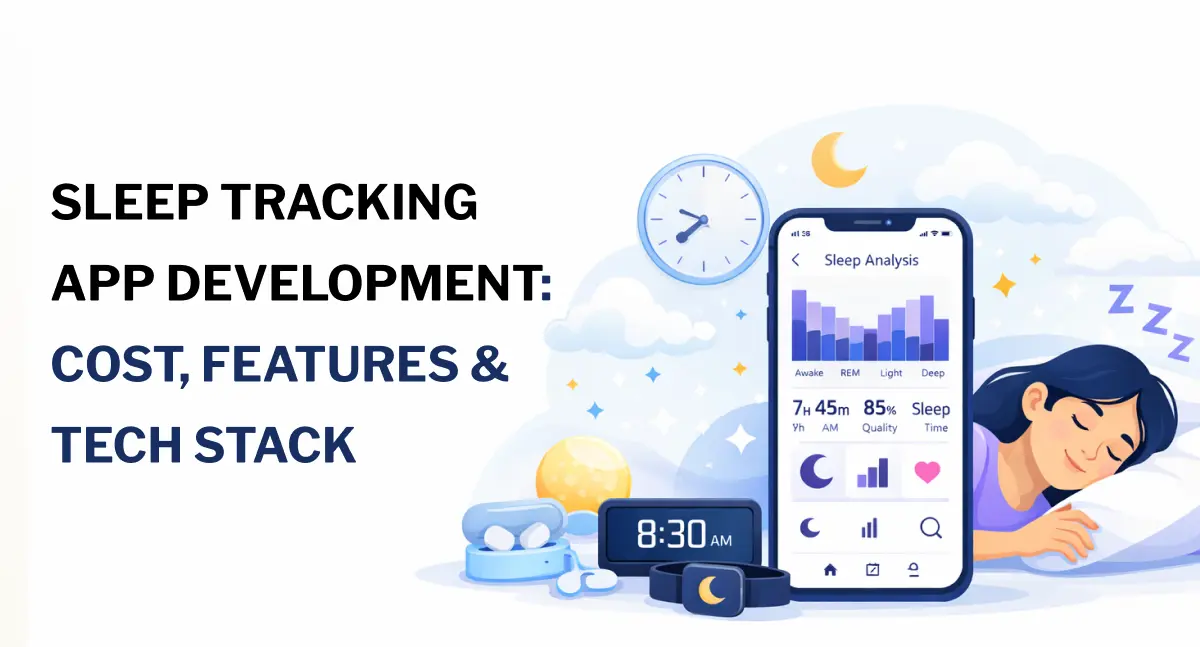
Building a sleep tracking app typically costs somewhere between $5,000 and $50,000 or more, depending on one decision that shapes almost everything else: whether the app relies on phone sensors alone or connects to a wearable device.
That decision matters more here than in most app categories. A phone-only tracker and a wearable companion app aren't really the same product with different price tags. They're different technical problems, with different accuracy ceilings and different audiences.
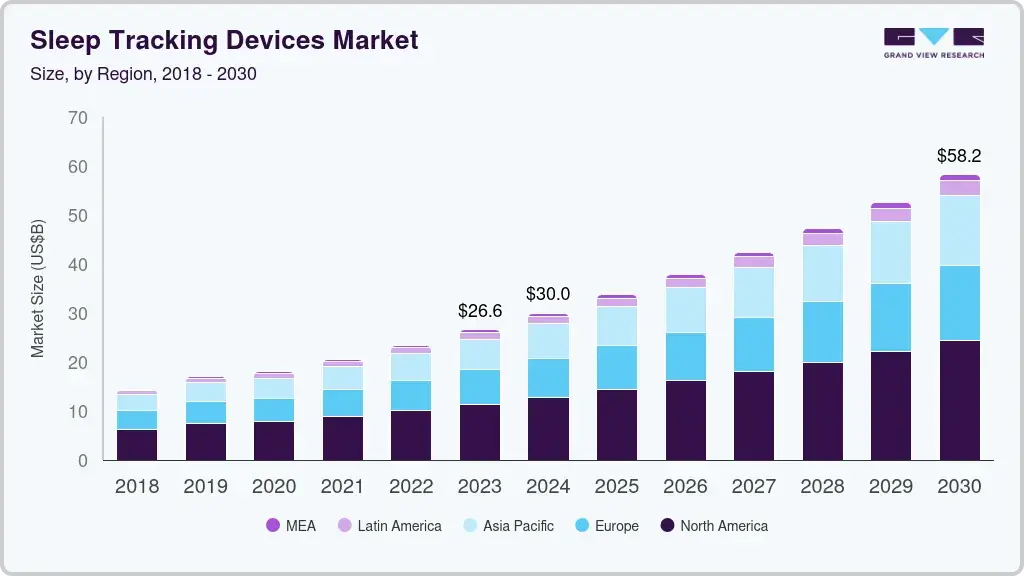
The market backing this up is real. The global sleep tracking devices market was valued at around $26.6 billion in 2023 and is projected to reach $58.21 billion by 2030, growing at roughly 11.7% a year, according to Grand View Research. North America holds about 43% of that revenue.
Sleep tracking is often lumped in with meditation and general wellness apps, and there's overlap in the audience. But the core challenge here isn't content production, it's sensor accuracy and honest data interpretation. Get the accuracy story wrong, or drain a user's battery overnight, and no amount of good design saves the app.
This article walks through how sleep tracking actually works, the features that matter, where compliance lines sit, the tech stack, the real development process, and what it costs. By the end you should be able to scope a realistic project instead of guessing at one.
Planning to Build a Sleep Tracking App?
Whether you're creating a phone-based sleep tracker, a wearable companion app, or an AI-powered sleep monitoring solution, starting with the right strategy can save both time and development costs. Our experts can help you define the ideal feature set, technology stack, and development roadmap for your business.
Talk to Our Experts
How Sleep Tracking Apps Actually Work
Before any feature or cost conversation makes sense, it helps to understand what's happening technically, because this shapes nearly every decision that follows.
Phone-based tracking uses the accelerometer to detect movement, sometimes paired with the microphone to catch snoring or talking. The underlying assumption is simple: people move more during light sleep and REM, and barely move during deep sleep. The app infers sleep stages from that movement pattern.
Wearable-based tracking adds heart rate variability, blood oxygen levels, and skin temperature into the mix. That additional biometric data produces meaningfully more accurate sleep staging than movement data alone.
The accuracy gap between the two approaches is worth naming honestly rather than glossing over. A phone sitting on a nightstand or under a pillow is making educated guesses. A smartwatch reading heart rate directly off the skin is working with a fuller picture.
This is a real product decision, not just a technical detail. A phone-only app is cheaper to build and has no hardware barrier to adoption, but it will always have a lower accuracy ceiling. A wearable companion app can offer sharper insights, but it locks users into owning a specific device first. Decide early which one you're actually building, because it cascades into your tech stack, your marketing claims, and your compliance posture.
Usage data backs up how mainstream this has already become. Around 15% of US adults reported using sleep-tracking apps in the past year, and that figure climbs closer to 25% in survey samples from China and India.
Types of Sleep Tracking Apps You Can Build
Standalone Phone-Based Sleep Trackers
No wearable required. Uses the accelerometer and microphone only. Lower cost, lower barrier to entry, and a genuine fit for a general consumer audience who isn't ready to buy a dedicated device just to track sleep.
Wearable Companion Apps
Built to pull data from an existing device: Apple Watch, Fitbit, Oura Ring, Garmin, or WHOOP. Higher accuracy, but it also means depending on a third party's API, their rate limits, and their terms of service. This model works best when your real differentiator is the insights layer sitting on top of the data, not the raw collection itself.
Smart Alarm and Sleep Cycle Apps
These wake the user during a light sleep window rather than at a fixed time, built around the pitch of waking up feeling less groggy. Sleep Cycle built its reputation on exactly this model, and it's a relatively lean build compared to a full analytics platform.
Clinical and Sleep Disorder Monitoring Apps
Aimed at insomnia, sleep apnea, or restless leg syndrome tracking, often used alongside an actual physician relationship. This sits in a different compliance category entirely, which we get into in detail further down.
Environment and Smart Home Integrated Apps
Adjusts room temperature, lighting, and sound through connected smart home devices based on sleep data. This is more of a hardware-adjacent product than a pure software build, and it's worth flagging early as a heavier project with more integration partners to manage.
Corporate and Insurance-Linked Wellness Apps
Distributed through employer wellness programs or health insurance partnerships, similar in structure to the B2B model that works well for meditation apps. Revenue here comes per employee or per member rather than through direct consumer subscriptions, which makes it a steadier, more predictable business model.
If you're weighing a sleep app as part of a broader wellness product, it's worth reading our meditation app development guide as well, since sleep and meditation features often end up living in the same app for a lot of successful wellness businesses.
Core Features Every Sleep Tracking App Needs
These are table-stakes. Missing any one of them makes the app feel unfinished next to Sleep Cycle, Pillow, or Samsung Health, which is the real bar users are measuring against, even for a niche app with a smaller ambition.
Automatic sleep detection and session logging. The app should detect when a user falls asleep and wakes up without requiring a manual start or stop. That said, a manual override still matters for edge cases like naps or inconsistent phone placement.
Sleep stage analysis. A visual timeline breaking the night into light, deep, and REM stages. A common mistake here is presenting this data with more confidence than the underlying sensor actually supports. Phone-only tracking has real accuracy limits, and overstating precision erodes trust fast the moment a user compares results against a wearable.
A sleep score and daily summary. One composite score plus a breakdown: time asleep, time to fall asleep, number of wake-ups, and sleep efficiency percentage. This is honestly the feature most users check every morning, more than the detailed stage graph underneath it.
Smart alarm. Wakes the user during a light sleep window within a set range instead of at a fixed time. It needs a hard fallback too: a guaranteed wake time regardless of detected sleep stage, since a smart alarm that fails silently is worse for a user than having no smart alarm at all.
Sleep sounds and environment recording. Ambient sound options to help users fall asleep, along with recording and flagging of snoring or talking during the night. Letting users play back a flagged audio clip the next morning is a small feature, but it drives a surprising amount of daily engagement.
Trends and historical data. Weekly and monthly views, ideally with some correlation against factors the user logs manually, like caffeine intake, exercise, or stress. This is where a sleep app moves from just collecting data to actually delivering insight, and it's one of the stronger retention drivers in the category.
Notifications and bedtime reminders. Wind-down reminders timed to a user's actual target bedtime work far better than a generic nightly ping. Same caution that applies to meditation and wellness apps generally: over-notifying works directly against the point of the product.
Data export and sharing. Export to PDF, or a direct share option with a physician. This matters more in sleep tracking than in most wellness categories, since sleep data frequently ends up as part of an actual clinical conversation.
Getting the data visualization right without overwhelming the user is a genuine design challenge here, not an afterthought. Our UI/UX design team has worked through exactly this problem for health and wellness products, where showing too much raw data feels clinical and showing too little feels shallow.
Need Help Defining the Right Features?
Choosing the right features is key to building a sleep tracking app that delivers value while staying within your budget. Our team can help you prioritize features, select the right technologies, and create a scalable solution tailored to your business goals.
Book A Free Consultation
Advanced and Differentiating Features
This is where a sleep app stops being "another tracker" and becomes something people actually recommend to a friend.
AI-powered personalized insights. Pattern recognition across weeks of data, correlating poor sleep nights with late caffeine, screen time, or logged stress, and surfacing that connection in plain language instead of a raw chart the user has to interpret themselves. Multiple 2026 sleep tech market reports point to this as the biggest shift in the category: apps moving from passive tracking toward active, prescriptive coaching.
Wearable and health platform integration. Apple HealthKit, Google Health Connect, and direct SDK integration with Oura, Fitbit, Garmin, or WHOOP. Heart rate variability and blood oxygen data meaningfully improve staging accuracy over anything phone-only tracking can offer.
Snore and sleep apnea risk flagging. Audio-based snore detection with pattern analysis, sometimes flagging a potential sleep apnea risk pattern for the user to bring up with a doctor. It's worth being precise about the language here: flagging a risk pattern is a different claim than diagnosing a condition, and getting that distinction right in your app's copy matters both ethically and legally, which ties directly into the compliance section below.
Smart home and environment control. Automatically adjusting a connected thermostat, smart bulbs, or a white noise machine based on sleep data and bedtime.
Sleep coaching programs. Structured multi-week programs, similar in spirit to guided meditation courses, aimed at improving sleep hygiene. Some of these draw on Cognitive Behavioral Therapy for Insomnia principles. Worth flagging clearly: CBT-I-based content sits closer to a clinical claim than general sleep hygiene tips, so this feature deserves the same scrutiny raised in the compliance section.
Partner and couple sleep tracking. Detecting and separating two sleepers' data from a shared bed. Few competitors handle this well, which makes it a genuine differentiation opportunity rather than a commodity feature.
For the AI-personalization layer specifically, this work sits within our generative AI development practice, where we build recommendation and pattern-detection systems for wellness and health products.
Where HIPAA and Health Claims Actually Apply
This is the section most competitor articles either skip or get wrong, often assuming all sleep data automatically falls under HIPAA. It doesn't, and the actual boundary is worth understanding clearly.
A consumer sleep tracker that doesn't share data with a covered healthcare entity and doesn't make diagnostic claims generally sits outside HIPAA. This is the same wellness-versus-clinical boundary we cover in our mental health app development guide, just applied to a different type of data.
The line shifts when the app integrates directly with a healthcare provider's systems, gets distributed through a clinical setting, or makes claims about diagnosing a named condition like sleep apnea or insomnia, rather than simply describing general sleep patterns.
FTC scrutiny applies independently of HIPAA status. A claim like "detects sleep apnea" or "treats insomnia" needs real evidentiary support behind it, or the app risks a deceptive-advertising problem regardless of whether HIPAA technically applies to the data itself.
Data sensitivity is still real even when HIPAA doesn't apply. Sleep data reveals a lot about a person's habits and routines, and depending on where your users are located, GDPR or state-level privacy laws like the CCPA may come into play on their own terms.
The practical takeaway: decide during discovery whether this is a general wellness tracker or something closer to a clinical-adjacent tool meant to support a conversation with a doctor. That single decision shapes your data architecture, how much legal review you need, and exactly what language your app is allowed to use about what it's actually detecting.
Tech Stack for Sleep Tracking App Development
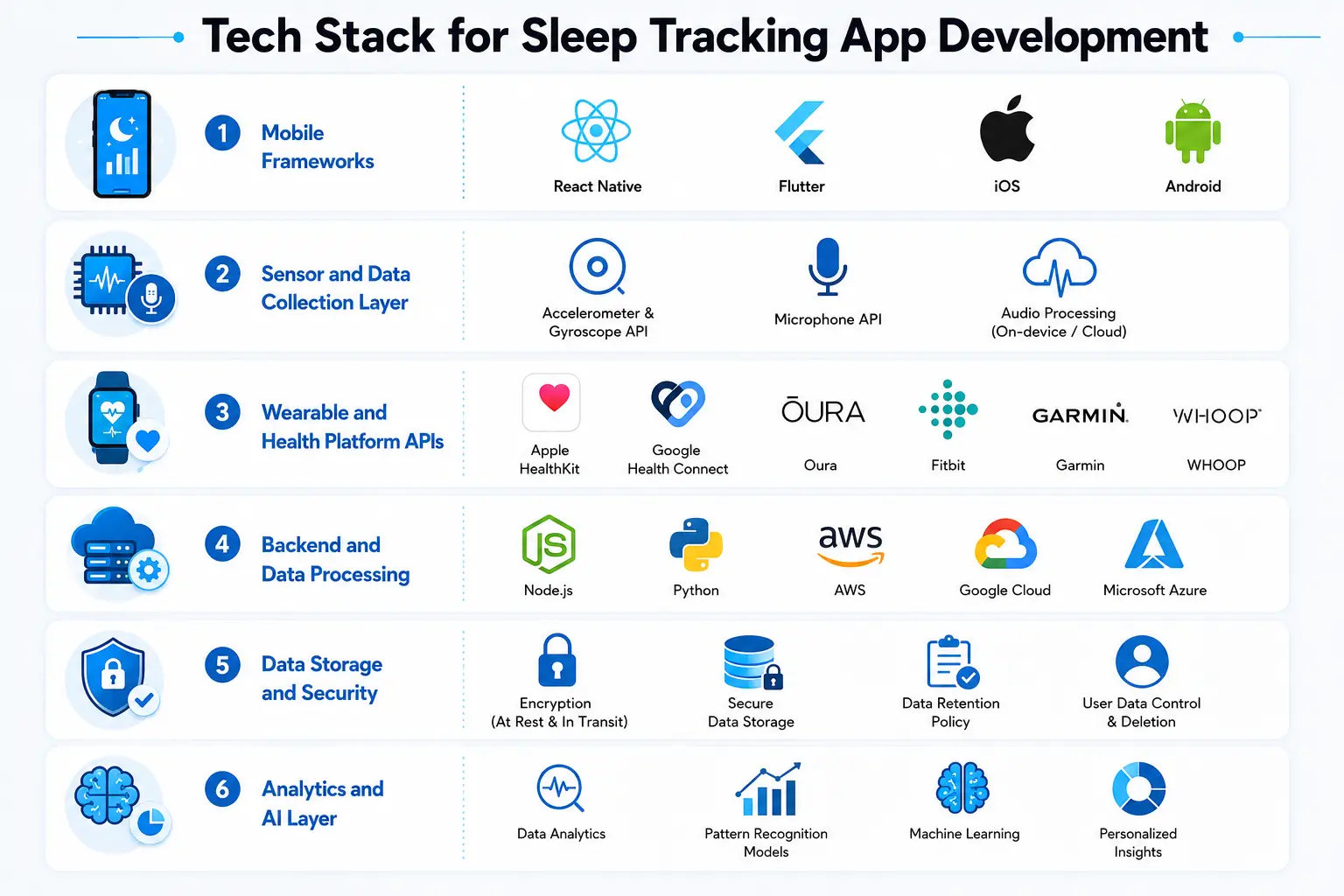
Mobile Frameworks
Cross-platform frameworks like React Native or Flutter work well for the UI and general app logic in most projects. Native development becomes the stronger choice once background sensor access becomes central to the product, since iOS and Android handle background accelerometer and microphone access quite differently, and getting this wrong is a common source of inaccurate-tracking complaints in app store reviews.
Sensor and Data Collection Layer
Accelerometer and gyroscope APIs handle phone-based motion detection. Microphone access, paired with either on-device or cloud-based audio processing, handles snore and sound detection. Battery drain deserves real attention here, since overnight recording is one of the most common triggers for one-star reviews in this category when it isn't optimized carefully.
Wearable and Health Platform APIs
Apple HealthKit, Google Health Connect, and direct SDKs for Oura, Fitbit, Garmin, and WHOOP, wherever deeper integration is the app's actual differentiator. Each wearable partner has its own API terms, rate limits, and approval process, and that approval timeline is a real scheduling factor that's easy to underestimate during planning.
Backend and Data Processing
Node.js handles real-time sync and notification delivery well. Python tends to be the better fit for the sleep-stage algorithms and any machine learning models involved in pattern detection or personalized insights. Cloud infrastructure should be sized around overnight batch processing specifically, since most users' data uploads and processes in a short morning window rather than continuously throughout the day.
Data Storage and Security
Encrypted storage at rest and in transit, given how sensitive overnight audio and biometric data is, even in cases that fall outside strict HIPAA scope. A clear data retention and deletion policy matters too, since sleep data accumulates quickly and users increasingly expect real control over how long it's kept.
Analytics and AI Layer
Pattern recognition models that correlate sleep data with logged lifestyle factors, kept firmly in the general wellness and coaching lane unless the product has been deliberately built and legally reviewed as a clinical tool.
The Sleep Tracking App Development Process, Step by Step
Phase 1: Discovery and Scope Definition (Weeks 1-3)
This is where you decide phone-only versus wearable-companion versus both, general wellness versus clinical-adjacent positioning, and who the target audience actually is. This is also where the compliance posture gets decided, not something to figure out after the fact.
Phase 2: UX and Data Visualization Design (Weeks 3-7, running alongside early backend work)
Sleep data visualization is a genuine design problem on its own. Show too much raw data and it feels overwhelming and clinical. Show too little and it feels shallow compared to Sleep Cycle or Oura. Design also needs to account for the fact that people check this app right before bed and right after waking, two moments that call for a calm, low-stimulation interface rather than a busy dashboard.
Phase 3: MVP Development (Months 3-5)
Core MVP scope usually covers automatic sleep detection, basic stage analysis, a sleep score, a smart alarm, and a trends view. Deliberately hold off on wearable partner integrations, AI-driven insights, and smart home control until real usage data tells you they're worth the investment.
Phase 4: Testing and Quality Assurance
Battery drain testing overnight is arguably the single most important QA category here, more than in almost any other app type, given how much background sensor use is involved. Accuracy validation against a known baseline, ideally a wearable with published accuracy data, matters if the app is making any specific staging claims. Testing should also cover a range of real-world phone placements and bed setups, since actual conditions vary a lot more than a controlled lab test usually accounts for.
Phase 5: Launch and Post-Launch Content and Feature Cadence
App store submission for health and wellness category apps comes with its own review considerations, including limits on how confidently you can describe detection accuracy. After launch, budget for ongoing maintenance at roughly 15-25% of build cost annually, covering algorithm refinement, new wearable API versions, and OS-level sensor API changes that come with every major platform update.
If you're deciding between a standalone consumer app and something broader, our custom software development team can help scope that during discovery, and for a B2B or insurance-linked platform specifically, that's more of a SaaS product development conversation.
How Much Does Sleep Tracking App Development Cost
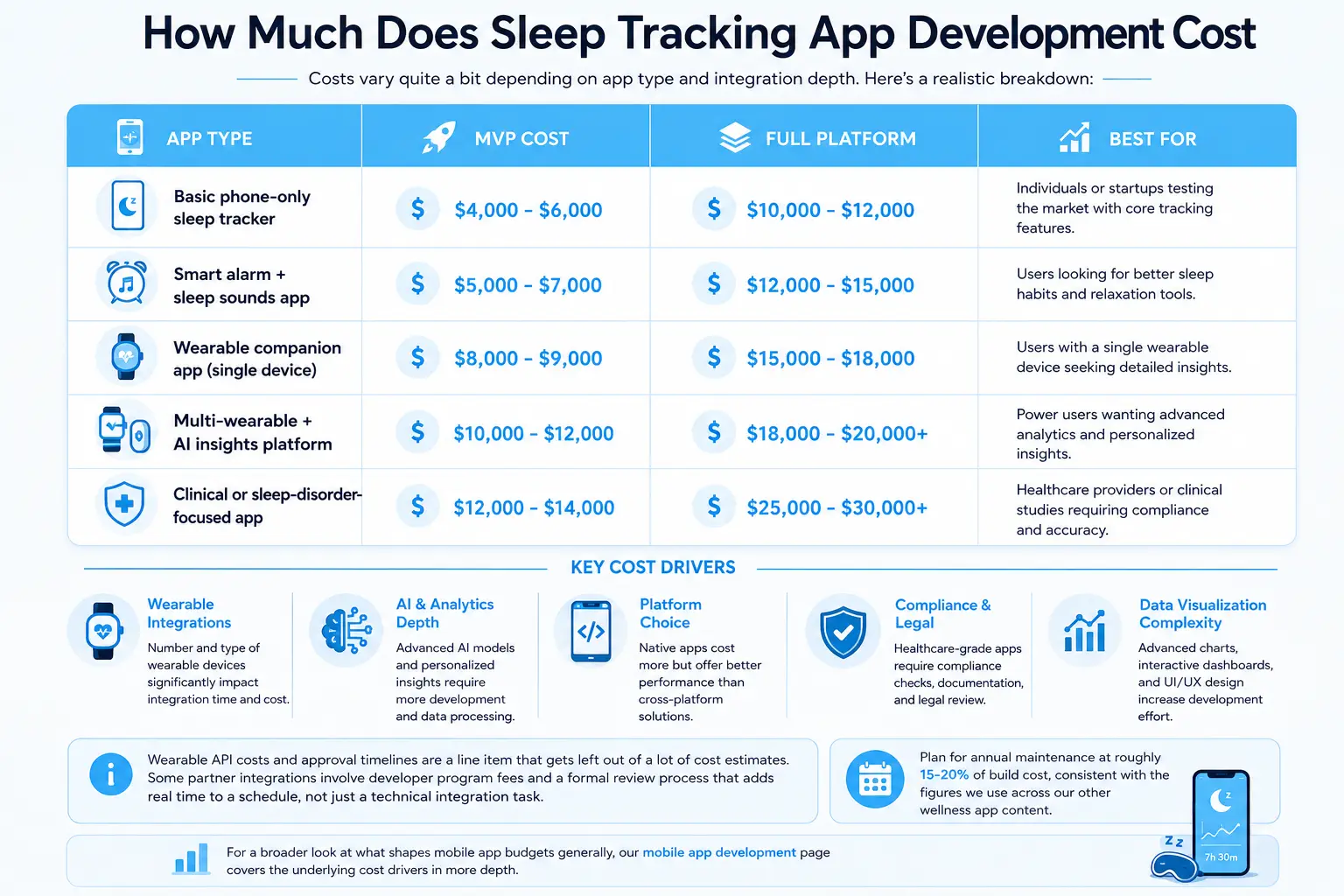
Costs vary quite a bit depending on app type and integration depth. Here's a realistic breakdown:
| App Type | MVP Cost | Full Platform |
|---|---|---|
| Basic phone-only sleep tracker | $4,000 - $6,000 | $10,000 - $12,000 |
| Smart alarm + sleep sounds app | $5,000 - $7,000 | $12,000 - $15,000 |
| Wearable companion app (single device) | $8,000 - $9,000 | $15,000 - $18,000 |
| Multi-wearable + AI insights platform | $10,000 - $12,000 | $18,000 - $20,000+ |
| Clinical or sleep-disorder-focused app | $12,000 - $14,000 | $25,000 - $30,000+ |
The main cost drivers: number of wearable integrations, depth of AI and analytics work, platform choice between native and cross-platform, how much compliance and legal review the project needs, and how complex the data visualization design gets.
Wearable API costs and approval timelines are a line item that gets left out of a lot of cost estimates. Some partner integrations involve developer program fees and a formal review process that adds real time to a schedule, not just a technical integration task.
Plan for annual maintenance at roughly 15-20% of build cost, consistent with the figures we use across our other wellness app content.
For a broader look at what shapes mobile app budgets generally, our mobile app development page covers the underlying cost drivers in more depth.
Looking for a Custom Development Cost Estimate?
Every sleep tracking app has unique requirements, from wearable integrations and AI-powered insights to advanced analytics and secure data management. Share your project requirements with our experts, and we'll provide a tailored development roadmap and cost estimate based on your business goals.
Request a Cost Estimate
Monetization Models That Actually Work
Freemium with a premium subscription tier is the dominant model in this category, unlocking detailed insights, full trend history, and AI coaching behind a paywall while keeping basic tracking free.
One-time purchase apps, similar to Pillow's approach, work well specifically for narrower, single-platform tools rather than broad multi-feature platforms trying to do everything.
Insurance and employer-linked distribution is a solid B2B path here too, mirroring the corporate wellness model that already works for meditation apps.
Ad-supported models carry a real trust risk in this category specifically, beyond the general point that ads feel out of place in wellness apps. Sleep data includes overnight audio and biometric readings, and users are understandably wary of that kind of data sitting anywhere near an ad-tech pipeline.
Common Mistakes That Sink Sleep Tracking Apps
Overstating accuracy claims for phone-only tracking. The moment a user compares results against a wearable and finds a mismatch, trust in the app drops fast, often permanently.
Ignoring battery drain during overnight background sensor use. This shows up quickly in app store reviews and is one of the hardest problems to fix after launch instead of designing around from the start.
Treating sleep data like just another dashboard metric. Sleep tracking deserves a genuinely calm, low-stimulation experience for the specific moments people check it: right before bed and right after waking.
Skipping the wellness-versus-clinical decision early. Adding features like apnea risk flagging or CBT-I-based content without the legal review that decision actually requires creates real exposure later.
Underestimating wearable API integration timelines. Partner approval processes can add weeks to a schedule that looked simple on paper before those API applications were submitted.
Launching without a clear data retention and deletion policy. This is both a trust issue with users and, depending on where they're located, a genuine legal requirement.
Building a Sleep App People Actually Trust
The category is growing fast, but growth doesn't protect an app that oversells its accuracy or drains a user's battery every single night. Those two failures alone account for a large share of the one-star reviews across this entire app category.
Sensor reliability, honest data presentation, and a genuinely calm interface beat a long feature list here, the same lesson that shows up across most of the wellness app space. A sleep tracker that tells users the truth about what it can and can't measure earns more long-term trust than one chasing every possible feature from day one.
At Nyusoft, we've worked through this exact set of decisions with wellness and health-tech clients, from choosing between phone-only and wearable-companion architectures to scoping AI-driven insights the right way. If you're weighing up what your own sleep tracking app should include, our mobile app development and UI/UX design teams are a good place to start that conversation, and our case studies show how similar wellness projects have come together end to end.
FAQs
1. How much does sleep tracking app development cost?
The cost of sleep tracking app development depends on the app's complexity, supported platforms, wearable integrations, AI capabilities, and custom features. A basic sleep tracking app typically starts around $15,000, while an advanced solution with AI-powered insights and wearable integrations can exceed $60,000.
2. How long does it take to develop a sleep tracking app?
The development timeline depends on the project's scope and feature requirements. A basic sleep tracking app may take 3–4 months, while a feature-rich solution with wearable integration, AI, and advanced analytics can require 5–8 months or more.
3. What features should a sleep tracking app include?
A sleep tracking app should include automatic sleep detection, sleep stage analysis, sleep score tracking, smart alarms, historical reports, bedtime reminders, data visualization, secure user authentication, and an admin dashboard. Advanced features such as AI insights, wearable integration, and sleep coaching can further improve user engagement.
4. Can a sleep tracking app integrate with wearable devices?
Yes. Sleep tracking apps can integrate with devices and health platforms such as Apple Watch, Apple Health, Google Health Connect, Fitbit, Garmin, Oura Ring, and WHOOP. These integrations provide more accurate sleep data and enable personalized recommendations based on biometric information.
5. Which technologies are best for sleep tracking app development?
The ideal technology stack depends on your business requirements. Many businesses use Flutter or React Native for cross-platform mobile development, while Node.js, Python, cloud services, AI frameworks, and secure databases help build scalable and high-performing sleep tracking applications.
6. Can AI improve the accuracy of a sleep tracking app?
AI can enhance sleep tracking by analyzing user behavior, wearable data, and historical sleep patterns to deliver personalized insights and recommendations. While AI improves data interpretation and user experience, the overall accuracy also depends on the quality of the sensor data collected.
7. What factors affect sleep tracking app development costs?
Several factors influence development costs, including the number of features, UI/UX complexity, AI implementation, wearable integrations, supported platforms, cloud infrastructure, security requirements, third-party APIs, and ongoing maintenance. Clearly defining your project scope helps estimate the budget more accurately.
8. Can I launch a sleep tracking app with an MVP first?
Yes. Many businesses begin with a Minimum Viable Product (MVP) that includes core features such as automatic sleep tracking, sleep reports, smart alarms, and basic analytics. Launching an MVP helps validate your idea, gather user feedback, and expand the application based on real user needs.
9. How do sleep tracking apps generate revenue?
Sleep tracking apps commonly generate revenue through subscription plans, freemium models, premium analytics, AI-powered coaching, wearable integrations, corporate wellness programs, and partnerships with healthcare or insurance providers. The right monetization strategy depends on your target audience and business goals.
10. Why should businesses invest in sleep tracking app development?
Growing awareness of sleep health, increased adoption of wearable devices, and rising demand for personalized wellness solutions have created significant opportunities for businesses. A well-designed sleep tracking app can improve user engagement, generate recurring subscription revenue, and establish a strong presence in the expanding digital wellness market.
Ready to Build a Sleep Tracking App?
Whether you're launching a wellness startup, enhancing an existing digital health platform, or developing a wearable-integrated sleep tracking solution, Nyusoft can help you turn your idea into a scalable, user-friendly mobile application. From product strategy and UI/UX design to development, AI integration, testing, and long-term support, our team is ready to bring your vision to life.
Book A Free Call Now