


 Front End Development
  Back End Development
  CMS / ECommerce Development
  Mobile Apps Development
  Cloud Services
  Fullstack Services
  Solution


How to Develop a Mental Health App: Features, Compliance, and Costs
Mental health support demand is growing faster than traditional care systems can keep up with. In the US alone, around 8,000 regions lacked enough mental health professionals in 2024, leaving an estimated 167 million residents without adequate access to care. Only 27.7% of people who need mental health services actually receive them.
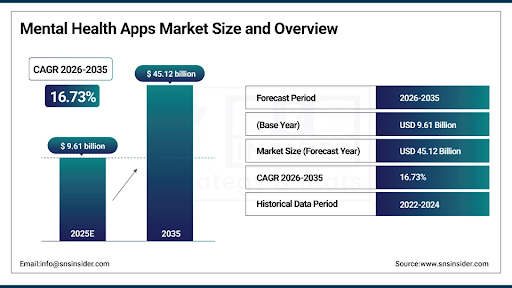
That gap is exactly why mental health app development has moved from a niche experiment into one of the most serious segments in digital health. The global mental health apps market was valued at $9.61 billion in 2025 and is projected to reach $45.12 billion by 2035, growing at a CAGR of 16.73% (Source: snsinsider).
But the market size doesn't automatically translate into a successful product. Building a mental health app means getting three things right simultaneously: clinical credibility, strict data privacy architecture, and user experience designed specifically for people in emotional distress. Miss any one of these and the product either loses user trust, attracts regulatory attention, or fails to retain anyone past the first week.
This guide covers everything you need to know about how to develop a mental health app, from choosing the right app type and core features to compliance, tech stack, real development costs, and the mistakes that actually kill these products.
Why Mental Health Apps Are Different From Other Healthcare Apps
This isn't a distinction worth glossing over. Mental health apps operate under a completely different set of stakes compared to general health and fitness apps, and treating them the same is one of the most common planning errors teams make.
The Data Is More Sensitive Than Standard Health Data
Mental health apps capture mood patterns, therapy session notes, medication history, trauma disclosures, and sometimes substance use information. A portion of this falls under 42 CFR Part 2 a federal regulation that provides stronger confidentiality protections than HIPAA, specifically for substance use disorder records. Psychotherapy notes also carry separate legal protections under HIPAA that ordinary medical records do not.
A breach here doesn't just expose personal data. It can expose the fact that someone sought mental health care at all, which still carries social and professional consequences for many people.
The User Is Often Vulnerable When They Open the App
People using mental health apps are frequently anxious, overwhelmed, or actively in distress. Design decisions that are perfectly acceptable in a fitness or appointment app, such as aggressive onboarding prompts, high-contrast notifications, and error messages that feel harsh, can cause real harm in this context.
Dashboard design should prioritize emotional state and cognitive load awareness. Progressive disclosure of sensitive content, calm visual language, and non-intrusive notification timing all carry more weight here than in any other app category.
Clinical Validity Actually Matters
A fitness app that isn't backed by sports science is just unhelpful. A mental health app that isn't grounded in evidence-based therapeutic frameworks, primarily Cognitive Behavioral Therapy (CBT) and Dialectical Behavior Therapy (DBT) is potentially harmful. It can give users false confidence that they're receiving effective care when they're not, and it creates real liability risk.
Apps making clinical claims without clinical validation lose practitioner trust instantly. And as app stores tighten their medical category guidelines, they're also at increasing risk of rejection or removal.
These three factors together mean mental health apps carry higher stakes at every stage of development than standard consumer health apps. That's the lens through which this entire guide is written.
Types of Mental Health Apps You Can Build
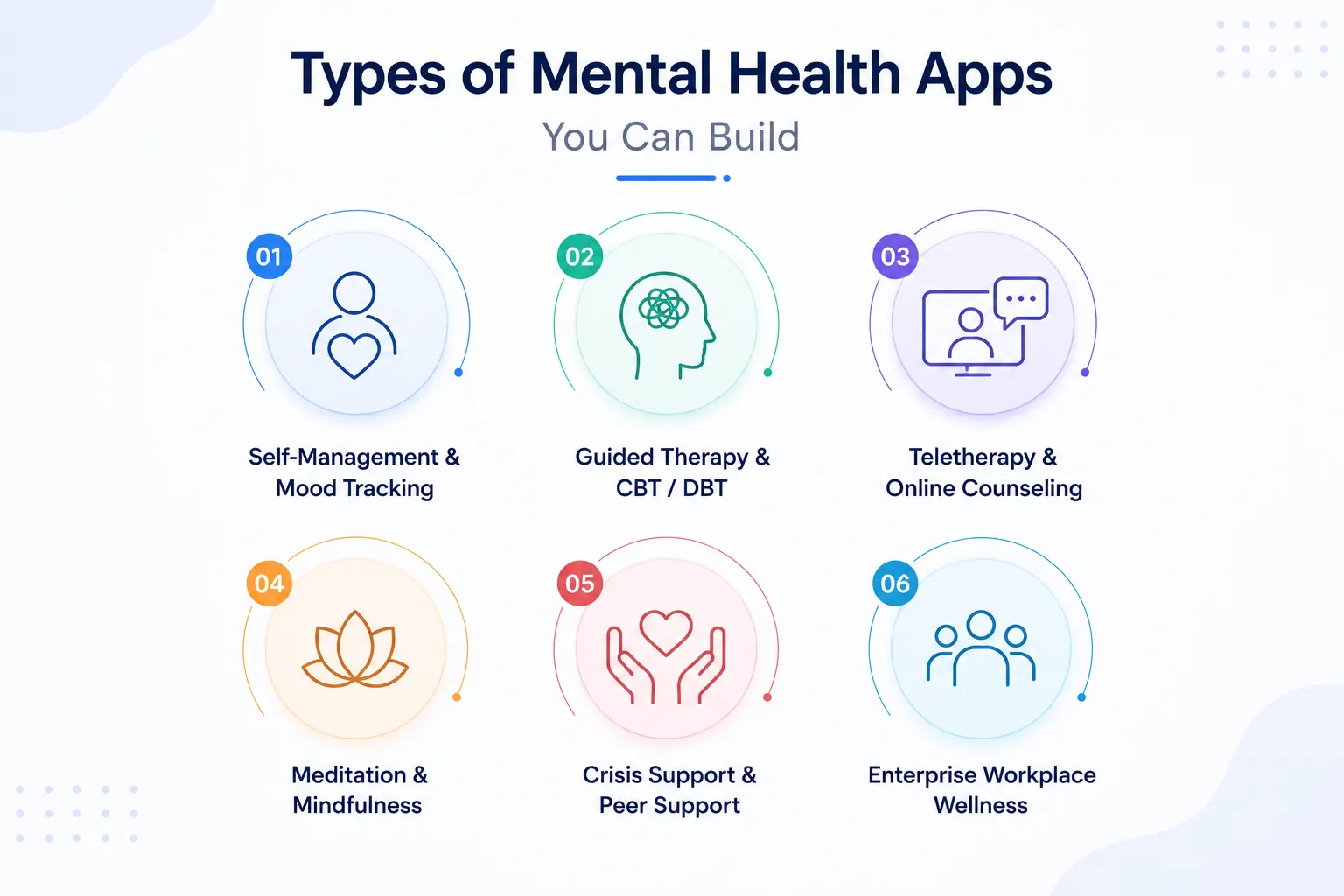
Before architecture, before features, before budget, know your category. The type of app you're building determines your compliance obligations, your required feature set, your liability exposure, and your development timeline.
Self-Management and Mood Tracking Apps
Mood journals, daily check-ins, habit tracking, sleep monitoring, and gratitude logs. This is the lowest-regulatory entry point if the app doesn't collect Protected Health Information (PHI) and doesn't make clinical claims; strict HIPAA compliance may not apply.
It's also the most saturated category. Apps like Calm, Headspace, and Daylio already dominate at scale. Competing here requires either a clearly focused user population (new parents, veterans, adolescents) or a depth of clinical grounding that generic wellness apps lack. Depression and anxiety management accounted for the largest application segment share at 30.13% in 2025 the demand is real, but the differentiation has to be meaningful.
Guided Therapy and CBT/DBT Apps
Structured therapeutic exercises based on validated clinical frameworks. These apps guide users through sessions thought records, behavioral activation, grounding techniques, and exposure exercises without necessarily involving a live therapist.
The regulatory risk here increases with the specificity of the clinical claims. An app that says "try this breathing exercise" operates differently from one that says "this will treat your panic disorder." The line matters legally and clinically.
Teletherapy and Online Counseling Platforms
This category connects users directly with licensed therapists and psychiatrists via video, messaging, or asynchronous consultation. It carries the highest regulatory load of any mental health app type, including HIPAA compliance, state licensure management for practitioners, multi-state practice rules, and insurance billing infrastructure.
It also carries the highest revenue potential. Medicare Advantage began reimbursing app-based therapy sessions in 2025 at $15–45 per session. Employer-sponsored plans increasingly cover digital therapy as a standard benefit. A strong video conferencing solution is the real-time communication layer these platforms depend on.
Meditation and Mindfulness Apps
Guided meditation, breathing exercises, sleep soundscapes, and stress relief content. Generally, outside the HIPAA scope, when no user health data is collected, and no clinical claims are made.
The development cost for the technology is relatively modest. The ongoing investment in high-quality audio content, clinical script review, and content updates is where teams underestimate the long-term cost. Stress management apps are projected to grow at a 16.34% CAGR as employers prioritize preventive mental wellness programs, making the B2B employer channel a significant distribution opportunity.
Crisis Support and Peer Support Apps
Hotline integration, AI-powered crisis detection, peer community forums, and check-in accountability features. This is the highest duty-of-care category in mental health app development.
Building this without a documented human escalation pathway is not viable. AI can detect crisis language. It cannot replace a trained human response. Any team building in this space needs a clinical advisory board involved from week one, and a clear crisis protocol tested end-to-end before any public launch.
Enterprise Workplace Wellness Platforms
B2B products sold to employers covering burnout prevention, EAP integration, mindfulness programs, and employee mental health assessments. 74% of US employers offered meditation or mindfulness apps in 2024, up from 52% in 2020. Per-employee contracts in the $2–$6 range eliminate user payment friction and raise engagement significantly compared to direct-to-consumer models.
This category is growing fast and has a cleaner monetization path than consumer mental health apps. It's worth considering as a go-to-market strategy even if your long-term vision includes direct consumer access.
Core Features That Define a Functional Mental Health App
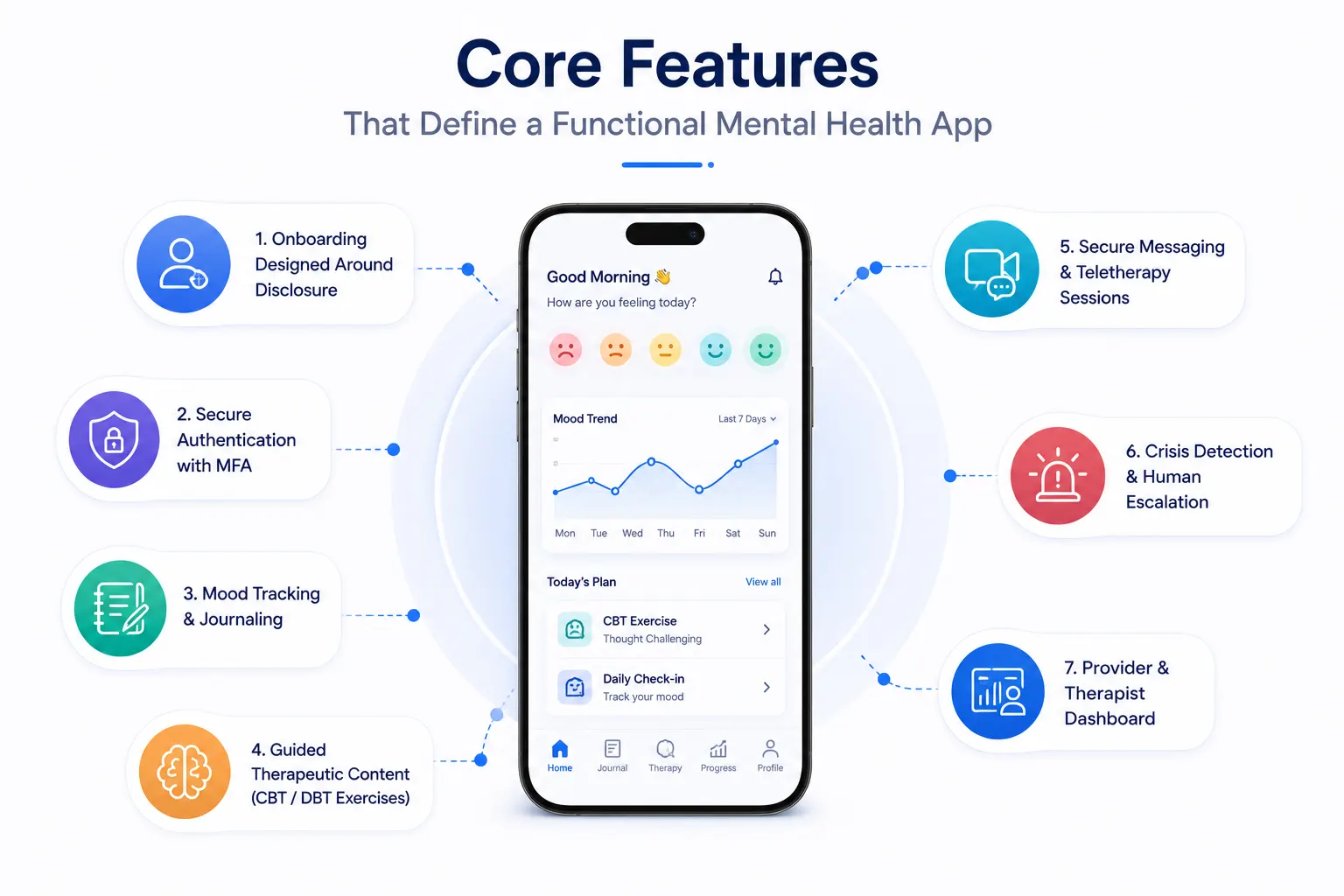
Onboarding Designed Around Disclosure
The onboarding flow in a mental health app is not just setup; it's the first trust-building moment. Users are deciding whether this app is safe enough to be honest with.
Avoid collecting sensitive information aggressively at signup. Build disclosure progressively: ask for basic preferences first, clinical history later, after the user has experienced the app's value. Explain clearly what data is stored, who can access it, and what happens if someone is identified as being in crisis. Put HIPAA consent and privacy acknowledgments in readable plain language, not buried in a terms document written for lawyers.
Secure Authentication With MFA
Biometric login improves the user experience for returning sessions, but it needs to sit on top of a proper identity layer with multi-factor authentication. The proposed 2026 HIPAA Security Rule update would make MFA mandatory for both patient-facing and provider-facing accounts. Plan for it now rather than retrofitting it later.
Session timeout logic matters here more than in most apps. Mental health apps are frequently accessed on shared devices.
Mood Tracking and Journaling
The core retention feature for most mental health apps. Users who can see their own progress a trend line improving over three weeks, a pattern connecting sleep quality to anxiety levels stay engaged at significantly higher rates than those who only see raw daily entries.
Notification timing for check-in prompts is a real UX challenge. Smart timing algorithms that account for user behavior patterns outperform fixed daily reminders. Late-night notifications should be avoided entirely they actively worsen sleep anxiety in a significant portion of mental health app users.
Guided Therapeutic Content (CBT/DBT Exercises)
A structured content library of exercises based on CBT and DBT frameworks: thought records, behavioral activation schedules, grounding techniques, distress tolerance skills. Audio, video, and interactive formats outperform text-only exercises in completion rates.
Every piece of clinical content needs review by a licensed clinician before it goes live. This isn't an optional quality step it's part of the product's clinical credibility, and increasingly part of what app stores scrutinize in the medical category.
Secure Messaging and Teletherapy Sessions
For apps involving licensed practitioners, HIPAA-compliant video calling and secure in-app messaging are non-negotiable. Standard SMS and push notifications are not HIPAA-compliant channels for PHI. The communication infrastructure needs end-to-end encryption and proper audit logging.
Therapist scheduling tools, session reminders, and follow-up care plan documentation belong in the same product flow, not stitched together from separate tools. For the mobile layer, Flutter app development delivers consistent UI across iOS and Android for session interfaces where visual consistency and reliability directly affect user experience.
Crisis Detection and Human Escalation
AI-powered sentiment analysis can flag crisis language in journal entries and chat messages. This is genuinely valuable; it catches situations that users may not explicitly flag themselves.
But AI flagging is only useful if it connects to a human response pathway. The protocol needs to be documented, tested, and updated regularly. Crisis resources should be permanently accessible in the app, not buried in settings. Clinical trial data from Woebot showed a 22% drop in PHQ-9 depression scores within four weeks with 83% adherence, but that outcome came from a system that positioned AI as a support tool, not a replacement for clinical care.
Provider and Therapist Dashboard
For apps involving licensed practitioners, the therapist-facing interface is half the product. It needs to show patient mood trends, session history, progress metrics, and clinical notes in a way that fits inside the actual workflow of a busy clinician.
Symptom tracking visualization over time, secure note documentation, treatment plan management, and DSM-5-TR diagnostic reference belong in this layer. If the provider-facing side of the product is clunky or slow, practitioners will stop using it and patient engagement collapses with it.
Compliance: The Architecture Decision That Comes Before Everything Else
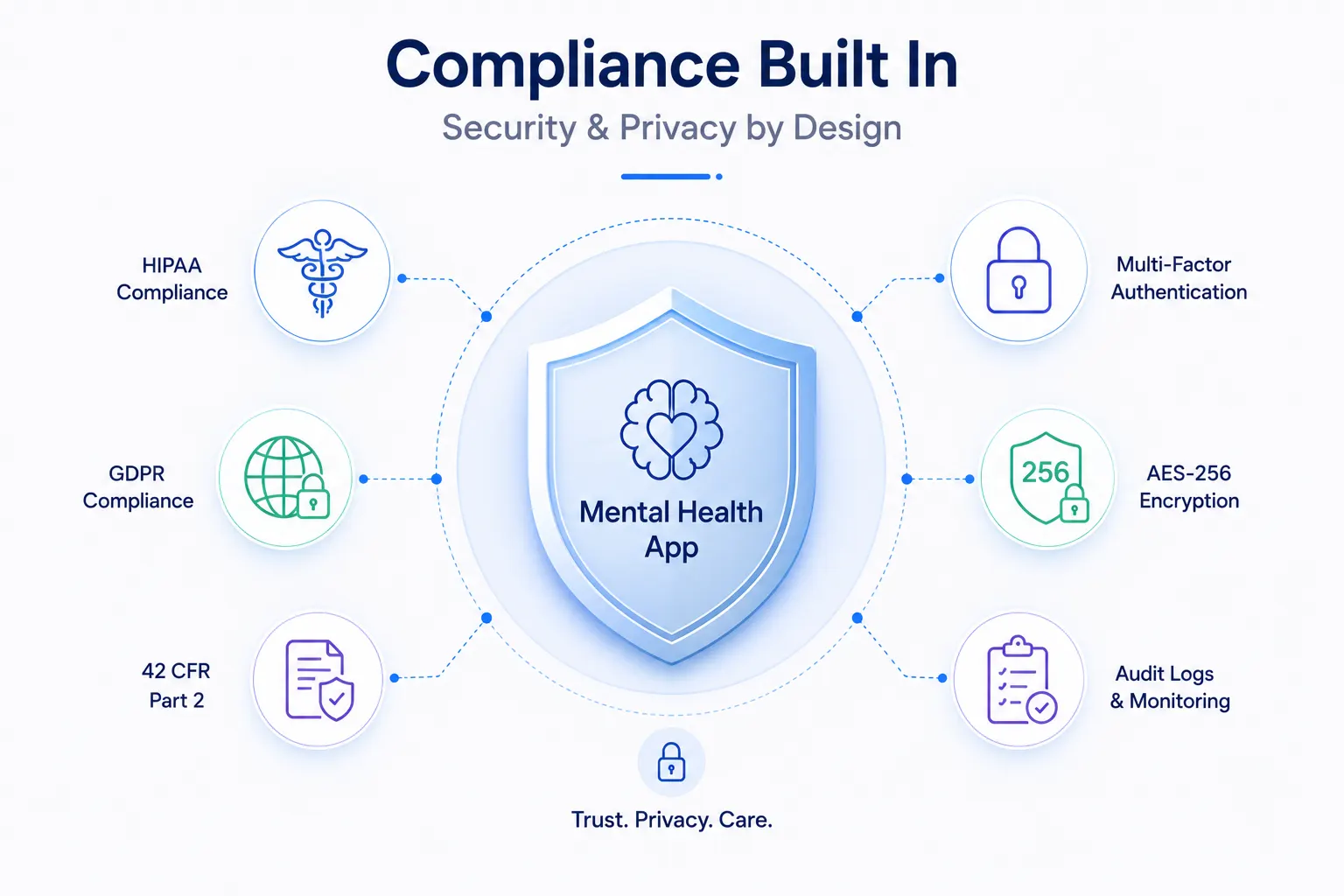
Mental health app compliance is more complex than general healthcare app compliance. There are layers most development teams don't plan for until they're already in trouble.
HIPAA and Psychotherapy Note Protections
Standard HIPAA rules apply to all identifiable health data. But mental health data has additional layers. Psychotherapy notes the clinician's private session notes have separate, stronger protections under HIPAA that are distinct from general medical records. They cannot be included in routine medical record disclosures or shared with insurers without explicit patient authorization.
The proposed 2026 HIPAA Security Rule update makes previously "addressable" safeguards fully mandatory: AES-256 encryption of all electronic PHI, multi-factor authentication for all accounts, and significantly stricter documentation requirements across systems of all sizes.
Non-compliance penalties range from $100 to $50,000 per violation. Build it right from the start the cost of retrofitting HIPAA compliance into a live product is consistently higher than building it in from day one.
42 CFR Part 2 — The Regulation Most Teams Miss
This is the most commonly overlooked compliance layer in mental health app development. 42 CFR Part 2 provides stronger confidentiality protections than HIPAA specifically for substance use disorder (SUD) treatment records. It requires explicit written consent before any SUD-related records can be shared, even with other treating providers.
Given the high comorbidity rates between mental health conditions and substance use disorders, most mental health apps will handle data from users who have SUD histories. A final rule issued in February 2024 aligned Part 2 more closely with HIPAA, with a compliance deadline of February 16, 2026.
If your app serves users with depression, anxiety, PTSD, or burnout, assume SUD comorbidity in your data architecture and build consent management accordingly.
FDA Software as a Medical Device (SaMD)
If your app diagnoses a mental health condition, recommends treatment modifications, or predicts clinical deterioration, it may qualify as a Software as a Medical Device under FDA classification. AI-powered diagnostic chatbots, clinical risk assessment tools, and treatment recommendation engines each carry this risk.
Address the SaMD question before building these features, not after they're live and generating revenue.
GDPR for International Users
Mental health data is classified as "special category data" under GDPR, requiring explicit informed consent not just implied consent from a terms acceptance. Any app serving EU users must support data portability, right to erasure, and breach notification within 72 hours, regardless of where the development company is based.
Accessibility Is a Compliance Requirement, Not a Nice-to-Have
WCAG 2.1 Level AA compliance is a legal requirement in many jurisdictions for healthcare apps. Screen reader compatibility, sufficient color contrast, captions for audio and video content, and plain language targeting a 6th–8th grade reading level are not design preferences they're baseline expectations for a product serving people in mental health crises.
Tech Stack for Mental Health App Development
Mobile Frameworks
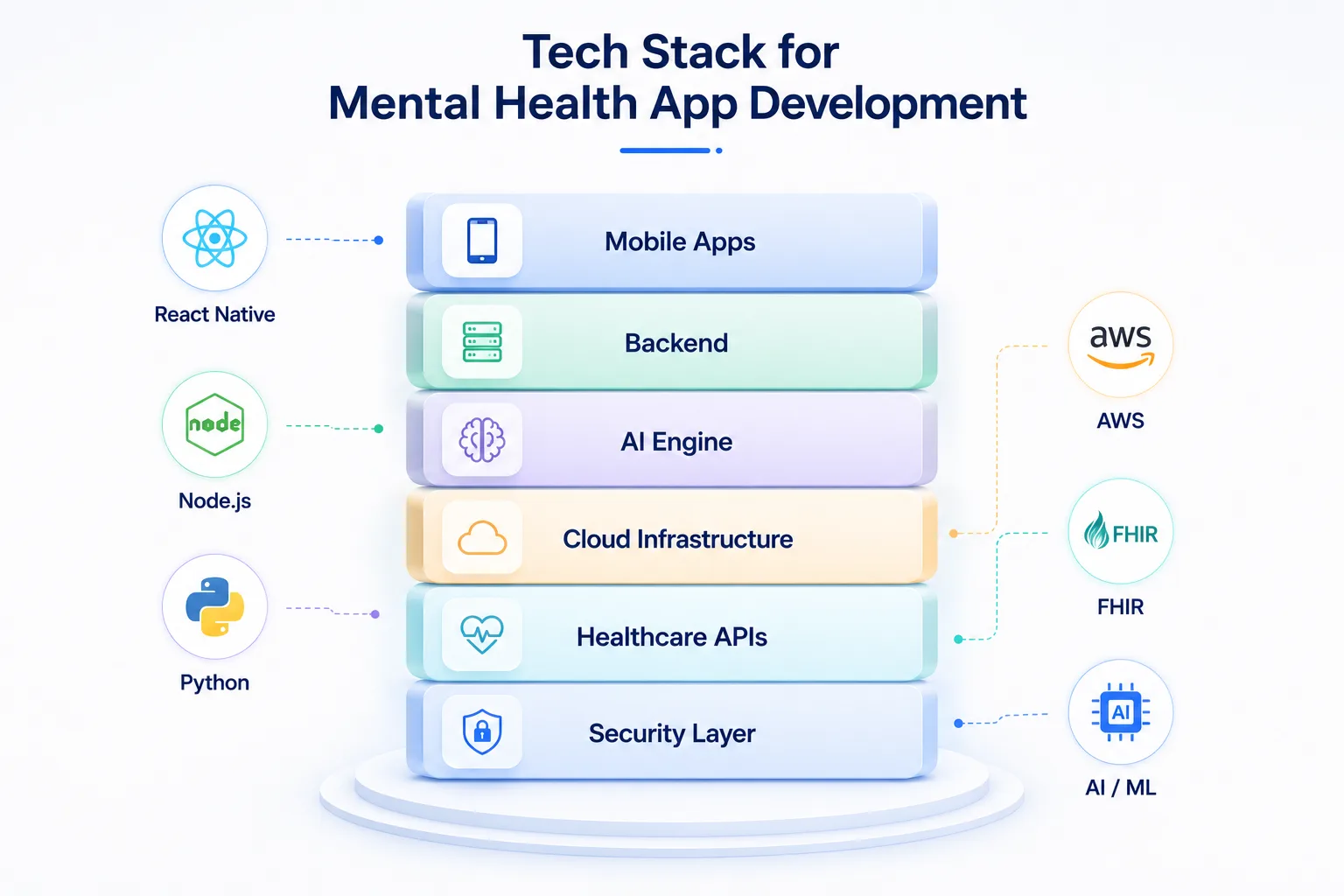
Cross-platform development is the right starting point for most mental health apps. React Native app development builds for iOS and Android from a single codebase reducing cost and time to market without sacrificing the native feel that matters for user trust in sensitive apps.
Native development makes sense when deep device integration is a core feature, such as Apple HealthKit sleep tracking, on-device mood logging, or Apple Watch biometric data feeding directly into the app's personalization engine.
Backend and Infrastructure
Node.js development handles real-time features well: live teletherapy sessions, instant secure messaging, real-time crisis alert delivery, and concurrent user management during peak demand.
Python development is the right choice for AI/ML components, sentiment analysis models, mood prediction engines, personalized CBT exercise sequencing, and crisis language detection. Python's ecosystem for clinical AI is significantly more mature than alternatives.
Cloud infrastructure must come with a signed HIPAA Business Associate Agreement. AWS Healthcare, Azure Government, and Google Cloud Healthcare API all support this. Firebase and Airtable do not belong anywhere near clinical mental health data; both lack the compliance infrastructure required.
A zero-trust security architecture where every access request is verified regardless of network origin is the appropriate baseline for mental health apps.
AI Integration for Personalization and Crisis Detection
AI is doing meaningful clinical work in mental health apps in 2026. Wysa achieved a 30% reduction in GAD-7 anxiety scores across users in India and the UK using AI-driven CBT personalization. These aren't marketing numbers they came from controlled studies.
Generative AI development capabilities are particularly relevant here: conversational AI that delivers structured CBT sessions, empathetic language models for between-session check-ins, and AI-powered sentiment analysis for crisis detection. Any AI pipeline that processes PHI requires documented model governance and data lineage tracking as part of the compliance framework.
For AI-assisted care coordination workflows, routing users to appropriate care levels, automating practitioner notifications, managing escalation protocols, agentic AI solutions cover this architectural layer.
Interoperability and Integrations
Apple HealthKit and Google Health Connect for wearable biometric data, sleep patterns, heart rate variability, and physical activity levels often correlate directly with mental health status and are valuable inputs for personalization.
HL7 FHIR for data exchange with EHR systems is required for clinical-grade apps that need to share data with hospital systems, insurance providers, or referring physicians. Payment infrastructure needs to support insurance billing, not just card payments, for teletherapy platforms targeting US insurance reimbursement.
The Mental Health App Development Process, Step by Step
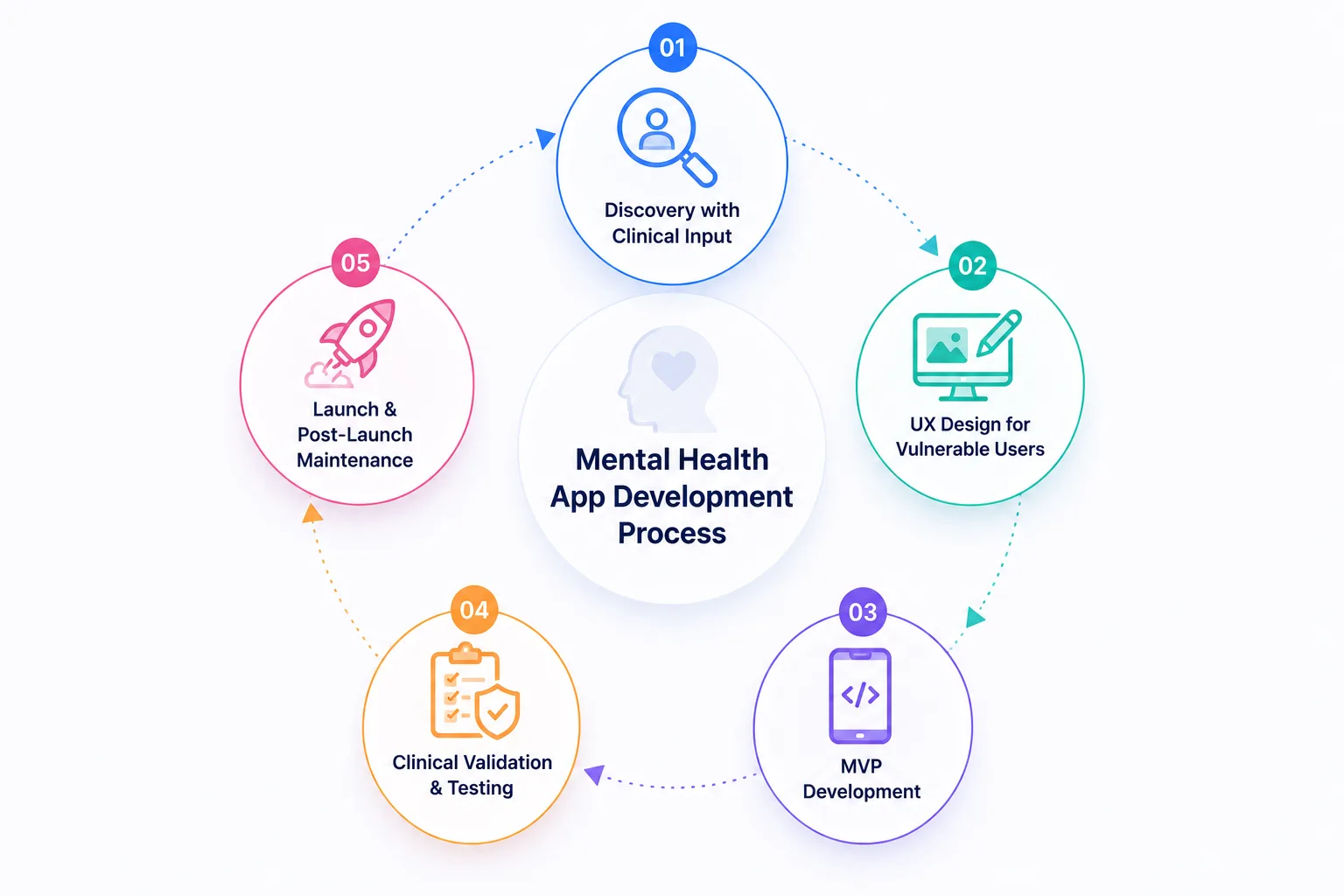
Phase 1 — Discovery With Clinical Input (Weeks 1–4)
Map the emotional journey of your target user before designing any feature. This is different from standard user research; you're building a product for people in distress, and the research needs to reflect that.
Engage a licensed mental health professional as a clinical advisor from the start. Define compliance scope: Does the app handle PHI? Does it make clinical claims? Is SUD data in scope? Is the app targeting a population with high crisis risk? These answers shape every subsequent decision.
Custom software development for mental health starts with getting these questions answered properly not with wireframes.
Phase 2 — UX Design for Vulnerable Users
Trauma-informed design principles apply here. That means avoiding language that pathologizes users, designing disclosure flows that don't feel interrogative, and using visual design that reduces rather than amplifies anxiety.
Progressive disclosure is the core principle: don't ask about suicidal ideation in a signup form. Surface sensitive questions only in appropriate contexts, after the user has established a baseline level of trust with the product.
Color choices matter more than in other app categories. Oversaturated colors increase anxiety for many users. Desaturated, calm color palettes reduce cognitive load. Accessibility cannot be retrofitted it needs to be built into every screen from the first design file.
Strong UI/UX design services for mental health go beyond visual polish; they require a genuine understanding of how design decisions affect users in vulnerable emotional states.
Phase 3 — MVP Development (4–6 Months)
For a mental health app, the MVP scope should cover secure authentication, mood tracking and journaling, a core guided exercise library, secure messaging if practitioners are involved, and crisis resources permanently accessible from within the app.
Build compliance architecture and security infrastructure first. Features come second.
Development cost for a mental health app MVP typically runs $5,000–$15,000 depending on feature scope and compliance requirements. Teletherapy platforms with full practitioner management, billing, and EHR integration sit closer to $25,000–$40,000 for a complete build.
If the product targets employer groups or healthcare systems rather than direct consumers, a SaaS product development architecture with multi-tenant infrastructure handles the B2B deployment model more efficiently.
Phase 4 - Clinical Validation and Testing
Testing a mental health app requires more than standard QA. Key requirements:
- Usability testing with real users from the target population — not QA engineers simulating mental health scenarios
- Clinical content review by a licensed professional before every content module goes live
- Crisis protocol testing — simulate crisis scenarios end-to-end, including escalation to human support and hotline connectivity
- HIPAA penetration testing — covers data access patterns, session handling, encryption, and audit log integrity
- Accessibility audit — WCAG 2.1 AA compliance verification across all supported devices
Phase 5 - Launch and Post-Launch Maintenance
Apple's App Store applies stricter review standards to mental health and medical apps specific privacy disclosures about mental health data handling are required. Budget extra time for submission review.
Post-launch maintenance for a mental health app runs 15–25% of the initial build cost annually. This covers quarterly content updates (therapeutic content has a shelf life), ongoing security vulnerability testing, HIPAA audit cycles, and regulatory monitoring for 42 CFR Part 2 and FDA guidance changes.
For clinical-grade mental health products that need ongoing compliance support and feature development, experienced healthcare software development teams treat post-launch as a continuous process, not a maintenance contract.
How much does it cost to develop a mental health app
| App Type | MVP Cost | Full Platform |
| Mood tracking / self-management | $5K – $7K | $10K – $15K |
| CBT/DBT guided therapy app | $5K – $7K | $12K – $25K |
| Teletherapy platform | $8K – $13K | $25K – $40K |
| Enterprise workplace wellness | $7K – $12K | $20K – $35K |
| AI-powered crisis support app | $9K – $15K | $25K – $40K+ |
Add 20–30% to any estimate for a full HIPAA compliance architecture. Factor in clinical advisory costs, typically $5,000–$20,000 for ongoing licensed advisor involvement. Annual maintenance runs 15–25% of your initial build cost.
Mistakes That Kill Mental Health Apps Before They Scale
Launching without clinical validation. Using CBT or DBT language in an app without licensed clinical review loses practitioner trust immediately and creates regulatory exposure. App stores are increasingly scrutinizing clinical claims in the mental health category.
Building crisis features without a human escalation pathway. AI crisis detection paired with a static hotline link is not a crisis protocol. It's a liability. Every crisis detection feature needs a tested, documented human escalation path.
Ignoring long-term retention. Strong initial downloads followed by a steep drop-off is the most common failure pattern in mental health apps. The mental health apps market faces significant challenges in retaining users over time; limited personalization, engagement fatigue, and unclear long-term benefits are the three main causes. Plan for quarterly content refreshes and adaptive personalization from the beginning, not after the churn data arrives.
Missing 42 CFR Part 2. Most development teams know HIPAA. Very few plan for 42 CFR Part 2. If your app serves any user population with a potential substance use disorder history and with comorbidity rates, most mental health apps, this regulation applies to your data architecture.
Designing for average users in average emotional states. A significant portion of people who open a mental health app are in acute distress. The product needs to work for those users, in those moments, on devices with low battery in poor lighting. That's a fundamentally different design standard than standard consumer apps.
The Opportunity Is Real. So Are the Execution Requirements.
The global mental health apps market is growing at 16.73% annually. Depression and anxiety management remains the largest segment. The corporate wellness channel is expanding fast. Insurance reimbursement for digital therapy is now real in the US market.
Does the market opportunity lead to successful product execution? The mental health app landscape has plenty of apps that downloaded well and retained poorly or were built fast and discovered compliance problems after launch.
The winners are the ones who picked a specific access or continuity problem for a defined user group, built with clinical credibility from day one, and treated data privacy as a product characteristic rather than a legal obligation.
If you're planning a mental health app and want a development partner who has worked through these specific challenges, compliance architecture, clinical UX, AI integration, and scalable infrastructure, Nyusoft Solutions has the technical depth across mobile app development and AI-powered health tech to take the product from concept to clinical-grade reality.
Build it right. Build it once.
FAQs
1. What types of mental health apps can be developed?
Businesses can build meditation apps, CBT and DBT therapy apps, mood tracking apps, teletherapy platforms, crisis support applications, employee wellness platforms, and AI-powered mental health assistants.
2. How can a mental health app improve patient engagement?
Features such as mood tracking, personalized therapy plans, guided meditation, journaling, reminders, progress tracking, and secure communication encourage long-term user engagement.
3. Can AI be safely used in mental health apps?
Yes. AI can assist with mood analysis, personalized wellness recommendations, symptom tracking, and conversational support. However, AI should support—not replace—licensed mental health professionals.
4. Do mental health apps require clinical validation?
If an app provides therapeutic guidance, diagnoses, or treatment recommendations, clinical validation and expert review are essential to improve credibility and reduce compliance risks.
5. What privacy measures are important for mental health apps?
Mental health apps should use encryption, secure authentication, role-based permissions, privacy-first architecture, and comply with regulations such as HIPAA, GDPR, and 42 CFR Part 2 where applicable.
6. What are the biggest challenges when building a mental health app?
Developers must balance user privacy, clinical accuracy, emotional user experience, accessibility, compliance, and long-term engagement while ensuring users receive reliable support.
7. Can mental health apps integrate with wearable devices?
Yes. Integrating smartwatches and fitness trackers allows apps to analyze sleep, heart rate, activity levels, and stress indicators to deliver more personalized wellness insights.
8. How do mental health apps generate revenue?
Common monetization models include subscriptions, premium content, teletherapy sessions, employer wellness programs, insurance partnerships, and enterprise licensing.
9. What makes a successful mental health app?
Successful apps combine evidence-based therapy methods, intuitive design, personalized experiences, strong privacy protection, and continuous content updates that keep users engaged.
10. Why choose Nyusoft for mental health app development?
Nyusoft builds secure, scalable, and user-focused mental health applications with AI capabilities, teletherapy features, HIPAA-compliant architecture, and clinically informed user experiences designed for long-term engagement.
Ready to Build a Secure and Scalable Mental Health App?
Building a successful mental health app requires more than great code. It demands clinical-focused design, strong security, regulatory compliance, and scalable technology. Whether you're planning a mood tracking app, teletherapy platform, or AI-powered mental health solution, our experts can help turn your idea into a secure, high-performance product.