

 Front End Development
  Back End Development
  CMS / ECommerce Development
  Mobile Apps Development
  Cloud Services
  Fullstack Services
  Solution


Building Personalized Learning Management Systems with Claude
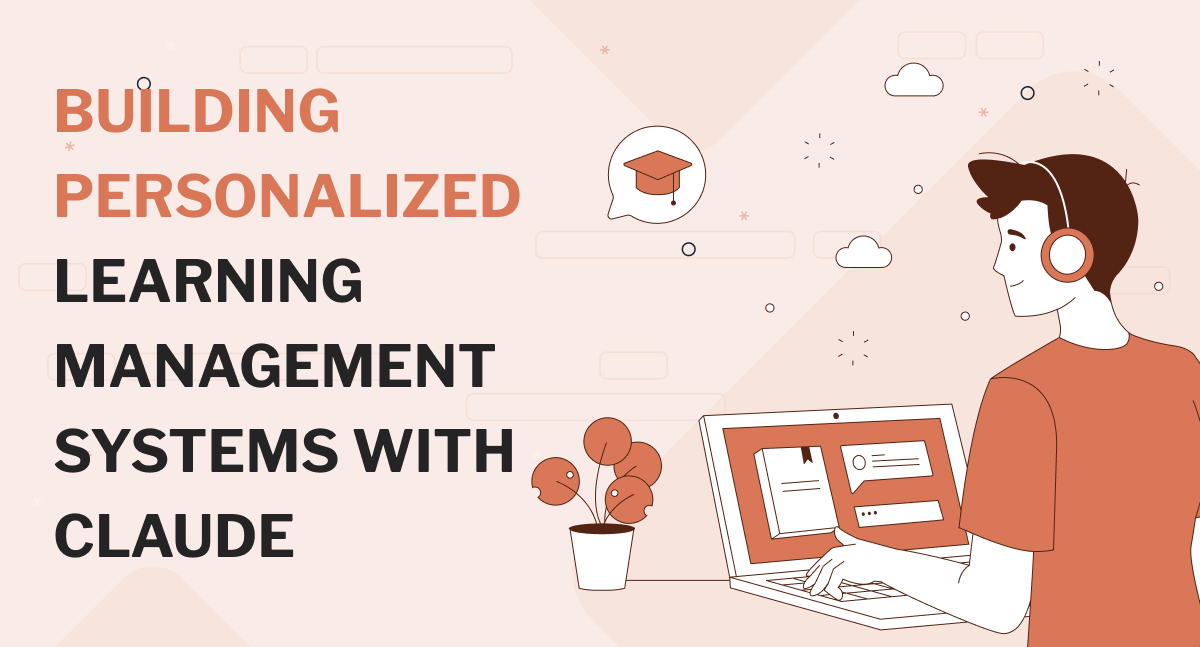
Whether you are a developer working alone to create your first learning platform or you are a business that requires adding AI-powered personalization to your already existing LMS, chances are that you have likely encountered the same issue. In the majority of the learning management systems, all learners are treated equally. Same material, same speed, same route - no matter who is pursuing the course, or what they already know. The result? Lack of engagement, low completion, and time and money wasted.
And this is where Claude enters the picture. The AI assistant created by Anthropic has become a popular resource among builders and businesses. Let’s understand how you can create your own LMS using Claude.
What Is a Personalized LMS and Why Does It Matter?
A learning management system is a computer application that assists you in building, offering, and monitoring courses or training programs. A customized LMS goes a step further to customize the experience to each learner - varying the content, pacing, and testing according to their performance and requirements.
In the case of individual builders, your platform is personalized, and that is what will make you stand out in a saturated market. To the businesses, it is what makes a checkbox compliance course something that employees will complete and retain. In any case, individualized learning is a catalyst to improved engagement, accelerated skill acquisition, and increased retention - and that is exactly what learners as well as companies are seeking at the moment.
LMS Market Trends You Should Know
The LMS market is estimated to have a value of about $28.59 billion in 2025, with a projection of $70.83 billion in 2030, with a CAGR of 19.9%. More than 36% of the worldwide LMS revenues are in North America, and uptake is quickening with startups and business organizations investing in AI-based training systems.
Source: (https://www.grandviewresearch.com/industry-analysis/learning-management-systems-market)

Why Use Claude to Build Your LMS?
Claude is not a mere chatbot. It is an AI collaborator that assists you in creating, constructing, and perfecting actual systems by talking. In case you are a single developer, Claude allows you to explain your course framework and evaluation logic in plain English and convert it to working code. No complete engineering staff required. Between days from idea to prototype.
As a business, Claude can overlay on your existing LMS - creating an adaptive learning path, building personalized assessments, and turning internal documents into training. There is no need to tear up and change your existing platform. In any case, you are not tied to a roadmap and pricing of a vendor. You create just what your learners require.
Claude-Built LMS vs Traditional LMS Platforms
A Claude-powered setup vs. a conversational LMS. Before making your decision whether to start afresh or simply add Claude to your existing system, here is a comparison of a Claude-powered approach to the traditional LMS platforms.
| Comparison Point | Claude-Built Custom LMS | Traditional LMS (Moodle, Docebo, Canvas) |
| Personalization | AI-driven and fully customizable per learner or department | Limited and mostly template-based |
| Development Speed | Days to weeks through conversational prompting | Weeks to months with traditional development cycles |
| Total Cost of Ownership | Low — API usage plus hosting with no licensing fees | High — licensing, setup, customization, and ongoing maintenance |
| Scalability | Build incrementally as your user base or team grows | Tied to subscription tiers or infrastructure limits |
| AI Content Generation | Native capability through Claude | Requires third-party plugins or separate AI tools |
| Learning Path Adaptivity | Dynamic and responds to learner performance in real time | Static or basic rule-based configurations |
| Data Ownership and Control | Full ownership of code, data, and infrastructure | Vendor-dependent with limited portability |
| Best For | Solo builders, startups, and businesses adding AI to existing systems | Quick deployment and compliance-heavy environments |
Key Features You Can Build with Claude
The following are the high-impact features that can be made by individual builders and businesses using Claude.
- Adaptive learning paths: Learning paths that adapt content according to the performance of individual learners. Students in need of additional assistance receive special attention automatically.
- Smart assessments: They change the level of difficulty in accordance with the prior responses. This maintains learners at the appropriate level and provides you with more meaningful information on real competency gaps.
- AI-powered content generation: Converts old documents, handbooks, SOPs, training manuals, or policy guides into organized courses, interactive modules, and brief lessons. This in itself can save weeks of instructional design for businesses.
- Progress dashboards: Provide you or your department with real-time access to the completion rates, engagement trends, and skill gaps across learners or departments.
- Automated feedback loops: Provide a personalized recommendation and feedback after each module, informing every learner of where to focus and what they are doing well.
How to Start Building: A Simple 5-Step Process
The following are the steps that you can follow to build a learning management system with Claude.
Step 1: Define your learning goals
Have clear learning outcomes. Whom you are building upon: customers or employees, begin with what learners need to know at the end of the course. Be specific and measurable.
Step 2: Prompt Claude with your course structure
Explain your modules, audience, and flow of content. As an example, I require a 5-module onboarding course to be taken by new marketing employees. Each of the modules should consist of a lesson, an example based on a scenario, and a quiz.
Step 3: Iterate and refine
This is a secret that Claude builders swear by. Prior to Claude commencing the construction, request it to conduct an interview with you on your needs. It captures those blind spots about which you were not aware and gives superior results in the first attempt.
Step 4: Add personalization logic
Share Claude’s way, the system needs to change. E.g., when a learner does not get more than 60% in Module 2, provide a review lesson and only then allow them to proceed with Module 3.
Step 5: Test with real learners
Test with a few beta users, in case you are a single builder. In case you are a business pilot in one of the teams or departments. Gather feedback, feed back to Claude, and refine and scale.
Read Also: The Role of LMS in Transforming EdTech for Exam Preparation
Tips for Getting the Best Results
- Begin with a single course or module - do not attempt to develop the whole platform the first day.
- Be clear and elaborate in the prompts you use - open-ended prompts result in general answers.
- When attempting to integrate Claude with an existing LMS, do not reinvent the wheel by simultaneously changing all features; instead, begin with a single feature, such as AI-generated quizzes or adaptive paths.
- Always have somebody (a human), whether it be you, a subject matter expert, or an L&D professional, proofread AI-generated content prior to it being shown to learners.
- Look at the context and memory features of Claude to be consistent across modules and courses.
- Take your first version as a pilot, not a final product - actual learner feedback is your best guide on what to work on next.
Summing it Up!
The LMS market is expanding almost 20% annually, and the need to introduce AI-based and personalized learning is not decreasing. Claude provides you with a practical way to do it, whether you are a single builder and you are building your learning product, or you are a business and you want to make your current training smarter, without paying the enterprise price or taking a year-long implementation cycle.
Begin with one course. Build it with Claude or improve what you already have. Test it with real learners, refine it based on their feedback, and then expand what delivers results. In EdTech, the builders and businesses that start early with personalized AI learning experiences will have a clear advantage in 2026 and beyond.