


 Front End Development
  Back End Development
  CMS / ECommerce Development
  Mobile Apps Development
  Cloud Services
  Fullstack Services
  Solution


Financial Planning Software Development: Features, Benefits, Cost & Complete Guide
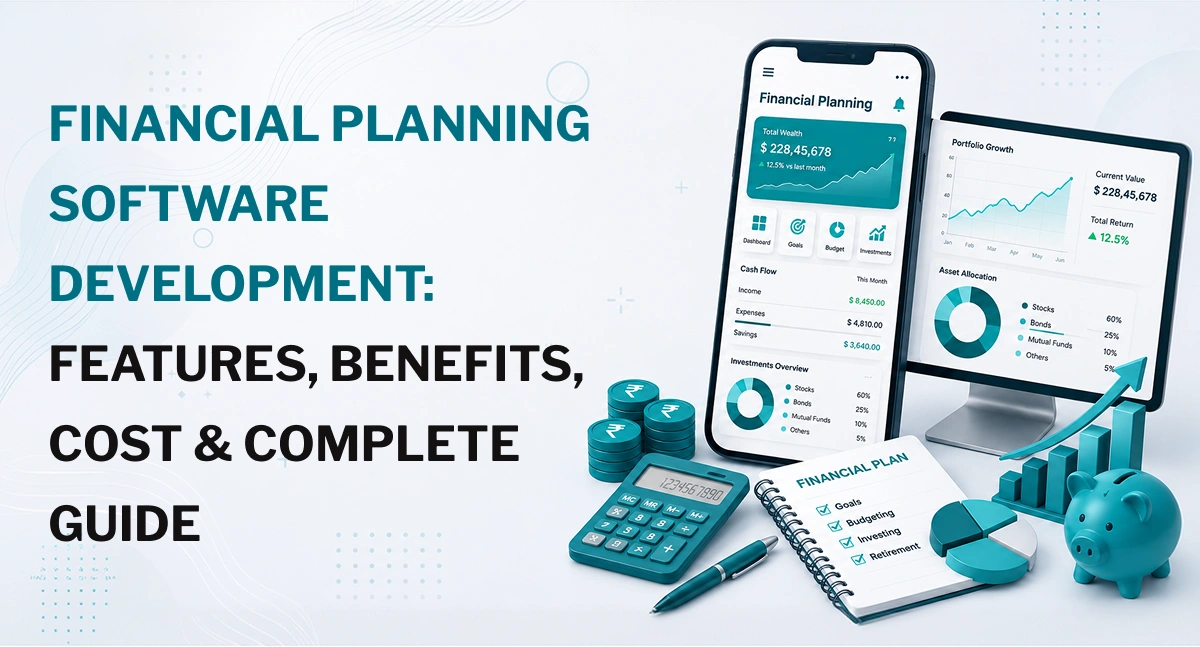
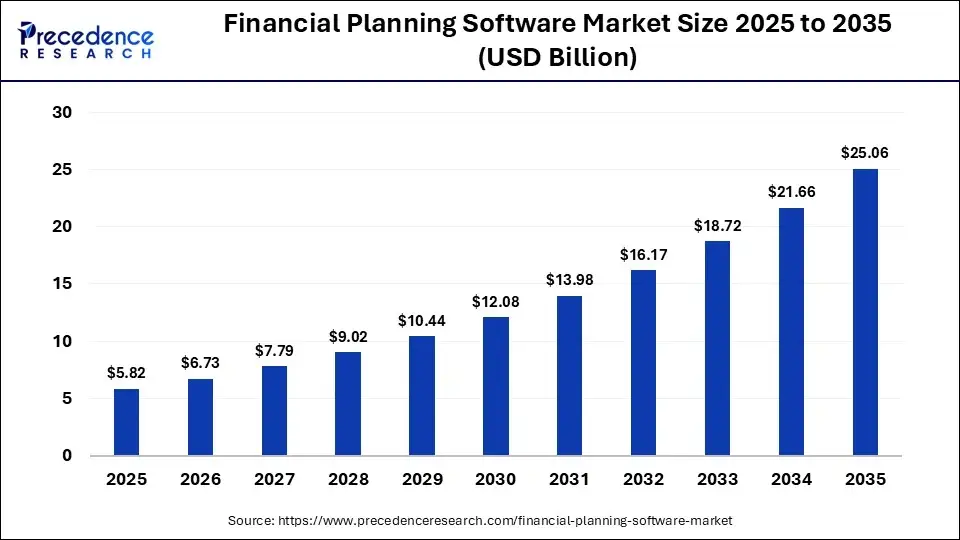
Financial planning is becoming increasingly digital as advisory firms, banks, wealth managers, and businesses move away from spreadsheets and disconnected tools. According to Precedence Research, the global financial planning software market was valued at USD 5.82 billion in 2025 and is projected to reach USD 25.06 billion by 2035, growing at a 15.72% CAGR. The demand is being driven by cloud-based platforms, AI-powered insights, and the need for more accurate financial forecasting.
Whether you're creating a retirement planning tool, a goal-based wealth management platform, or enterprise FP&A software, building the right solution starts with understanding exactly what type of product you need. A simple financial planning application that models future savings has very different technical, compliance, and integration requirements than a platform that connects to investment accounts, provides portfolio recommendations, or supports financial advisors with AI-powered planning.
Development costs also vary considerably. A focused financial planning application may cost around $5,000 to 10,000+, while a comprehensive advisor platform with account aggregation, scenario modeling, AI capabilities, and enterprise integrations can exceed $25,000+. The biggest factors influencing cost are the platform's functionality, integration requirements, security standards, and regulatory obligations.
What Is Financial Planning Software?
Financial planning software models a person's or a business's financial future. It projects retirement income, tests what happens if someone retires five years early, calculates whether a college savings goal is on track, or forecasts a company's cash position six quarters out. That's a different job than tracking what already happened.
This is the point where a lot of confusion creeps in, because "financial planning app" and "personal finance app" get used almost interchangeably in casual conversation, and they shouldn't be. A budgeting app answers "where did my money go last month." Financial planning software answers "where will my money be in twenty years, and what happens if I change one variable." If you're weighing that distinction for your own product, our breakdown of personal finance app development covers the consumer-facing budgeting and net-worth-tracking side of this world in detail, which is a genuinely different build than what this article covers.
The people who actually use financial planning software split into two groups. Independent financial advisors and RIAs (registered investment advisors) use it to build plans for clients and produce the reports clients see in meetings. Corporate finance teams use a related but distinct category, often called FP&A software, to budget, forecast, and model scenarios for the business itself rather than for individual clients. Both fall under the same broad market category, but the feature sets diverge quickly once you get past the basics.
Types of Financial Planning Software You Can Build
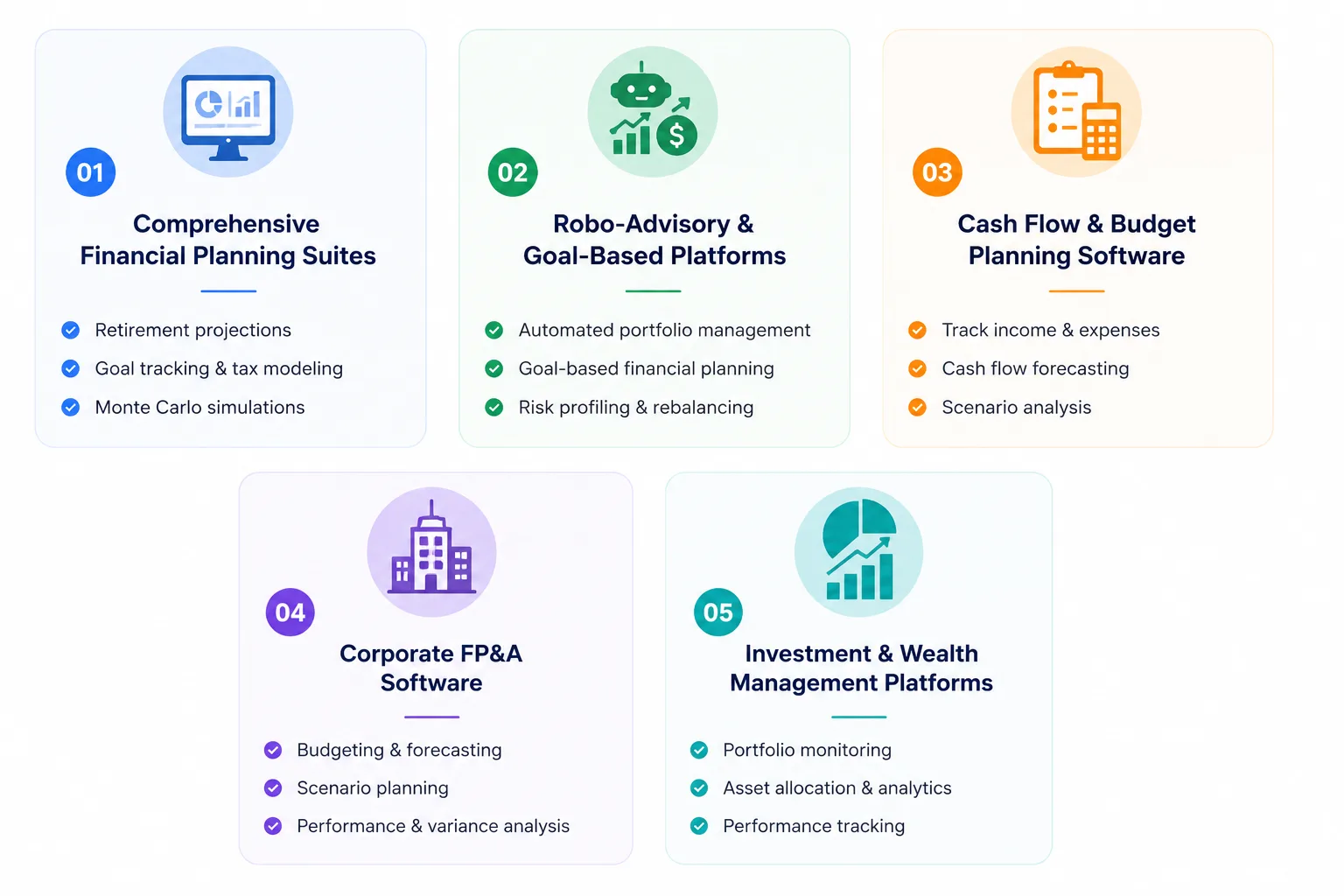
Comprehensive Financial Planning Suites
This is the category most people picture when they hear the term, the kind of tool built in the mold of established players like eMoney Advisor or MoneyGuidePro. These suites pull together retirement projections, goal tracking, tax modeling, and Monte Carlo simulations into one platform an advisor uses across every client relationship. They're the most feature-heavy and the most expensive to build well, mostly because the modeling engine underneath has to handle dozens of interacting variables without falling apart under edge cases.
Robo-Advisory and Goal-Based Planning Platforms
These combine planning logic with actual portfolio management, sometimes cutting the human advisor out of the loop entirely for lower-balance clients. A user sets a goal, answers a risk questionnaire, and the platform both builds a plan and manages the underlying investments to hit it. This is where the regulatory conversation gets serious fast, since automated investment recommendations edge into territory that needs proper advisory registration. Teams building in this space should look closely at what a dedicated portfolio management system actually requires before assuming a planning tool can absorb that functionality as an add-on.
Cash Flow & Budget Planning Software
Cash flow and budget planning software helps individuals and businesses track income, expenses, savings, and future financial commitments. By forecasting cash flow and comparing different financial scenarios, users can identify potential shortfalls, improve budgeting decisions, and maintain healthier financial performance. These platforms are commonly used by businesses, financial advisors, and individuals looking to plan beyond day-to-day expense tracking.
Corporate FP&A Software
Budgeting, forecasting, and scenario planning built for a business rather than an individual client. This segment actually holds the largest share of the financial planning software market by functionality, since every mid-size and large company needs some version of this whether they buy an off-the-shelf tool or build one around their own reporting structure. The core logic overlaps with consumer-facing planning tools less than you'd expect; it's driven by general ledger data, department-level budgets, and rolling forecasts rather than personal goals.
Investment & Wealth Management Platforms
Investment and wealth management platforms help financial advisors and wealth management firms monitor portfolios, evaluate asset allocation, track investment performance, and support long-term financial planning. Many modern platforms also incorporate AI-powered insights, portfolio analytics, risk assessments, and account aggregation to provide more informed investment guidance while improving client engagement.
Core Features Every Financial Planning Platform Needs
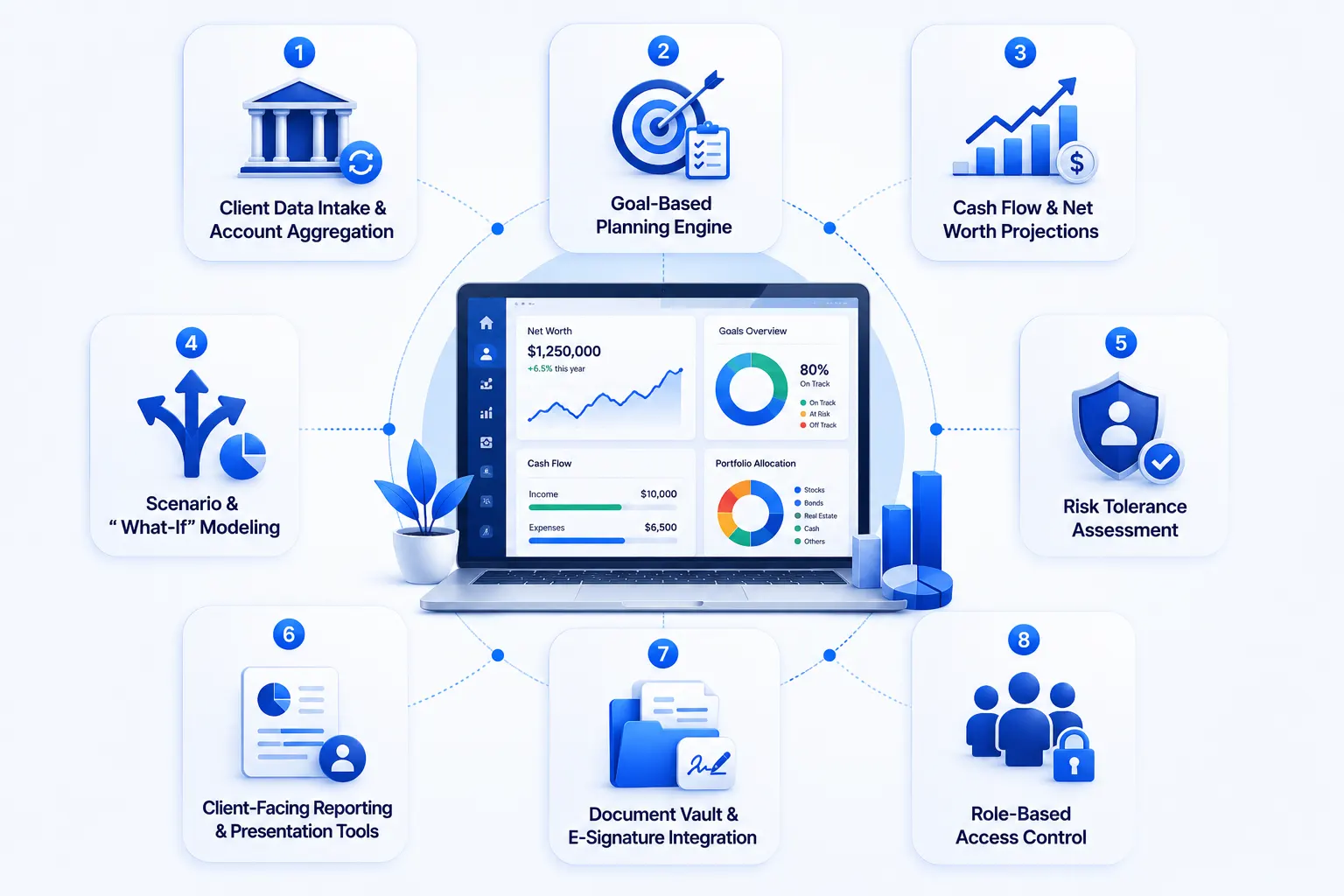
These are the features a platform needs before it's usable in a real advisor workflow or a real finance department. Skip one and the tool feels half-built next to what advisors already have access to.
- Client data intake and account aggregation. Pulling balances, holdings, and transaction history from linked accounts rather than requiring an advisor to enter everything by hand during an onboarding meeting.
- Goal-based planning engine. Retirement age, college funding, home purchase, and other goals modeled against income, savings rate, and expected returns, with the ability to update one variable and see the ripple effect on everything else.
- Cash flow and net worth projections. Multi-year and multi-decade views showing how income, expenses, assets, and liabilities evolve, not just a single point-in-time snapshot.
- Scenario and "what-if" modeling. The actual value of financial planning software over a static spreadsheet: run a scenario, compare it side by side against the baseline plan, and let the client see the tradeoff visually rather than describing it verbally.
- Risk tolerance assessment. A structured questionnaire that feeds directly into the planning assumptions and investment recommendations rather than sitting as a disconnected PDF in a client file.
- Client-facing reporting and presentation tools. Advisors live and die by how a plan looks in a client meeting. Clean, exportable reports that translate complex modeling into something a non-financial person can actually follow matter as much as the modeling accuracy underneath. Getting that balance right is a real design problem, and it's the kind of work our UI/UX design team spends a lot of time on with fintech clients, since burying good modeling under a cluttered interface undoes most of its value.
- Document vault and e-signature integration. Plans, disclosures, and client agreements need a secure home, and most advisory workflows now expect e-signature built in rather than handled through a separate tool.
- Role-based access control. Advisors, para-planners, compliance staff, and clients each need different views into the same underlying plan data, and getting the permission structure wrong early is expensive to fix later.
Planning a Financial Planning Software Platform?
The features you choose today determine how scalable, secure, and competitive your platform will be tomorrow. Whether you're building software for financial advisors, wealth managers, banks, or enterprise finance teams, our experts can help you define the right feature set from the very beginning.
Discuss Your Project With Us
Advanced and AI-Driven Features That Actually Differentiate a Platform
This is where a planning tool stops looking like a modernized spreadsheet and starts looking like something an advisory firm would switch to from an established competitor.
AI-generated plain-language insights are the biggest shift happening in this category right now. Instead of showing an advisor a chart and expecting them to translate it for a client, the platform surfaces the observation directly: "at the current savings rate, this client's plan has an 82% probability of success, down from 91% last quarter because of the market pullback." That kind of output sits well within a broader generative AI development practice, where the model is trained around a specific plan's actual data rather than generating generic financial commentary.
Conversational interfaces are close behind. An advisor typing "what happens to Sarah's plan if she retires at 60 instead of 65" and getting an instant answer, instead of manually rerunning a scenario, saves real time across a book of a hundred-plus clients. This kind of feature usually gets built on top of an LLM integrations layer, where a language model interprets the request and calls the actual planning engine rather than guessing at an answer.
Autonomous monitoring is the newer frontier. Rather than an advisor manually checking every client plan for drift, an agentic AI solution can continuously watch for meaningful changes, a large account withdrawal, a market move that pushes a plan's success probability below a threshold, and flag it before the next scheduled review. This is still early in adoption industry-wide, but it's the direction the category is heading, and firms that get there first tend to hold onto clients longer simply because problems get caught before a client notices them.
Predictive shortfall modeling, automated rebalancing suggestions tied to plan outputs, and OCR-based statement parsing for faster onboarding round out the list of features that meaningfully separate a modern platform from a legacy one. None of these are strictly necessary for a first version, but they're worth designing the data architecture around from the start, since retrofitting AI features onto a rigid planning engine later is consistently harder than building with room for them from day one.
Where Compliance and Regulation Actually Apply
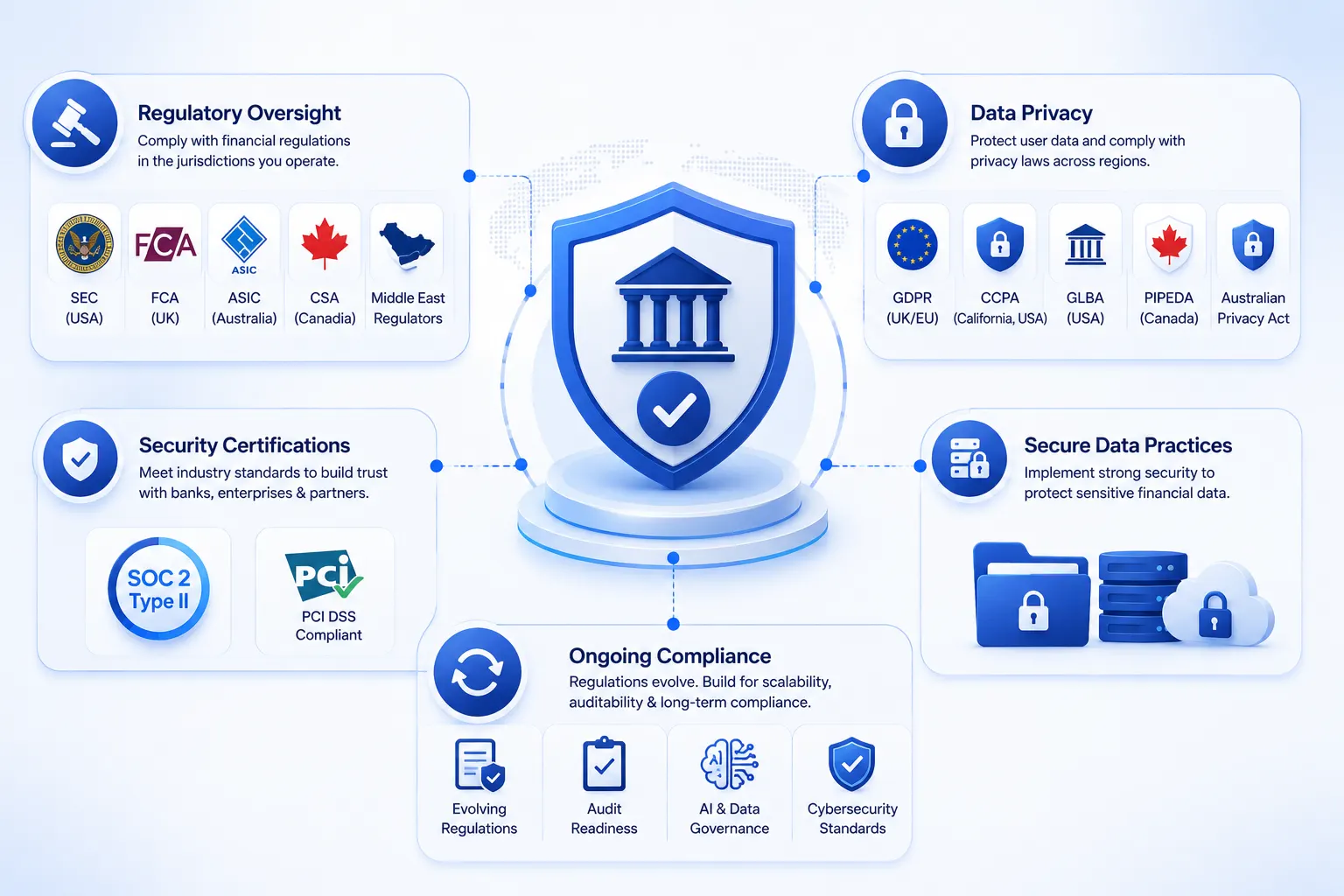
Compliance requirements for financial planning software depend on what the platform does, where it operates, and the jurisdictions it serves. A planning tool that models financial scenarios without executing trades or managing investments generally has fewer regulatory obligations than a platform that provides investment advice, manages portfolios, or facilitates financial transactions.
If your software offers investment recommendations or discretionary portfolio management, it may need to comply with financial regulations applicable to your target market. For example, this could include oversight from the U.S. Securities and Exchange Commission (SEC), the Financial Conduct Authority (FCA) in the UK, the Australian Securities and Investments Commission (ASIC), the Canadian Securities Administrators (CSA), or the relevant financial regulators across the Middle East. Understanding these requirements early helps avoid costly compliance issues later in the development process.
Data privacy is equally important. Financial planning platforms typically handle highly sensitive personal and financial information, making strong data protection practices essential. Depending on where your users are located, your software may need to comply with regulations such as GDPR (UK/EU), CCPA (California, USA), GLBA (USA), PIPEDA (Canada), the Australian Privacy Act, or regional privacy frameworks in the Middle East. Building privacy and security into the platform from the beginning is significantly easier than retrofitting compliance after launch.
Security certifications are another key consideration. While standards such as SOC 2 Type II are not legal requirements in most jurisdictions, enterprise financial institutions, banks, custodians, and technology partners often expect them before integrating with a platform. If your application processes payment information, complying with PCI DSS is also essential for protecting cardholder data and maintaining customer trust.
Finally, regulatory compliance is not a one-time activity. Financial regulations continue to evolve, particularly around AI, data privacy, cybersecurity, and digital financial services. Designing your software with scalability, auditability, and compliance in mind helps ensure it can adapt as regulatory expectations change across different markets.
Ready to Build AI-Powered Financial Planning Software?
From AI-generated financial insights and scenario modeling to intelligent client assistants and predictive analytics, we develop secure financial planning platforms with advanced AI capabilities that improve decision-making and enhance user experiences.
Talk to Our AI Experts
Tech Stack for Financial Planning Software Development
Frontend. Advisor dashboards and client portals both benefit from a framework built for fast, data-heavy interfaces. Next.js handles this well for a browser-based experience, giving clean routing and strong performance for pages loaded with charts, projections, and plan comparisons.
Backend and modeling engine. Node.js tends to handle real-time data sync and notification delivery efficiently, given how well it handles concurrent, event-driven work. The actual planning and simulation logic, running Monte Carlo scenarios or forecasting models, usually fits better in Python , since most of the mature statistical and machine learning tooling in this space lives in the Python ecosystem rather than anywhere else.
Integrations. Custodian APIs for account data, CRM integrations with tools advisors already use like Redtail or Wealthbox, and market data feeds for real-time pricing all need to be planned during architecture, not bolted on after the core product ships.
Infrastructure and security. Cloud hosting on AWS, GCP, or Azure, with encryption at rest and in transit as a baseline rather than an upgrade. A solid DevOps setup with automated security scanning and a real CI/CD pipeline matters more here than in a typical SaaS product, given how much scrutiny financial platforms face from enterprise buyers before they'll sign a contract.
The Development Process, Step by Step
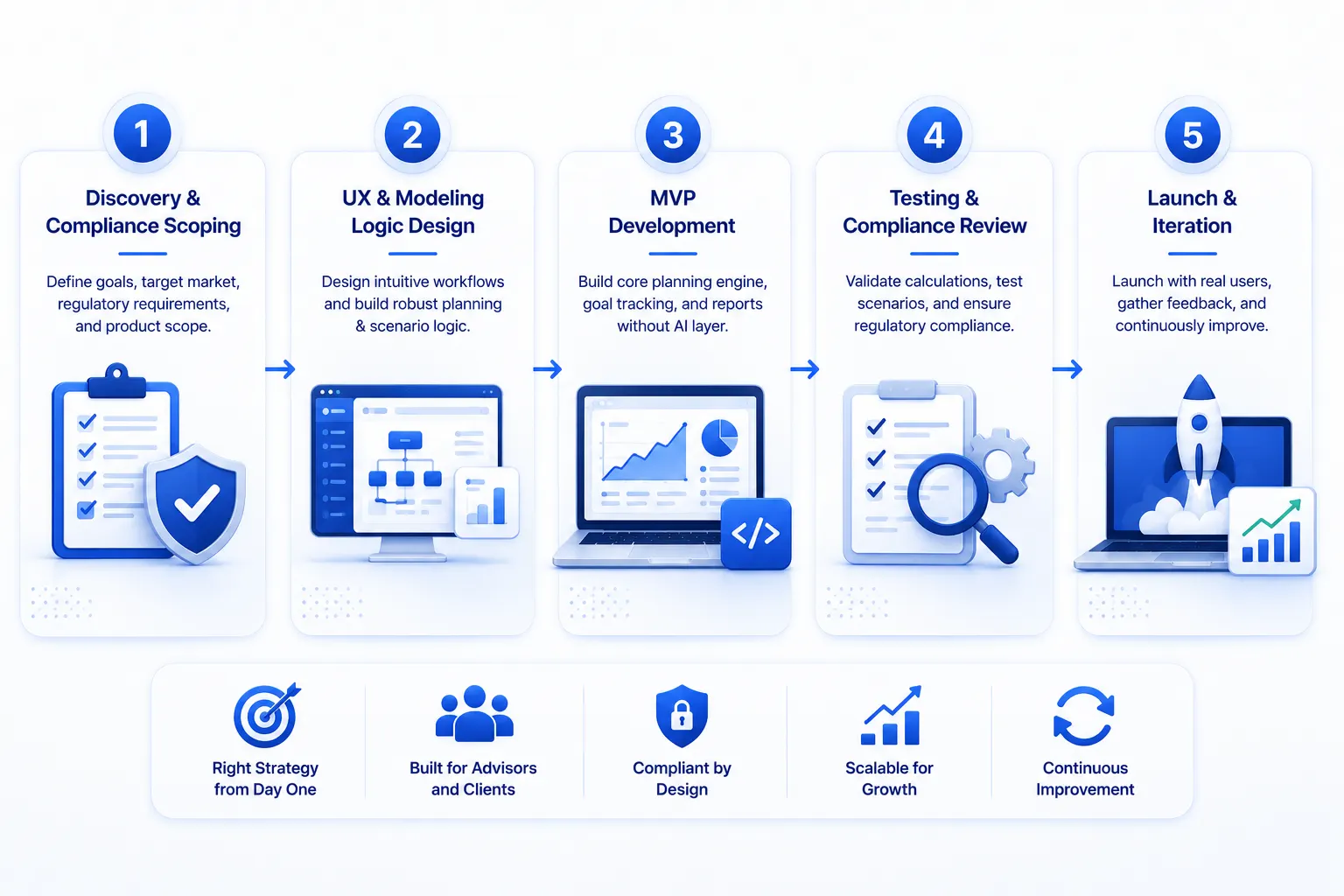
Discovery and compliance scoping comes first, and it's where the planning-only versus execution-enabled decision actually gets made, along with target market (independent advisors, RIAs, banks, or corporate finance teams). Getting this wrong early is the single most common source of scope creep later in the project.
UX and modeling logic design takes longer than most teams expect. The interface is the visible part, but the actual projection and scenario engine underneath, the part that has to handle edge cases like negative cash flow years, irregular income, or overlapping goals, is where most of the real engineering effort goes.
MVP development should cover the planning engine, basic goal tracking, and client-facing reporting, without the AI layer. Advanced features are worth holding back until real advisor usage shows which ones are actually worth the investment, rather than guessing upfront.
Testing and compliance review needs to validate the modeling math against known scenarios, not just check that the interface renders correctly. A planning tool that's off by a percentage point on a retirement projection is a trust problem, not a minor bug.
Launch and iteration should include a maintenance budget from day one, since integrations with custodians and CRMs change on their own timelines regardless of your release schedule. Teams scoping something broader than a single tool, a full platform meant to support multiple advisor workflows or a multi-tenant product for several firms, are usually better served thinking about it through a custom software development lens from the start rather than treating it as an extension of a simpler build.
How Much Does Financial Planning Software Cost
Costs vary widely based on modeling complexity, integration depth, and whether the platform touches actual client accounts or investment execution.
| Platform Type | MVP Cost | Full Platform |
| Single-purpose planning tool (retirement or tax calculator) | $5,000 – $10,000 | $10,000 – $15,000 |
| Goal-based planning tool with account aggregation | $10,000 – $20,000 | $20,000 – $30,000 |
| Comprehensive advisor planning suite | $20,000 – $30,000 | $30,000 – $50,000+ |
| Robo-advisory platform with execution capability | $30,000 – $40,000 | $40,000 – $60,000+ |
| Corporate FP&A platform | $40,000 – $60,000 | $60,000 – $80,000+ |
The main cost drivers are the depth of the modeling engine, the number of third-party integrations (custodians, CRMs, market data providers), how much compliance and legal review the project needs, and whether the platform generates specific recommendations versus just displaying projections.
Plan for ongoing maintenance around 15 to 20% of the original build cost annually. Custodian and CRM APIs change, market data feeds get updated, and security patching in a category handling this much sensitive financial data never really stops. If you're weighing whether this is better built as a licensed product across multiple advisory firms rather than a single internal tool, that decision shapes both the architecture and the pricing model, and it's worth thinking through a SaaS product development lens early rather than after the first version is already live.
Get a Cost Estimate for Your Financial Planning Software
Every financial planning platform has unique requirements. Whether you're building an MVP, advisor portal, robo-advisory platform, or enterprise FP&A solution, we'll help you estimate development costs, timelines, technology stack, and the best approach for your project.
Request a Free Estimate
Benefits of Investing in Custom Financial Planning Software
Off-the-shelf platforms like eMoney or MoneyGuidePro dominate the advisor market for a reason. They work, and they're already built. But firms and product teams that go custom usually do it for specific reasons that a licensed tool can't solve.
Custom software gives a firm full ownership of client data and modeling logic, rather than depending on a vendor's roadmap for the integrations or features a specific client base actually needs. It allows differentiation in a market where every advisor at a competing firm is using the exact same licensed tool with the exact same client-facing reports. It also tends to produce better integration flexibility, since a custom build can connect to exactly the CRM, custodian, and data provider a firm already uses instead of working around whatever a licensed platform happens to support.
For firms with a specific niche, planning built for physicians, planning built for business owners selling a company, planning built for a particular retirement income strategy, a custom tool can bake that specialization directly into the modeling assumptions in a way generic software never will.
Monetization Models Worth Considering
If the goal is building this as a product rather than internal tooling for a single firm, a few models tend to work well in this category:
Per-advisor or per-seat SaaS licensing is the most common approach, priced monthly or annually per advisor using the platform. Tiered subscriptions separate basic planning functionality from advanced AI insights and multi-scenario modeling, letting smaller firms in at a lower price point while capturing more revenue from firms that want the full feature set. White-label licensing to banks or larger RIAs works well for steady, predictable revenue, since it's sold in bulk rather than one advisor at a time. Enterprise licensing for large wealth management firms, often bundled with custom integrations and dedicated support, tends to be the highest-value but longest-sales-cycle option.
Common Mistakes That Derail Financial Planning Software Projects
Teams building in this category tend to trip over a specific, recurring set of mistakes.
Underestimating the modeling engine is the most frequent one. It's easy to scope the interface and forget that the actual projection logic, handling irregular income, multiple overlapping goals, and edge-case tax situations, is where most of the engineering time actually goes.
Treating compliance as a later-stage concern instead of a discovery-phase decision consistently costs more to fix than it would have cost to plan for correctly the first time. Retrofitting SOC 2 controls or clarifying advisory registration status after a platform is already live and in front of clients is a genuinely expensive correction.
Overloading advisors and clients with raw data instead of clear, actionable output undermines the entire point of the software. A plan that shows fifteen charts without a clear takeaway isn't more useful than a spreadsheet, it's just a worse-organized spreadsheet.
Skipping CRM and custodian integration planning until late in the build tends to surface painful surprises, since every custodian's API behaves a little differently and that discovery work needs to happen early, not during a launch sprint.
And building AI-driven recommendation features without a clear answer on fiduciary responsibility is a mistake that doesn't show up until it matters most, usually after a client acts on a recommendation the platform generated and something goes wrong.
Getting the Foundation Right
The decision framework that opens this article holds all the way through a project: planning-only versus execution-enabled, advisor-facing versus corporate FP&A, and licensed versus custom. Get those calls right during discovery, and the rest of the build, the tech stack, the compliance posture, and the final cost, tends to follow logically from there rather than getting decided by accident halfway through development.
At Nyusoft Solutions, we've worked through this exact set of decisions with fintech clients building planning tools, portfolio platforms, and lending products from the ground up. Our fintech app development team has scoped and built projects across this space, and if you're weighing your own financial planning software build, that's a solid place to start the conversation.
FAQs
1. What is financial planning software?
Financial planning software helps individuals, financial advisors, and businesses forecast future financial outcomes based on income, expenses, savings, investments, and long-term goals. Unlike budgeting apps that track past spending, financial planning software focuses on creating projections and helping users make informed financial decisions.
2. What features should financial planning software include?
A modern financial planning platform should include goal-based planning, cash flow forecasting, scenario modeling, account aggregation, client reporting, document management, role-based access controls, and secure integrations. Advanced platforms may also include AI-powered insights, predictive analytics, and automated portfolio recommendations.
3. How much does it cost to develop financial planning software?
The cost of developing financial planning software typically ranges from $5,000 to $50,000+, depending on the platform's complexity, AI capabilities, third-party integrations, compliance requirements, and overall functionality. A simple retirement planning tool costs significantly less than an enterprise-grade advisor platform with portfolio management and real-time financial data integrations.
4. How long does it take to develop financial planning software?
The development timeline depends on the project's scope and feature set. A basic MVP can often be completed in 2 to 6 months, while a comprehensive financial planning platform with advanced integrations, AI capabilities, and compliance features may take 9 to 12 months or longer to develop.
5. Can AI improve financial planning software?
Yes. AI enhances financial planning software by generating personalized financial insights, forecasting future cash flow, automating scenario analysis, identifying investment opportunities, and improving customer engagement through conversational assistants. AI can also help advisors monitor client portfolios and detect financial risks more proactively.
6. Is financial planning software different from personal finance software?
Yes. Personal finance software primarily helps users manage day-to-day budgeting, expenses, and savings, while financial planning software focuses on long-term financial forecasting, retirement planning, investment strategies, tax planning, and scenario analysis. Financial planning platforms are typically designed for financial advisors, wealth managers, businesses, or individuals with more complex financial planning needs.
7. What technologies are commonly used to build financial planning software?
Financial planning software is commonly built using modern technologies such as Next.js or React for the frontend, Node.js or Python for the backend, PostgreSQL or MySQL for databases, and cloud platforms like AWS, Microsoft Azure, or Google Cloud. AI-powered platforms may also integrate machine learning frameworks and large language models for advanced financial analysis.
8. What compliance requirements should financial planning software meet?
Financial planning software should be designed to meet the security, privacy, and financial regulations of the markets it serves. Depending on your target region, this may include GDPR (UK/EU), CCPA (California, USA), GLBA (USA), PIPEDA (Canada), the Australian Privacy Act, PCI DSS for payment security, SOC 2 Type II, and regional financial regulations in the Middle East. Building compliance into the platform from the start helps reduce legal risks, protect sensitive financial data, and simplify future expansion into new markets.
9. Should I build custom financial planning software or buy an existing solution?
The right choice depends on your business objectives. Off-the-shelf software is often suitable for organizations with standard workflows and limited customization needs. Custom financial planning software provides greater flexibility, ownership, scalability, and integration options, making it a better choice for businesses with unique requirements or long-term product strategies.
Build Secure & Scalable Financial Planning Software with Nyusoft
Creating financial planning software requires more than great features. It demands secure architecture, regulatory compliance, scalable infrastructure, seamless integrations, and an exceptional user experience. We develop custom financial planning solutions tailored to the needs of financial advisors, wealth management firms, fintech startups, banks, and enterprises across the USA, UK, Canada, Australia, the Middle East, and other global markets. Whether you're building a planning tool from scratch or modernizing an existing platform, our team can help you bring your vision to life.
Let's Build Your Platform