


 Front End Development
  Back End Development
  CMS / ECommerce Development
  Mobile Apps Development
  Cloud Services
  Fullstack Services
  Solution


AI in FinTech: Applications, Benefits, Challenges & Industry Examples
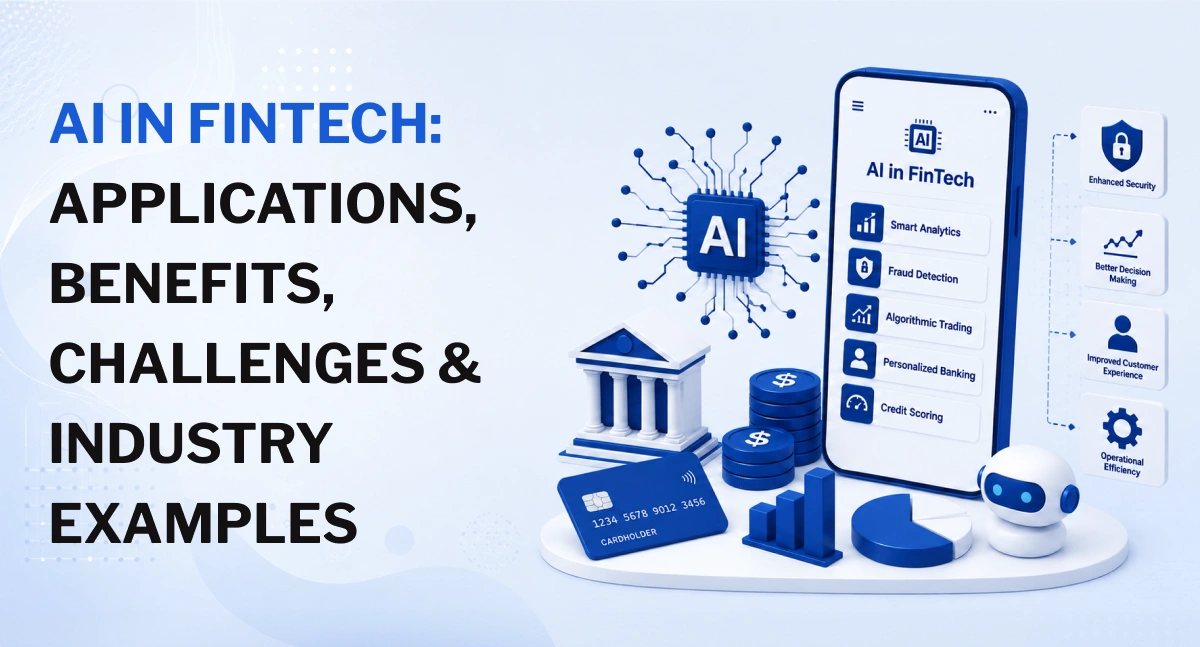
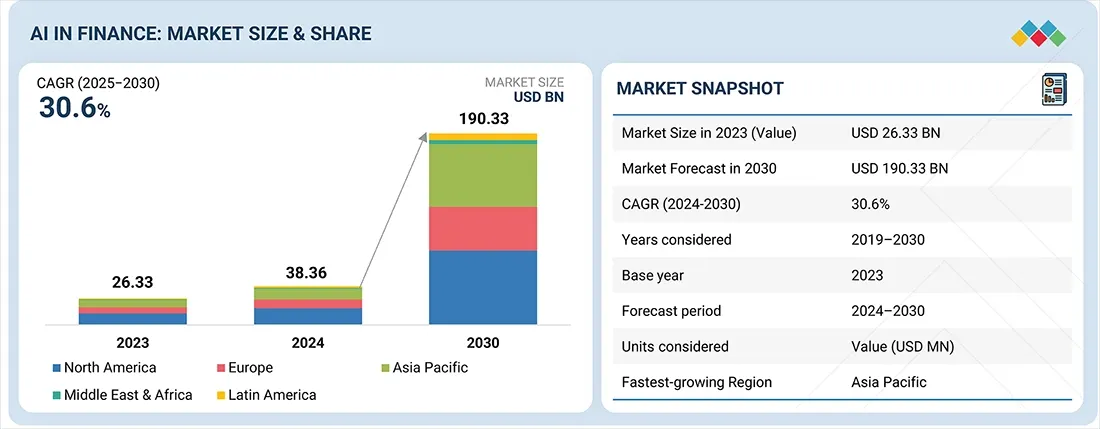
Artificial intelligence is no longer an emerging technology in financial services; it is becoming a core part of how modern FinTech products operate. The AI in Finance market is projected to grow from $38.36 billion in 2024 to $190.33 billion by 2030, according to MarketsandMarkets, representing a 30.6% compound annual growth rate. Whether it's detecting fraudulent transactions, approving loan applications, managing investment portfolios, or assisting customers through virtual banking, AI is helping financial institutions make faster decisions while improving efficiency and customer experiences.
The growing adoption of AI isn't simply about automation. Financial organizations are using intelligent systems to analyze massive volumes of structured data, identify patterns that humans might overlook, strengthen security, and deliver highly personalized financial services. As customer expectations continue to rise and regulations become more demanding, AI is helping fintech companies stay competitive without compromising compliance or operational reliability.
However, implementing AI successfully requires much more than deploying machine learning models. FinTech organizations, banks, lenders, payment providers, and other financial businesses need high-quality data, strong security measures, regulatory compliance, and continuous model monitoring to ensure AI systems deliver accurate, reliable, and trustworthy results.
This guide explores how AI is transforming the fintech industry, the technologies behind it, its most valuable applications, real-world examples, business benefits, implementation challenges, and the future of AI-driven financial products.
What AI in FinTech Actually Means
Artificial intelligence in fintech refers to the use of intelligent technologies that help financial applications automate tasks, analyze data, identify patterns, and support better business decisions. Rather than replacing financial professionals, AI enhances their ability to process information quickly and make more informed decisions.
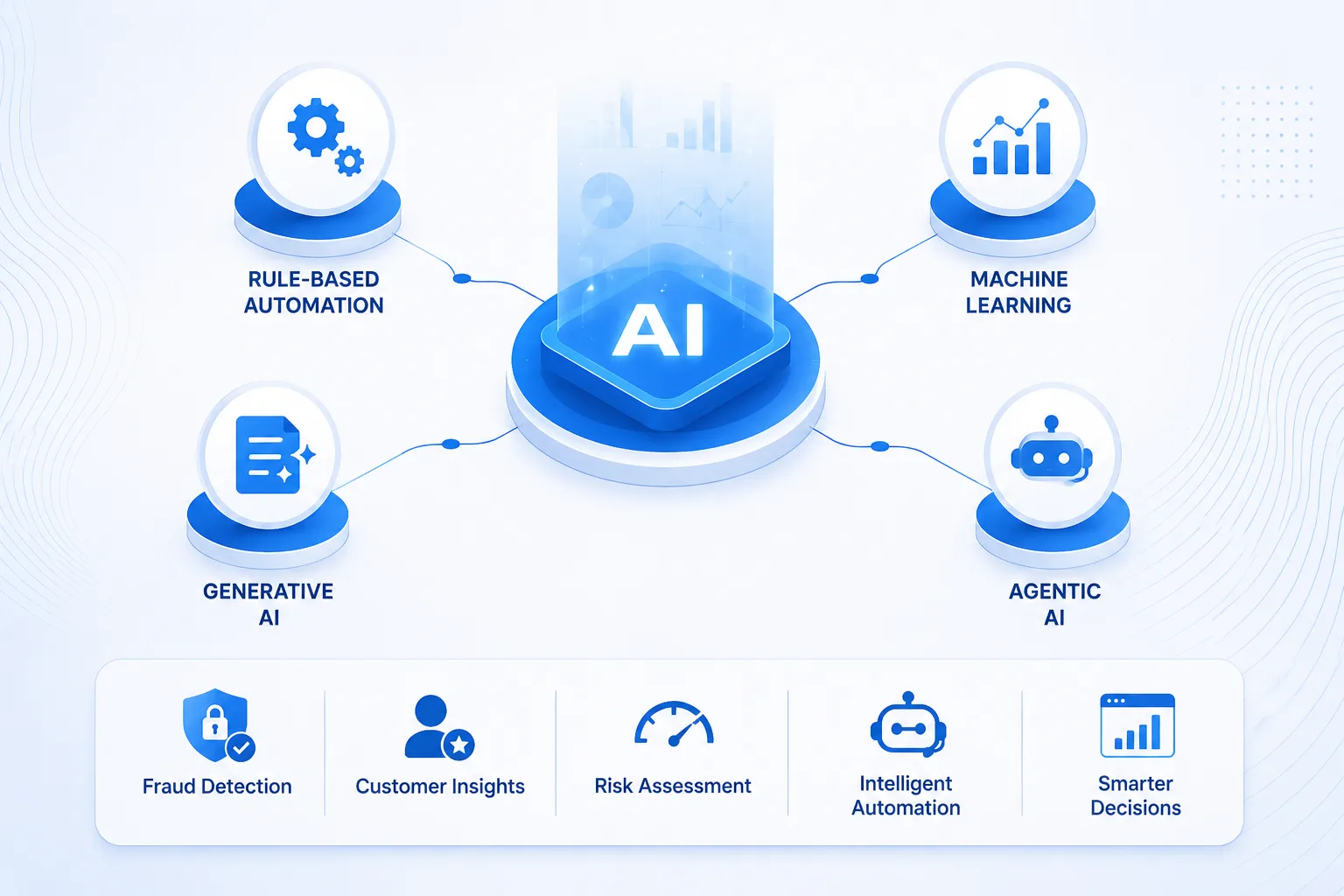
Several AI technologies work together across modern financial platforms, each serving a different purpose.
Traditional rule-based automation follows predefined instructions. It is effective for repetitive processes such as sending transaction alerts or verifying payment limits but cannot adapt to changing circumstances.
Machine learning builds on automation by learning from historical data. Instead of relying on fixed rules, these models continuously improve their ability to recognize fraud, predict customer behavior, assess lending risk, and detect unusual financial activities.
Generative AI focuses on creating content rather than identifying patterns. Financial institutions use it to draft compliance reports, summarize financial documents, assist customer support teams, and generate operational insights that reduce manual workloads.
The newest development is agentic AI, which goes beyond recommendations by performing approved actions. Instead of simply identifying a suspicious payment, an AI agent can temporarily freeze a payment card, notify the customer, begin a fraud investigation, and trigger the replacement process automatically within predefined business rules.
These technologies work particularly well in financial services because every payment, fund transfer, account login, investment transaction, and customer interaction generates structured data that AI systems can analyze continuously.
AI Technologies Used in FinTech
| AI Technology | Purpose | FinTech Example |
| Rule-Based Automation | Executes predefined business rules | Payment verification, transaction alerts |
| Machine Learning | Learns from historical data | Fraud detection, lending decisions, risk assessment |
| Generative AI | Creates content and summaries | Compliance documentation, customer support |
| Agentic AI | Makes decisions and performs approved actions | Automated fraud response, card replacement workflows |
Each technology solves different business challenges, and many fintech platforms combine multiple AI approaches to improve operational efficiency.
Looking to Build AI Features Into Your FinTech Product?
From fraud detection and lending automation to AI-powered wealth management and intelligent customer support, the right AI strategy can improve security, streamline operations, and create better customer experiences. Whether you're building a new fintech platform or modernizing an existing one, our experts can help you choose the right AI technologies for your business goals.
Talk to Our FinTech Experts
AI Adoption in FinTech: Key Statistics
Artificial intelligence is becoming a core technology across banking, payments, lending, wealth management, and insurance. The following statistics show how financial institutions are adopting AI to improve efficiency, strengthen security, and deliver better customer experiences.
- The global AI in Finance market is projected to grow from $38.36 billion in 2024 to $190.33 billion by 2030, reflecting the increasing investment in AI-powered financial solutions.
- More than four out of five financial services organizations now use AI in at least one business function.
- More than half of financial institutions are already exploring or testing agentic AI systems capable of performing approved operational tasks.
- 65% of financial services organizations reported actively deploying or using AI in 2025, with capital markets firms leading adoption.
- Mastercard uses AI to analyze billions of payment transactions, helping detect fraud while reducing false declines.
- Bank of America's Erica has surpassed 2.5 billion customer interactions since launch and is now used by approximately 20 million clients.
- JPMorgan Chase's COiN platform reviews complex legal documents using natural language processing, saving thousands of hours of manual work each year.
- More than 60% of financial services firms now actively use generative AI, highlighting its growing role in customer service, operations, compliance, and financial analysis.
These statistics show that AI has become an integral part of modern financial services rather than an experimental technology. Financial institutions are investing in AI to automate operations, improve fraud detection, accelerate lending decisions, strengthen compliance, and deliver more personalized customer experiences at scale.
Key Applications of AI in FinTech
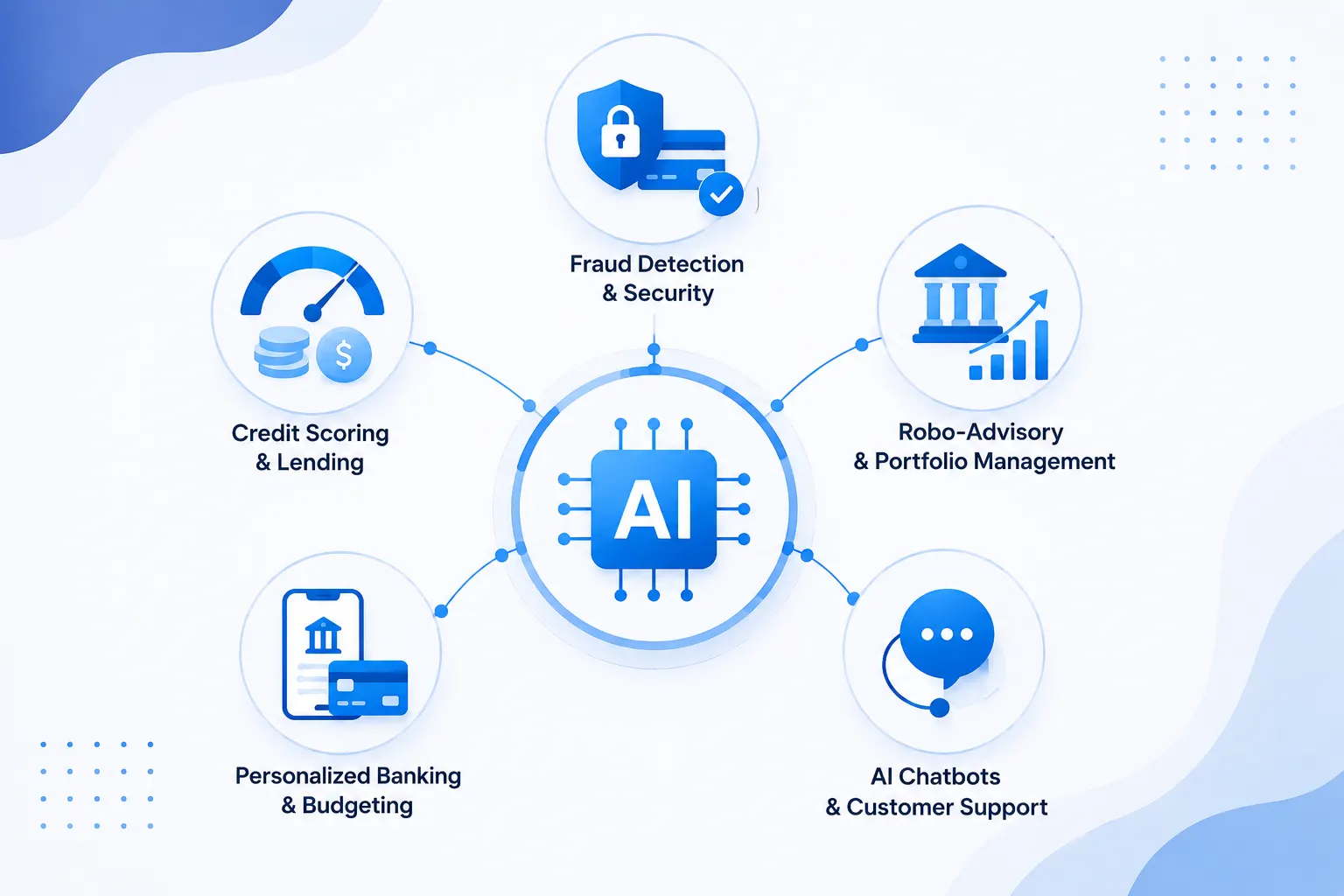
AI delivers measurable value because it solves practical business problems rather than acting as a standalone technology. Today, financial institutions use AI across nearly every stage of the customer journey.
Fraud Detection and Transaction Security
Fraud detection remains one of the most mature and valuable applications of artificial intelligence in fintech.
Traditional fraud prevention systems rely on predefined rules. While effective for known fraud patterns, they often generate false positives by blocking legitimate transactions and struggle to identify sophisticated attack methods.
Machine learning models evaluate hundreds of signals during every transaction, including customer behavior, device fingerprinting, transaction history, spending habits, geographic location, IP addresses, and purchase timing. These models continuously adapt as new fraud patterns emerge, allowing financial institutions to identify suspicious activities more accurately while reducing unnecessary transaction declines.
For organizations building payment platforms, digital wallets, or banking applications, strengthening digital payment and wallet security is often the highest-impact starting point before expanding AI capabilities into other areas.
Credit Scoring and Lending Decisions
Traditional credit scoring models primarily depend on credit bureau history, making it difficult for individuals with limited credit records to qualify for loans despite demonstrating responsible financial behavior.
AI-powered lending systems evaluate a much broader range of financial indicators, including:
- Cash flow
- Income consistency
- Utility payment history
- Rental payments
- Banking activity
- Employment stability
This broader perspective enables lenders to make more accurate lending decisions while expanding financial access to customers who may have been overlooked by conventional credit scoring systems.
These capabilities are becoming increasingly common in modern AI-powered instant loan and micro-finance platforms, where automated underwriting helps accelerate loan approvals while maintaining responsible risk management.
Organizations planning to build lending ecosystems should also understand the essential components of a scalable P2P lending marketplace, where AI supports borrower verification, credit assessment, fraud prevention, and loan management throughout the lending lifecycle.
Robo-Advisory and Portfolio Management
AI has transformed wealth management by making investment advice accessible to a broader range of customers.
Instead of relying entirely on human financial advisors, AI-powered robo-advisors continuously analyze investment objectives, market conditions, portfolio performance, asset allocation, and customer risk tolerance to recommend or automatically rebalance investment portfolios.
This allows fintech companies to provide professional investment services while improving scalability and reducing operational costs.
Many investment platforms now incorporate these capabilities into AI-powered portfolio management platforms that offer intelligent portfolio recommendations, automated rebalancing, and real-time investment insights.
Personalized Banking and Budgeting
Modern customers expect financial services to understand their needs rather than simply record transactions. Artificial intelligence enables banks and fintech companies to deliver highly personalized experiences by analyzing customer behavior, spending habits, savings patterns, and financial goals.
Instead of offering generic financial advice, AI identifies meaningful insights from everyday transactions. For example, it can detect recurring subscriptions that have increased over time, notify customers about unusual spending, recommend savings opportunities, or predict potential cash-flow shortages before they become financial problems.
Personalization also improves customer engagement by delivering relevant product recommendations. Someone who consistently saves a portion of their monthly income may receive investment suggestions, while customers with irregular cash flow might be offered budgeting tools or short-term lending options based on their financial profile.
As AI models continue learning from customer interactions, financial recommendations become increasingly accurate and relevant, helping users make better financial decisions while strengthening long-term customer relationships.
AI Chatbots and Customer Support
Customer support is one of the earliest and most successful applications of AI in financial services. Banks and fintech companies receive thousands of routine customer inquiries every day, making AI-powered virtual assistants an effective way to improve response times while reducing operational costs.
Modern AI chatbots can assist customers with a wide range of everyday banking tasks, including:
- Checking account balances
- Viewing recent transactions
- Tracking payment status
- Managing debit and credit cards
- Resetting passwords
- Answering frequently asked questions
- Providing basic product information
Unlike traditional chatbots that rely on scripted responses, modern conversational AI understands customer intent and provides more natural interactions. It can also retrieve information from multiple systems to deliver faster and more accurate responses.
However, AI should not replace human support in every situation. Complex issues such as fraud disputes, loan negotiations, regulatory complaints, or emotionally sensitive financial matters still require experienced support professionals. The most effective customer service strategies combine AI automation with seamless escalation to human agents whenever necessary.
Regulatory Compliance and Reporting
Financial services operate in one of the world's most heavily regulated industries. Maintaining compliance requires continuous monitoring, documentation, auditing, and reporting, all of which demand significant time and resources.
Artificial intelligence helps reduce this workload by automating repetitive compliance processes while improving accuracy and consistency. AI-powered compliance tools can support financial institutions in meeting payment security standards such as PCI DSS, data protection and privacy regulations including GDPR, UK GDPR, PIPEDA, CCPA, and the Australian Privacy Act, as well as financial regulations that apply to banking, lending, and payment businesses in different jurisdictions.
The specific compliance requirements depend on your products, services, and the markets where your organization operates.
Common AI applications include:
- Transaction monitoring
- Suspicious activity detection
- Regulatory reporting
- Audit documentation
- Risk assessments
- Internal compliance reviews
Instead of manually reviewing thousands of financial records, compliance teams can focus on high-risk transactions that require expert analysis. AI also standardizes documentation, reduces human error, and accelerates reporting while maintaining consistency across regulatory processes.
Although AI significantly improves efficiency, human oversight remains essential. Regulatory decisions often require human judgment, interpretation, and accountability, making AI a valuable support tool rather than a replacement for compliance professionals.
Agentic AI: The Next Evolution in FinTech
The financial industry is entering a new phase of AI adoption with the emergence of agentic AI.
Traditional AI systems analyze information and generate recommendations. Agentic AI goes one step further by carrying out approved actions autonomously within predefined business rules.
For example, if an AI system detects suspicious activity on a customer's account, it can:
- Temporarily block the payment card
- Notify the customer immediately
- Initiate a fraud investigation
- Generate the required compliance documentation
- Trigger the card replacement process
Instead of requiring multiple employees to complete these tasks individually, AI agents coordinate the workflow while maintaining audit trails and following organizational policies.
Beyond fraud prevention, agentic AI is expected to support customer onboarding, payment processing, loan servicing, operational workflows, compliance monitoring, and financial operations.
As financial institutions continue investing in AI governance and explainable decision-making, agentic AI will play an increasingly important role in improving operational efficiency while maintaining regulatory compliance.
Real Industry Examples
Many of today's leading financial institutions demonstrate how AI can create measurable business value when applied to specific operational challenges.
Mastercard uses AI-powered fraud detection models to analyze billions of payment transactions in real time. By evaluating customer behavior, transaction history, device information, and other risk indicators simultaneously, its AI systems help reduce fraudulent transactions while minimizing false declines that inconvenience legitimate customers.
JPMorgan Chase developed the COiN platform to review complex legal agreements using natural language processing. Tasks that previously required extensive manual effort can now be completed significantly faster, allowing legal teams to focus on higher-value work.
Upstart has shown how artificial intelligence can improve lending decisions by incorporating alternative financial data alongside traditional credit history. This approach enables lenders to evaluate a broader range of qualified borrowers while maintaining responsible risk management.
Bank of America uses its AI-powered virtual assistant, Erica, to help customers complete routine banking tasks such as checking balances, reviewing transactions, and managing accounts. By automating common requests, the bank improves customer experience while allowing human advisors to focus on more complex financial conversations.
These organizations demonstrate that successful AI adoption is not about implementing every available technology. Instead, it comes from identifying well-defined business problems where AI can deliver measurable improvements in efficiency, security, and customer experience.
Benefits of AI in FinTech
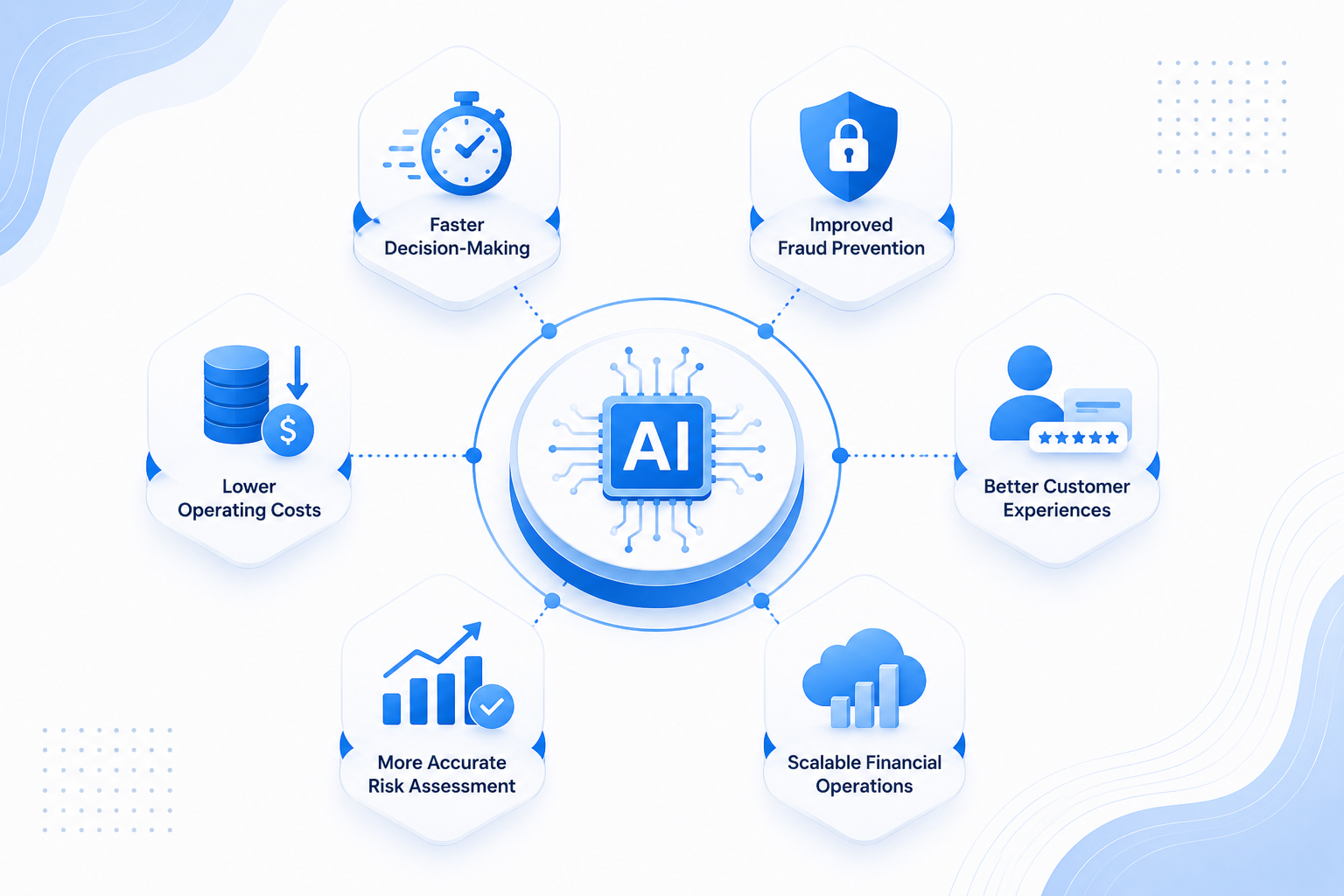
When implemented strategically, artificial intelligence delivers measurable improvements across nearly every area of financial services. While the specific outcomes vary depending on the business model, several benefits consistently emerge across banking, lending, payments, insurance, and investment platforms.
Faster Decision-Making
Financial decisions that once required hours or even days can now be completed in seconds. AI accelerates processes such as loan approvals, fraud detection, transaction monitoring, customer onboarding, and document verification by analyzing vast amounts of data in real time.
This speed not only improves operational efficiency but also enhances the customer experience by reducing waiting times.
Improved Fraud Prevention
Cybercriminals constantly develop new techniques to bypass traditional security systems. Unlike rule-based software, machine learning models continuously learn from new fraud patterns and adapt to evolving threats.
By analyzing customer behavior, transaction history, device information, and geographic patterns simultaneously, AI helps financial institutions detect suspicious activity more accurately while reducing false positives that disrupt legitimate customers.
Lower Operating Costs
Many financial processes involve repetitive manual work, from reviewing documents to handling customer inquiries and preparing compliance reports.
AI automates these routine tasks, allowing employees to focus on higher-value responsibilities such as financial analysis, customer relationship management, and regulatory oversight. Over time, this improves productivity while reducing operational expenses.
Better Customer Experiences
Today's customers expect personalized financial services rather than one-size-fits-all recommendations.
AI enables financial platforms to deliver tailored product suggestions, proactive spending insights, savings recommendations, investment guidance, and faster customer support based on individual financial behavior.
These personalized experiences improve customer satisfaction, strengthen engagement, and encourage long-term loyalty.
More Accurate Risk Assessment
AI analyzes significantly more data than traditional financial models, helping organizations evaluate lending risk, detect unusual financial activity, and improve underwriting decisions.
Rather than relying solely on historical credit records, AI considers broader financial indicators, enabling organizations to make more balanced and informed decisions.
Scalable Financial Operations
As financial institutions grow, managing increasing transaction volumes and customer interactions becomes more challenging.
AI enables organizations to scale their operations without increasing staffing at the same rate by automating customer service, fraud monitoring, reporting, and operational workflows.
The result is sustainable growth without sacrificing service quality.
Challenges of Implementing AI in FinTech
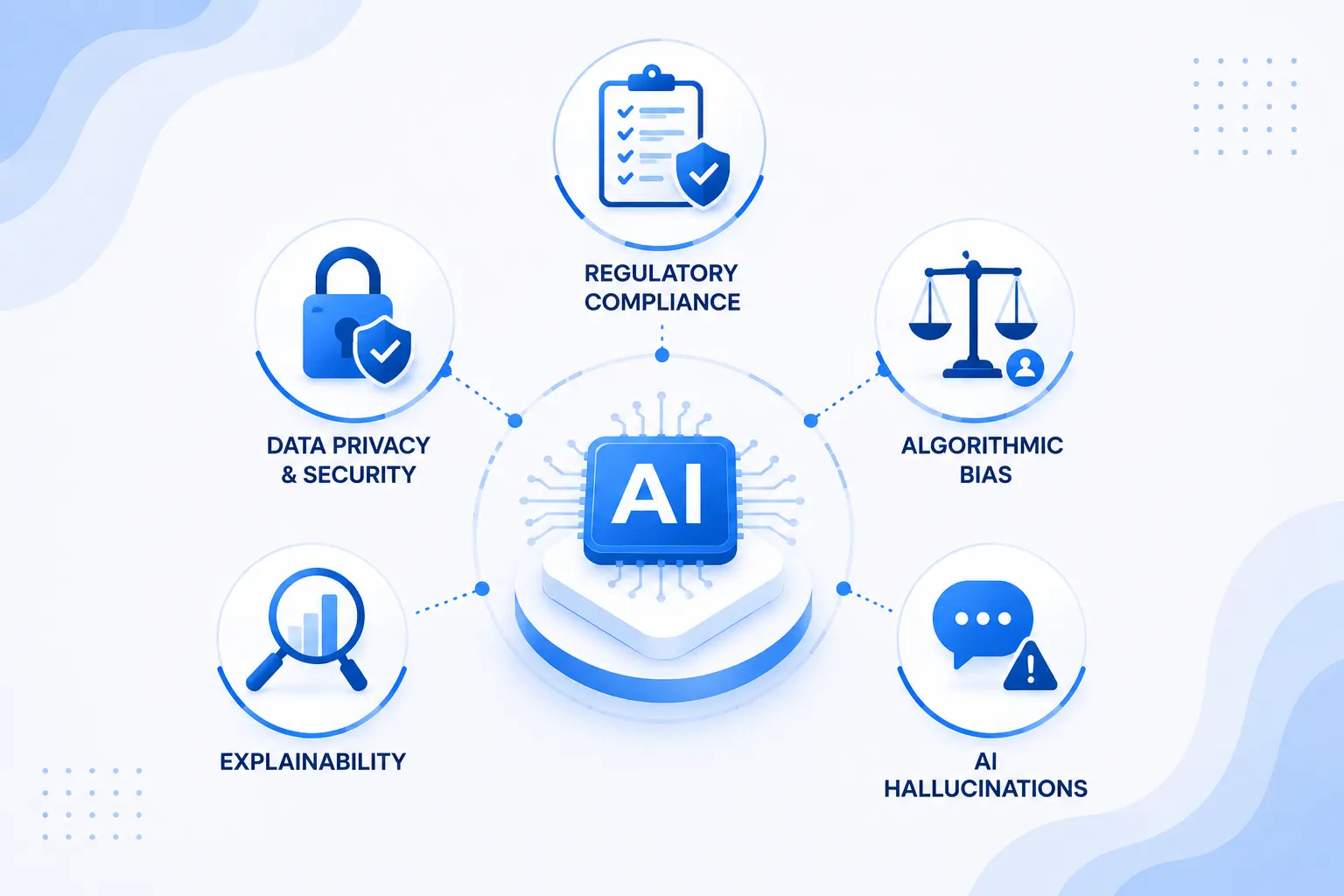
Although AI offers significant advantages, successful implementation requires organizations to overcome several technical, operational, and regulatory challenges.
Regulatory Compliance
Financial services operates under strict regulations designed to protect consumers, financial markets, and sensitive customer information.
When AI influences lending decisions, fraud investigations, or customer eligibility, organizations must ensure those decisions remain transparent, explainable, and compliant with applicable regulations.
Building compliance into AI systems from the beginning is far more effective than attempting to retrofit governance later.
Data Privacy and Security
AI models depend on large volumes of financial data to generate reliable predictions.
Because this information often includes personally identifiable information (PII), payment details, and banking records, organizations must implement strong security measures including encryption, access controls, secure APIs, and continuous monitoring.
A single data breach can result in financial penalties, reputational damage, and loss of customer trust.
Algorithmic Bias
AI models learn from historical information. If that data contains bias, automated decisions may unintentionally reinforce unfair lending practices or inaccurate risk assessments.
Organizations should regularly evaluate training datasets, test models for fairness, and continuously monitor outcomes to reduce bias before AI systems are deployed at scale.
Explainability
Highly sophisticated AI models often function as "black boxes," making it difficult to explain how individual decisions are reached.
In regulated industries such as financial services, explainability is essential. Customers, auditors, and regulators may require clear reasoning behind lending decisions, fraud alerts, or automated recommendations.
Investing in explainable AI helps organizations improve transparency while building greater trust.
AI Hallucinations
Generative AI can occasionally produce inaccurate or misleading information with high confidence.
While this may be acceptable for drafting internal documents, it becomes far more serious when AI assists with customer communications, financial advice, or regulatory documentation.
Human review should remain part of any workflow involving important financial decisions or compliance-related content.
Build AI Solutions Without Compliance Risks
Developing AI for financial services requires more than advanced technology. It demands secure architecture, regulatory compliance, data governance, and scalable infrastructure. Work with a team that understands both AI and the complexities of fintech development.
Schedule a Free Consultation
Common Mistakes Companies Make
Many AI initiatives fail not because the technology is ineffective but because organizations overlook the fundamentals required for successful implementation.
Some of the most common mistakes include:
- Implementing AI without first defining a clear business objective.
- Underestimating the time required to prepare and organize high-quality data.
- Treating AI as a one-time implementation rather than an ongoing improvement process.
- Delaying compliance planning until after development begins.
- Launching AI systems without sufficient monitoring or performance evaluation.
- Failing to test models for fairness, bias, and long-term reliability.
Avoiding these challenges early significantly increases the likelihood of building AI solutions that remain effective, compliant, and scalable over time.
Future of AI in FinTech
Artificial intelligence will continue transforming financial services, but the next phase of innovation will focus less on simply adopting AI models and more on integrating intelligent automation throughout the financial ecosystem.
One of the most significant developments is the rise of agentic AI, where intelligent systems perform approved operational tasks instead of merely providing recommendations. These AI agents will increasingly support customer onboarding, fraud investigations, payment operations, loan servicing, compliance monitoring, and internal business workflows while maintaining appropriate human oversight.
Personalization will also become more sophisticated. Instead of offering generic financial advice, AI will deliver recommendations based on each customer's spending patterns, financial goals, investment preferences, and changing life circumstances.
At the same time, regulatory expectations will continue to evolve. Financial institutions will place greater emphasis on responsible AI, explainable decision-making, governance frameworks, continuous monitoring, and data transparency to ensure AI systems remain trustworthy and compliant.
Rather than existing as standalone features, AI capabilities will become deeply embedded across digital banking, payments, lending, wealth management, insurance, and financial planning platforms. Customers may not always recognize AI working behind the scenes, but they will experience faster transactions, stronger security, smarter financial recommendations, and more seamless digital experiences.
How to Start Implementing AI in Your FinTech Product
Adopting AI successfully begins with solving a clearly defined business problem rather than trying to automate every process simultaneously.
Start by identifying a high-impact use case such as fraud detection, customer support, lending decisions, or compliance automation. Focusing on one objective allows organizations to evaluate performance, measure business outcomes, and expand AI initiatives more confidently.
Next, assess your data readiness. AI models depend on accurate, structured, and well-governed data. Investing time in data preparation often delivers greater long-term value than rushing into model development.
Organizations should also evaluate whether building a custom AI platform or adopting an existing solution better aligns with their business goals. Understanding the differences between a custom fintech app and a white-label solution can help decision-makers choose the most suitable development approach while balancing flexibility, cost, and implementation timelines.
Choosing the right technology partner is equally important. Before beginning development, organizations should understand the questions to ask before hiring a fintech development team to evaluate technical expertise, security practices, regulatory experience, and long-term support capabilities.
Most importantly, compliance and security should never be treated as final-stage activities. Building regulatory requirements, privacy controls, and governance frameworks into the product from day one creates a stronger foundation for sustainable AI adoption.
Turn Your AI FinTech Idea Into a Market-Ready Product
Whether you're building a digital banking platform, lending solution, payment application, investment platform, or financial marketplace, our team can help you design, develop, and launch secure AI-powered fintech software tailored to your business requirements.
Start Your FinTech Project
Key Takeaways
- Artificial intelligence has become a core technology powering modern fintech platforms.
- Fraud detection, lending, wealth management, compliance, and customer support remain the most mature AI applications.
- Agentic AI is expanding financial automation by enabling intelligent systems to perform approved business actions.
- Successful AI implementation depends on high-quality data, security, governance, regulatory compliance, and continuous monitoring.
- Organizations achieve the best results by starting with one high-impact use case before expanding AI across their broader financial ecosystem.
Build Secure AI-Powered FinTech Solutions with Nyusoft
Artificial intelligence is reshaping every aspect of financial technology, from digital payments and lending to investment management and regulatory compliance. However, long-term success depends on more than implementing AI models; it requires secure architecture, regulatory expertise, scalable infrastructure, and continuous optimization.
Whether you're building a digital banking platform, payment solution, lending application, wealth management product, or intelligent financial platform, partnering with an experienced fintech app development company can help reduce development risks while accelerating innovation.
At Nyusoft, we build secure, scalable, and compliant fintech solutions that combine advanced AI capabilities with industry best practices. If you're planning your next AI-powered financial product or modernizing an existing platform, our team can help you develop future-ready solutions that deliver measurable business value.
FAQs
1. What is AI in FinTech?
AI in FinTech refers to the use of artificial intelligence technologies such as machine learning, generative AI, and predictive analytics to automate financial processes, improve decision-making, detect fraud, assess credit risk, personalize customer experiences, and streamline regulatory compliance. It enables financial institutions to deliver faster, more accurate, and more secure services.
2. How is AI used in the financial services industry?
Financial institutions use AI across a wide range of operations, including fraud detection, credit scoring, loan approvals, algorithmic trading, portfolio management, customer support, regulatory reporting, and personalized financial recommendations. AI helps organizations improve efficiency while reducing operational costs and risks.
3. What are the biggest benefits of AI in FinTech?
AI helps fintech companies make faster decisions, improve fraud detection, automate repetitive tasks, personalize financial services, reduce operational costs, strengthen regulatory compliance, and enhance customer experiences. It also enables businesses to scale their operations more efficiently without compromising service quality.
4. Can AI detect financial fraud?
Yes. AI can detect financial fraud by analyzing customer behavior, transaction history, device information, location, and spending patterns in real time. Unlike traditional rule-based systems, machine learning models continuously learn from new fraud techniques, making them more effective at identifying suspicious activities while reducing false positives.
5. How does AI support lending decisions?
AI helps lenders make faster and more informed lending decisions by analyzing credit bureau data alongside additional financial information such as income, cash flow, banking activity, repayment behavior, and existing liabilities. It can identify patterns, highlight potential risks, and automate parts of the underwriting process, allowing lending teams to review applications more efficiently while keeping human oversight for final approval when needed.
6. What challenges do companies face when implementing AI in FinTech?
Some of the biggest challenges include regulatory compliance, data privacy, cybersecurity, algorithmic bias, explainable AI requirements, and maintaining high-quality training data. Organizations must also continuously monitor AI models to ensure they remain accurate, secure, and compliant with changing regulations.
7. What is Agentic AI in FinTech?
Agentic AI refers to AI systems that can perform approved business actions rather than simply providing recommendations. In fintech, agentic AI can automate tasks such as blocking suspicious payment cards, initiating fraud investigations, updating customer records, and triggering compliance workflows while operating within predefined business rules.
8. Is AI replacing financial advisors and banking professionals?
No. AI is designed to support financial professionals rather than replace them. It automates repetitive tasks, analyzes large volumes of data, and provides insights that help advisors, compliance teams, and customer support representatives make better decisions. Human expertise remains essential for complex financial planning, regulatory oversight, and relationship management.
9. Which financial institutions are using AI today?
Many leading financial organizations have integrated AI into their operations. For example, Mastercard uses AI for fraud detection, JPMorgan Chase applies AI to review legal documents, Upstart uses AI for lending decisions, and Bank of America's Erica virtual assistant helps customers with everyday banking tasks. These examples demonstrate how AI is improving efficiency, security, and customer service across the financial industry.
10) How Much Does It Cost to Develop an AI-Powered FinTech Application?
The cost of developing an AI-powered fintech application typically ranges from $5,000 to $15,000+, depending on the product's complexity, AI features, third-party integrations, security requirements, and regulatory compliance. A simple MVP costs significantly less than an enterprise-grade banking, lending, or wealth management platform. The most accurate estimate depends on your specific business requirements and project scope.
11. How can businesses start implementing AI in their FinTech products?
Businesses should begin by identifying a high-impact use case, such as fraud detection, lending automation, customer support, or compliance reporting. The next steps include assessing data quality, ensuring regulatory compliance, selecting the right AI technologies, and partnering with an experienced fintech development team to build secure, scalable, and compliant AI-powered financial solutions.
Build Smarter FinTech Products with AI
AI is redefining how financial products are built, secured, and scaled. From intelligent fraud detection and automated lending to personalized banking and compliance automation, successful AI adoption starts with the right technology partner.
Let's Build Your AI FinTech Solution