


 Front End Development
  Back End Development
  CMS / ECommerce Development
  Mobile Apps Development
  Cloud Services
  Fullstack Services
  Solution


PCI DSS Compliance for FinTech Apps: Requirements, Benefits & Best Practices
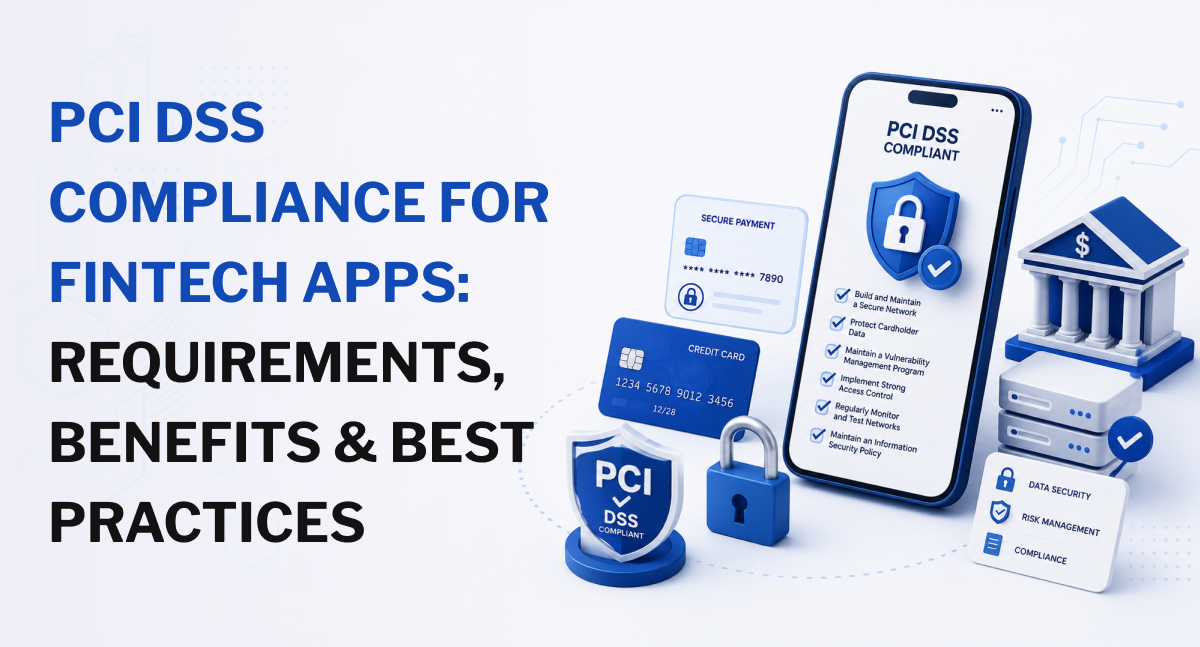
PCI DSS compliance for FinTech apps means protecting payment card account data throughout the application environment, from the moment card data enters a system to the point where it is processed, stored, transmitted, or securely removed. The exact scope depends on how the FinTech application handles cardholder data and which systems can affect its security. For many teams, the most effective approach is to reduce unnecessary exposure to card data through secure payment integrations, strong access controls, encryption, network controls, logging, and secure software development.
The financial impact of security failures is significant for financial services companies in the United States. According to IBM's 2026 Cost of a Data Breach Report, data breaches in the financial services sector cost an average of $6.3 million. The report analyzed breaches experienced by organizations between March 2025 and February 2026, highlighting the financial impact of security incidents across the industry.
For a FinTech company, PCI DSS should not be treated as a document that is reviewed shortly before launch. Payment-data flows, access permissions, encryption, application security, third-party services, logging, and testing all need to be considered during product design and development.
What Is PCI DSS Compliance for FinTech Apps?
PCI DSS stands for Payment Card Industry Data Security Standard. It is a security standard designed to protect payment account data handled by organizations involved in payment card processing.
A FinTech application may fall within PCI DSS scope if it stores, processes, or transmits payment card account data. Systems that can affect the security of that data may also need to be considered when determining scope.
This distinction matters because the term "FinTech app" covers many different products.
A budgeting application that never handles payment card data has a different PCI DSS profile from a digital wallet that stores card information. A lending application may have limited PCI DSS exposure if its payments are handled entirely by a third-party provider, while a payment platform that processes card transactions may have a much larger cardholder data environment.
The first step is therefore not choosing a security tool. It is understanding what payment data the application handles and where that data travels.
For organizations looking for FinTech app development, this scope analysis should happen during the requirements and architecture stages rather than after the application has already been built.
Building a FinTech App That Handles Payments?
Don't leave payment security until the final stage of development. Your architecture determines how card data flows through the application, which systems fall within scope, and where security controls need to be implemented.
Plan your payment architecture, security controls, and development roadmap with an experienced FinTech development team.
Does PCI DSS Apply to Every FinTech App?
No. PCI DSS applicability depends on the payment environment and the application's relationship with payment account data.
Consider three examples.
Example 1: FinTech App Stores Card Data
A digital wallet allows users to save their card number in the application database so that they can make future payments.
The application receives and stores sensitive card data. Its systems, databases, access controls, encryption, monitoring, development processes, and related infrastructure require careful PCI DSS scope analysis.
Example 2: FinTech App Uses Tokenization
A payment provider receives the card information and returns a token to the FinTech application.
The application uses the token for later transactions rather than retaining the underlying card number.
This architecture can significantly reduce the systems directly handling cardholder data, though it does not automatically make the application entirely outside PCI DSS scope.
Example 3: Payment Is Fully Outsourced
A customer is redirected to a third-party payment provider to enter card details. The FinTech application never receives the card number.
This can reduce PCI DSS exposure substantially. The exact compliance responsibilities still depend on the implementation and applicable validation requirements.
PCI Security Standards Council guidance makes an important point here: outsourcing payment processing does not automatically remove an organization's PCI DSS responsibilities. The organization still needs to understand the third party's role and its own responsibilities.
PCI DSS 4.0.1: What FinTech Companies Need to Know
PCI DSS v4.0.1 is the active PCI DSS version supported by the PCI Security Standards Council. PCI SSC published v4.0.1 in June 2024 as a limited revision to PCI DSS v4.0. The revision clarified certain requirements and corrected issues without adding or deleting requirements. PCI DSS v4.0 was retired on December 31, 2024.
For FinTech development teams, the practical implication is simple: new applications should be designed against the current PCI DSS requirements rather than older PCI DSS 3.2.1 guidance.
PCI DSS v4.x also places greater attention on areas such as:
- Customized approaches to meeting certain requirements
- Authentication controls
- Secure software development
- Payment-page security
- Third-party service-provider relationships
- Vulnerability management
- Continuous security practices
- Documented responsibilities and processes
Several future-dated PCI DSS v4.x requirements became effective on March 31, 2025, so they should not be treated as optional legacy guidance for current projects. PCI SSC's documentation library provides the current v4.0.1 standard and supporting documents.
The 12 PCI DSS Requirements for FinTech Apps
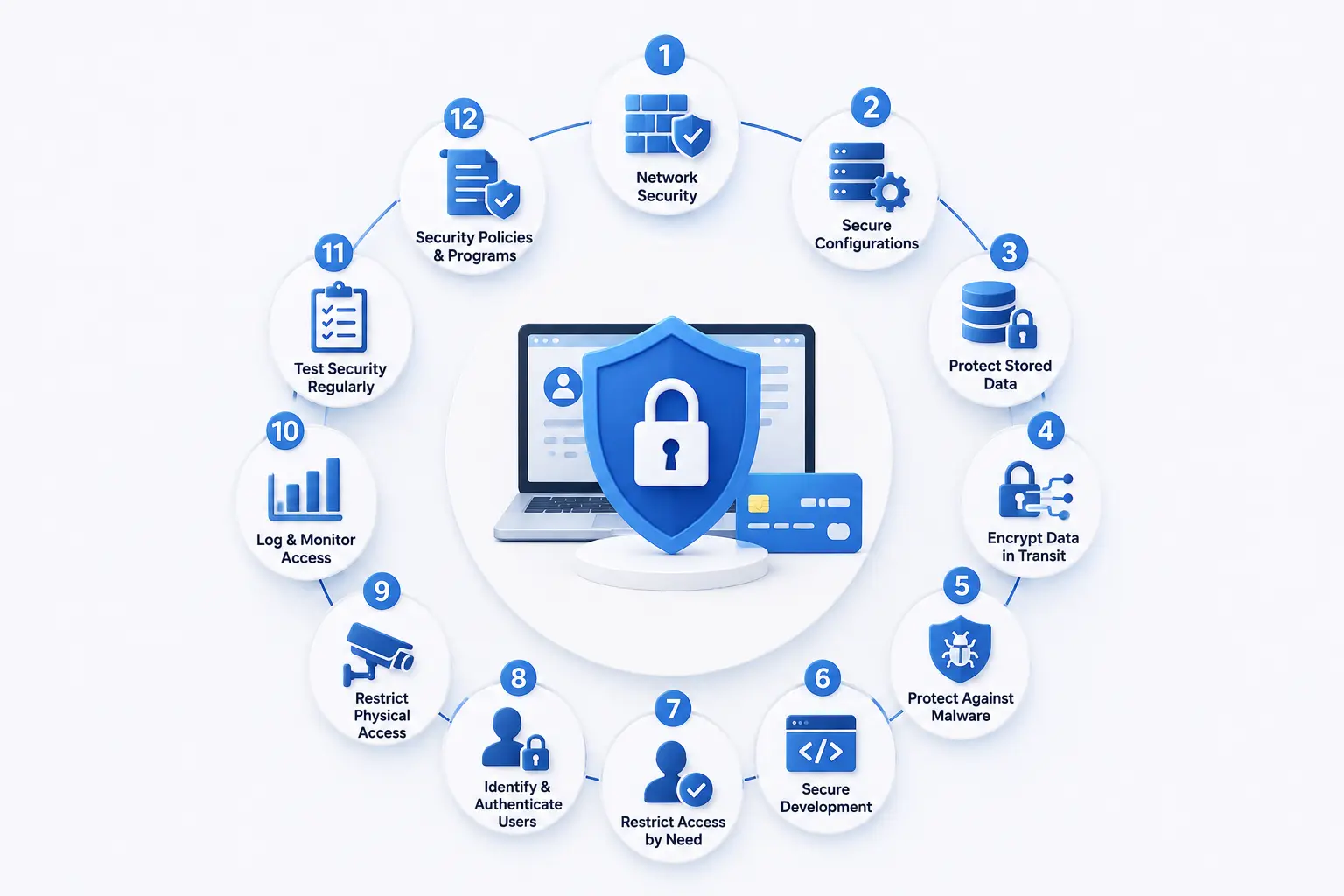
PCI DSS is organized around 12 core requirements. The requirements are broad, so a FinTech development team needs to translate them into actual technical and operational controls.
| PCI DSS Requirement | Practical Meaning for a FinTech App |
| 1. Network security controls | Protect networks and restrict unnecessary connectivity |
| 2. Secure configurations | Remove insecure defaults and harden systems |
| 3. Protect stored account data | Minimize, protect, encrypt, or tokenize stored payment data |
| 4. Protect data during transmission | Use strong cryptography for sensitive data in transit |
| 5. Protect against malicious software | Deploy appropriate malware protection and controls |
| 6. Develop and maintain secure systems | Build security into development, testing, patching, and change management |
| 7. Restrict access by business need | Give users only the permissions they require |
| 8. Identify users and authenticate access | Use unique identities and appropriate authentication controls |
| 9. Restrict physical access | Protect physical systems, devices, media, and facilities |
| 10. Log and monitor access | Record security-relevant activity and review it |
| 11. Test security systems and processes | Conduct required security testing and verify controls |
| 12. Support information security with policies | Define responsibilities, policies, training, risk management, and incident response |
Requirement 1: Network Security Controls
A FinTech application should not allow every system to communicate freely with every other system.
Network security controls should be designed around the actual payment environment. Depending on the architecture, this may involve firewalls, cloud security controls, private networks, segmentation, restricted inbound and outbound connections, and tightly controlled administrative access.
For example, a payment-processing database should not need unrestricted communication with a marketing analytics server.
Network architecture should follow the principle that systems only receive the connectivity they actually need.
Requirement 2: Secure System Configurations
Default configurations can leave unnecessary services, ports, accounts, permissions, or software enabled.
A secure FinTech environment should establish documented configuration standards for:
- Application servers
- Databases
- Cloud infrastructure
- Containers
- Network devices
- Operating systems
- Security tools
- Administrative accounts
Changes should be controlled and reviewed rather than made informally in production.
Requirement 3: Protect Stored Account Data
This is one of the most important areas for a payment-enabled application.
The first question should be:
Does the application actually need to store the card data?
If the answer is no, avoiding storage is usually preferable to building additional controls around unnecessary data.
Where payment data must be retained, teams need appropriate controls for storage, encryption or other mechanisms required by the applicable PCI DSS requirements, key management, masking, access restrictions, retention periods, and secure deletion.
Tokenization is also widely used to reduce the number of systems directly handling sensitive card data.
Requirement 4: Protect Cardholder Data During Transmission
Sensitive payment information should be protected when moving between systems.
This includes communication between:
- Mobile applications and backend APIs
- Web applications and payment services
- Backend services and payment processors
- Internal services
- Cloud infrastructure
- Third-party payment systems
Strong cryptographic protocols, appropriate certificate management, secure API design, and careful configuration are all part of the technical picture.
Simply saying "the application uses HTTPS" is not enough to describe a complete payment-security strategy.
Requirement 5: Protect Systems From Malicious Software
FinTech environments need controls that reduce the risk of malware affecting systems involved in payment processing.
The exact technologies vary by environment, but teams should consider endpoint protection, malware detection, patching, monitoring, secure configurations, and controls for systems where malicious software could affect payment security.
Requirement 6: Develop and Maintain Secure Systems and Software
This requirement has direct relevance to software development teams.
Security should be built into the development lifecycle rather than added after the product is finished.
A secure development process may include:
- Secure coding standards
- Code review
- Dependency management
- Vulnerability remediation
- Secrets management
- Application security testing
- Change control
- Secure deployment practices
- Security requirements during product planning
For a FinTech app, a vulnerable third-party library can create a security problem even if the application's own source code was written carefully.
PCI DSS v4.0.1 also includes specific requirements and guidance related to public-facing web applications and payment-page scripts, making application security an important part of the current standard.
Requirement 7: Restrict Access by Business Need
A developer, customer-support agent, financial administrator, database administrator, and security analyst do not need the same permissions.
Access should be based on job responsibilities.
A developer working on a mobile interface, for example, should not automatically have unrestricted access to production payment databases.
Role-based access control, least-privilege permissions, periodic access reviews, and controlled administrative privileges can help enforce this separation.
Requirement 8: Identify Users and Authenticate Access
Every person who can access relevant systems should have an identifiable account rather than relying on shared credentials.
Authentication controls should be appropriate to the system and type of access.
Important areas include:
- Unique user IDs
- Strong authentication
- Multi-factor authentication
- Privileged-account protection
- Password controls
- Session management
- Account lifecycle management
- Access reviews
The same principle applies to internal administrative panels as it does to customer-facing applications. Protecting customer login while leaving an internal payment-management dashboard weakly protected creates an obvious gap.
Requirement 9: Restrict Physical Access
Cloud infrastructure does not remove the need to consider physical security.
Physical access can involve data centers, backup media, devices, printed records, storage media, and other physical assets.
PCI DSS requirements can also apply to physical records containing cardholder data. The protection strategy therefore needs to cover both digital and physical forms of payment information where applicable.
Requirement 10: Log and Monitor Access
Payment environments need visibility.
Useful security logs can include:
- Successful and failed authentication attempts
- Privilege changes
- Administrative activity
- Access to sensitive systems
- Security events
- Configuration changes
- Payment-related system activity
Logs become particularly valuable during an incident because they help investigators understand what happened, which accounts were involved, and which systems may have been affected.
A log that exists but is never reviewed provides much less value than a monitored system that generates actionable alerts.
Requirement 11: Test Security Systems and Processes Regularly
Security testing should verify that controls work as expected.
Depending on the environment and applicable PCI DSS requirements, testing can include:
- Vulnerability scanning
- Application security testing
- Penetration testing
- Network testing
- Segmentation testing
- Remediation validation
- Security-control testing
Automated scanning and penetration testing serve different purposes. A scanner can identify known vulnerabilities across a large environment, while a skilled penetration test can explore how vulnerabilities may be combined to reach sensitive systems.
Requirement 12: Maintain Information Security Policies
Technology alone cannot define an organization's security program.
A FinTech company should establish documented policies and responsibilities covering areas such as:
- Information security
- Access management
- Incident response
- Security awareness
- Third-party risk
- Vulnerability management
- Data retention
- Acceptable use
- Business responsibilities
The goal is to make security practices repeatable rather than dependent on one employee's knowledge.
Planning a New FinTech Platform?
Payment security should be part of your product architecture before the first line of production code is written. From payment gateways and secure integrations to authentication, encryption, access control, audit logs, and security testing, the right decisions made early can prevent expensive changes later.
Tell us what you're building, and let's map out the technical approach.
How to Determine PCI DSS Scope for a FinTech App
One of the most important steps is mapping the application's payment-data flow.
Start with a simple question:
Where does the card data enter the system?
Then follow it through every relevant component.
For example:
Customer → Mobile/Web App → Payment Gateway → Payment Processor → Acquirer/Card Network
Now ask:
- Does the FinTech application receive the card number?
- Does it store the card number?
- Does it transmit the card number?
- Can employees access the payment data?
- Which databases contain payment information?
- Which servers process it?
- Which APIs communicate with the payment environment?
- Which third-party services can affect the security of those systems?
- Which development or administrative systems can access the environment?
- Where are logs, backups, and copies of relevant data stored?
This exercise creates a much clearer picture of the Cardholder Data Environment, commonly referred to as the CDE.
A useful architecture principle is to keep the CDE as small and controlled as practical.
PCI DSS Compliance Architecture for a FinTech App
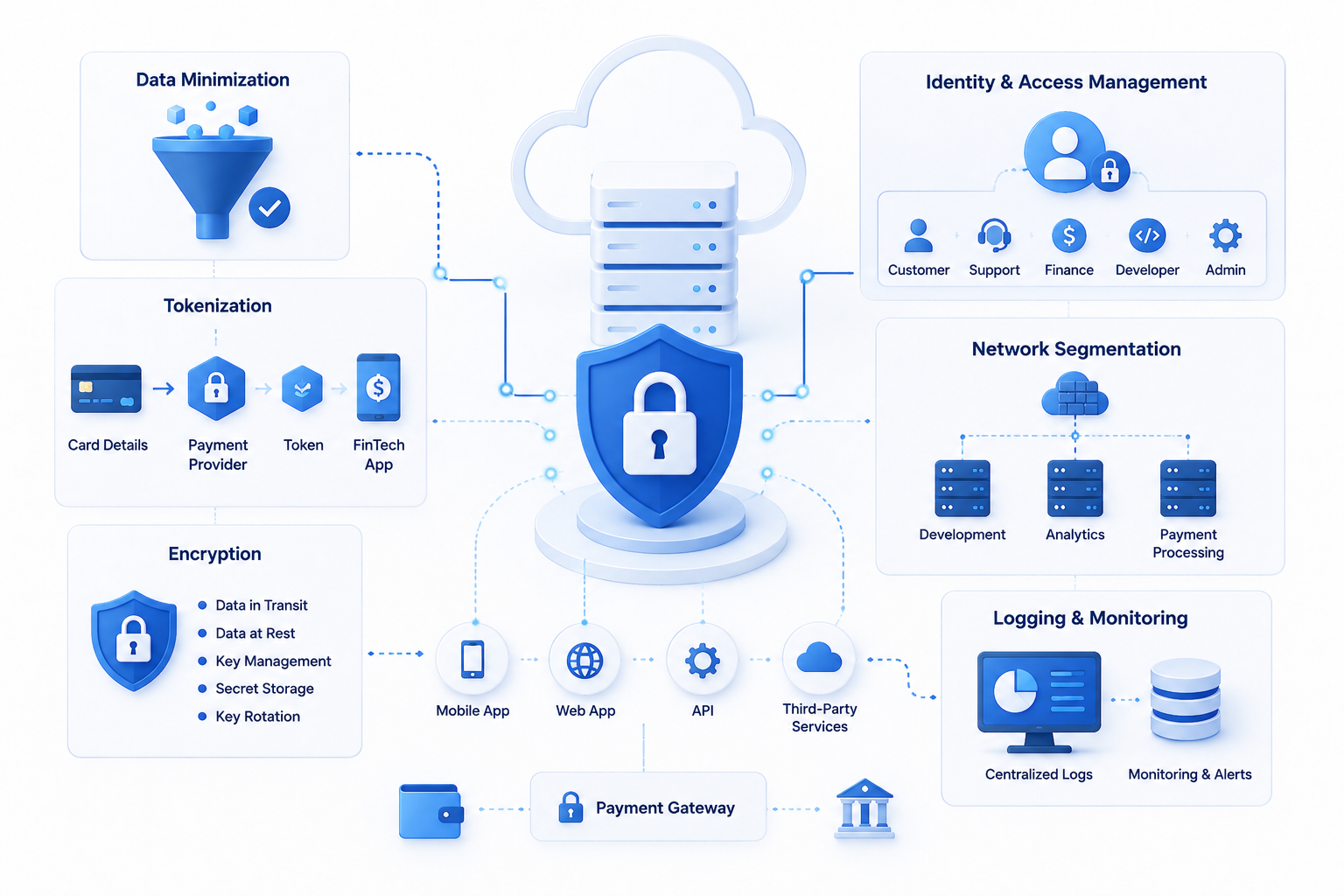
A secure architecture starts with limiting exposure.
Data Minimization
Do not collect payment information simply because the database can store it.
Define what information is actually required for the transaction and what can be handled by a payment provider.
Tokenization
Tokenization can allow an application to reference a payment method without repeatedly handling the underlying card number.
For example:
Card Details → Payment Provider → Token → FinTech Application
The application can then use the token for an authorized transaction flow.
Tokenization does not remove the need for scope analysis, but it can reduce the number of systems directly exposed to sensitive payment data.
Encryption
Sensitive information should be protected according to its location and use.
Consider:
- Data in transit
- Data at rest
- Database encryption
- Key management
- Secret storage
- Key rotation
- Access to encryption keys
Encryption keys should not simply be placed beside encrypted data or hard-coded into application source code.
Identity and Access Management
Access should be designed around roles.
A typical FinTech environment may have separate roles for:
- Customers
- Support staff
- Finance teams
- Operations
- Developers
- DevOps
- Security administrators
- System administrators
Each role should have only the permissions needed to perform its responsibilities.
Network Segmentation
Segmentation can limit the number of systems that can communicate with payment-related infrastructure.
For example, development, analytics, customer-support, and payment-processing environments can be separated according to the architecture and risk requirements.
Logging and Monitoring
Security events should be collected in a way that supports detection and investigation.
Centralized logging can make it easier to correlate activity across application servers, databases, authentication systems, cloud infrastructure, and security controls.
Best Practices for PCI DSS Compliance in FinTech App Development
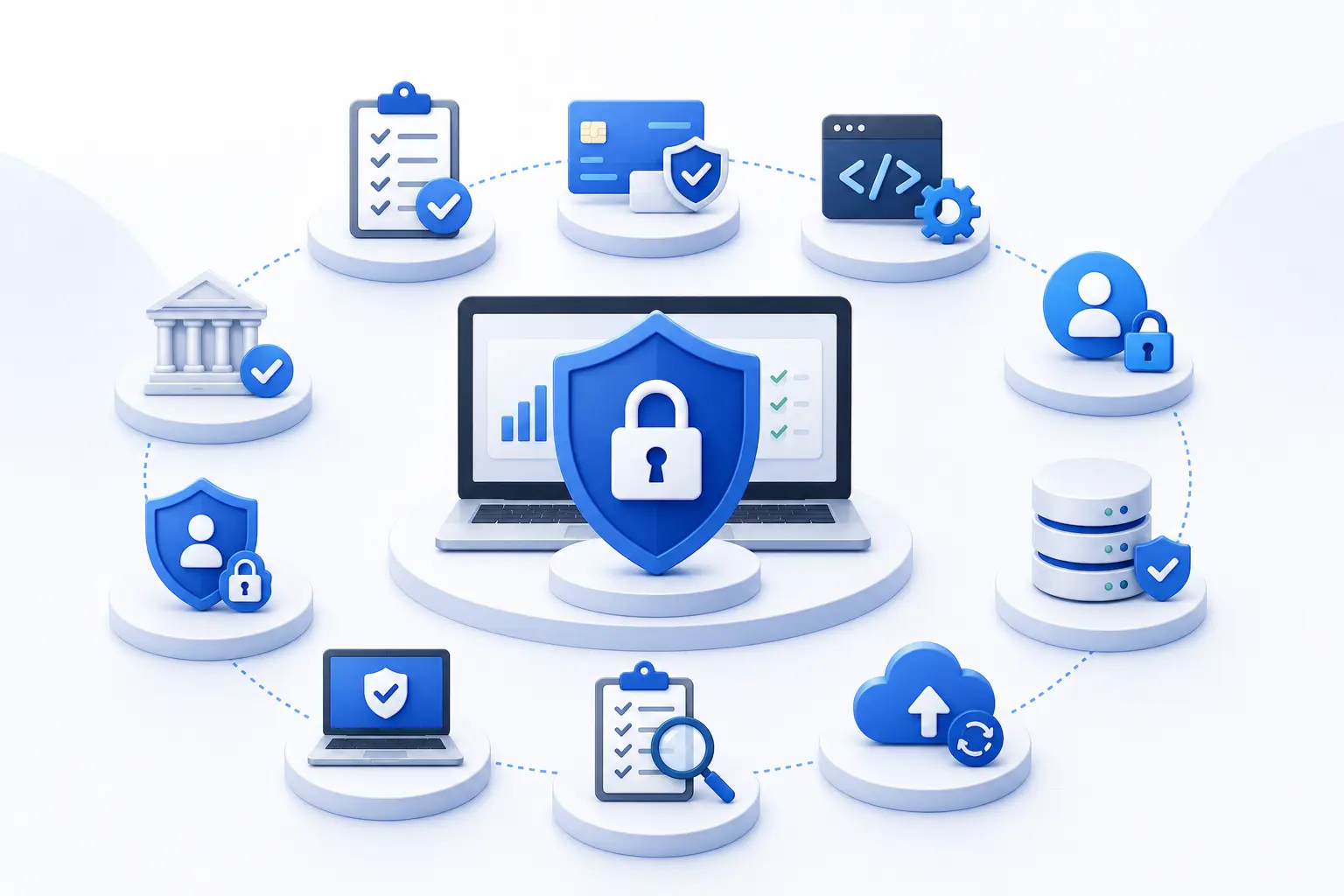
Start During Requirements Gathering
PCI DSS should influence technical requirements before development begins.
At the beginning of a project, document:
- Payment flows
- Data types
- Third-party services
- Authentication requirements
- Access roles
- Storage requirements
- Security testing requirements
- Compliance responsibilities
This can prevent expensive architecture changes later.
Keep Card Data Out of the Application Where Possible
If the business does not require the application to receive or store PAN, consider payment architectures that keep the sensitive data with an appropriate payment provider.
This can reduce the number of components that need to be considered in the payment environment.
It does not mean that the application has no security responsibilities.
Build a Secure Software Development Lifecycle
A practical lifecycle can look like:
Requirements → Threat Modeling → Architecture → Development → Code Review → Security Testing → Deployment → Monitoring
Security decisions made during architecture are generally easier to implement than security requirements discovered after production deployment.
Protect Privileged Accounts
Administrative accounts deserve particular attention.
Use strong authentication, restricted permissions, controlled access paths, logging, and periodic access reviews for people who can change production systems or access sensitive environments.
Review Third-Party Dependencies
Modern FinTech applications rarely operate alone.
A single product may use:
- Payment gateways
- Cloud infrastructure
- Identity providers
- Fraud-detection APIs
- Analytics platforms
- Messaging services
- Customer-support systems
- Monitoring platforms
Each provider should be evaluated based on the data it receives and the systems it can affect.
Patch Software and Dependencies
Outdated packages can introduce vulnerabilities into otherwise well-designed applications.
Maintain an inventory of application dependencies and infrastructure components, monitor relevant security advisories, and establish a process for evaluating and applying required updates.
Test Before Launch
A production release should not be the first time security receives serious attention.
Security testing should take place throughout development, with appropriate remediation and retesting before release.
Your FinTech App Needs More Than a Payment Integration
A secure payment product starts with the architecture behind it. If you're building a payment platform, digital wallet, lending application, portfolio management system, or another FinTech product, PCI DSS requirements should be considered before development decisions become difficult to change.
Bring your requirements, payment flow, and product idea to a FinTech development team that can turn them into a secure technical architecture.
PCI DSS and Third-Party Payment Providers
Using a payment gateway or processor is common in FinTech development.
The mistake is assuming that outsourcing payment processing transfers every compliance responsibility to the provider.
There is a difference between:
Reducing PCI DSS scope
and
having no PCI DSS responsibilities.
For example, a payment provider may process the card number while the FinTech application receives only a token. The application may have less exposure to cardholder data, but its own systems, integration, payment pages, APIs, redirects, scripts, and security controls still need to be evaluated according to the actual implementation.
PCI SSC also provides specific guidance around eligibility criteria for certain outsourced e-commerce payment configurations, which shows why the technical payment flow matters when determining the applicable validation approach.
Shared Responsibility
The agreement between the FinTech company and its payment provider should make responsibilities clear.
Questions should include:
- Who protects cardholder data?
- Who manages payment infrastructure?
- Who performs security testing?
- Who handles vulnerability remediation?
- Who provides compliance documentation?
- Who responds to security incidents?
- Which controls are handled by the provider?
- Which controls remain with the FinTech company?
The answers should be documented rather than assumed.
How Is PCI DSS Compliance Validated?
Being technically secure does not automatically mean an organization has completed its required PCI DSS validation.
Depending on the organization's role, environment, transaction volume, and applicable requirements, validation may involve mechanisms such as:
- Self-Assessment Questionnaires
- Report on Compliance
- Attestation of Compliance
- Qualified Security Assessors
- Approved Scanning Vendors
The exact validation path should be determined from the organization's circumstances and requirements from the relevant payment brands, acquirer, or other applicable parties.
A development company should also avoid making blanket claims such as "every FinTech application needs a QSA" or "using a payment gateway makes PCI certification unnecessary." Both statements can be misleading.
Benefits of PCI DSS Compliance for FinTech Apps
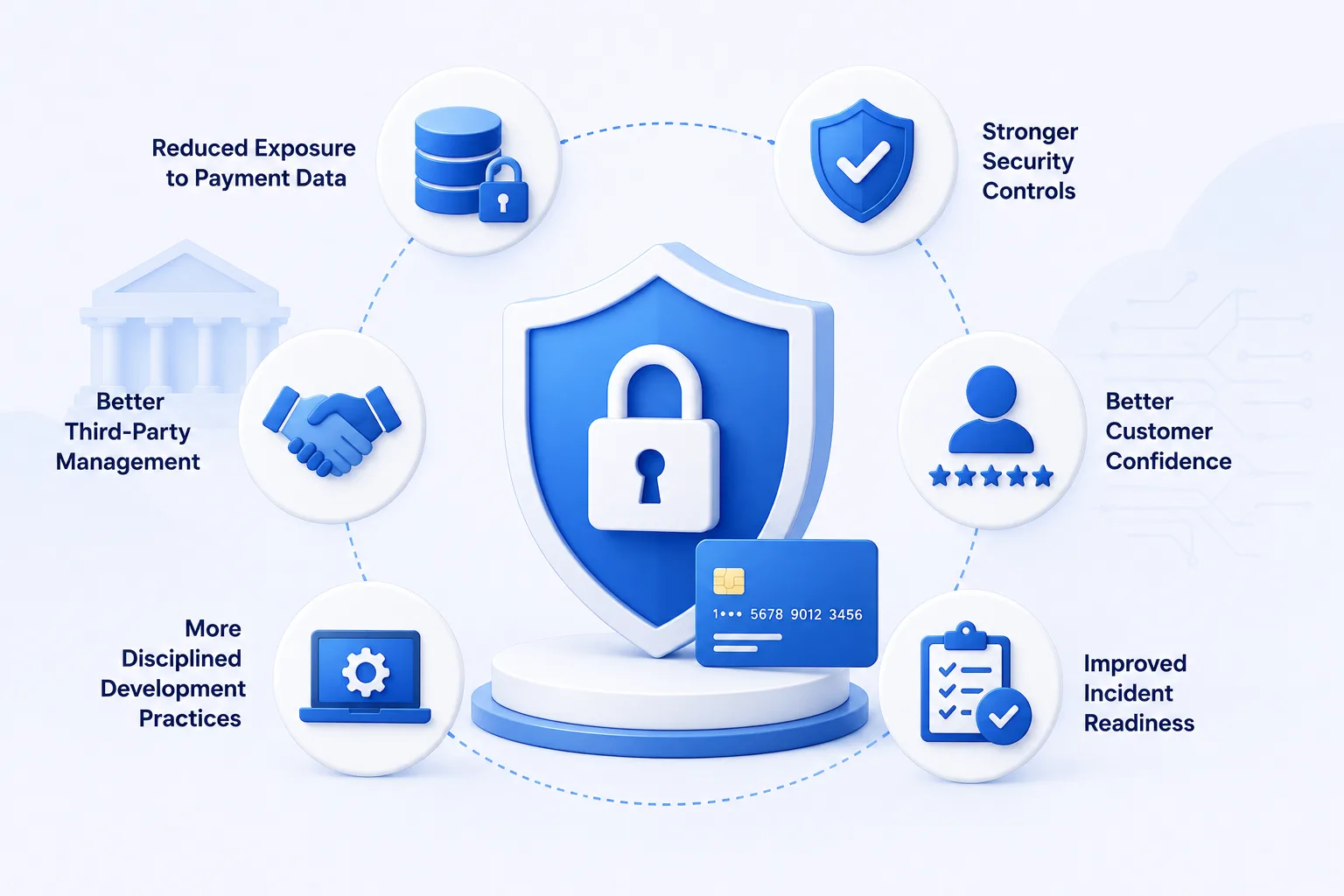
Reduced Exposure to Payment Data
Limiting how much card data an application handles can reduce the number of systems that need to protect it.
Stronger Security Controls
PCI DSS provides a structured set of requirements covering network security, data protection, access control, authentication, logging, testing, software development, and governance.
Better Customer Confidence
Customers expect financial applications to protect sensitive information. Strong payment-security controls support that expectation.
Better Third-Party Management
PCI DSS requirements encourage organizations to understand how payment providers and other service providers affect the security of their environments.
Improved Incident Readiness
Logging, monitoring, access controls, testing, and incident-response procedures can give security teams better visibility when something goes wrong.
More Disciplined Development Practices
Security requirements introduced during development can improve the quality of application architecture, access control, testing, and deployment processes.
Common PCI DSS Mistakes FinTech Companies Make
Treating PCI DSS as an Audit Project
If security controls are created only because an assessment is approaching, teams often end up with fragmented processes and rushed remediation.
PCI DSS requirements should be incorporated into product and infrastructure planning.
Assuming the Payment Gateway Handles Everything
A payment provider can handle part of the payment environment. It cannot automatically take responsibility for every system operated by the FinTech company.
Storing Card Data Without a Business Need
Every sensitive data field creates additional security and compliance responsibility.
If the application does not need the card number, consider whether the architecture can avoid receiving or storing it.
Giving Developers Broad Production Access
Convenience is not a good reason for unrestricted production permissions.
Access should be tied to actual responsibilities and controlled through appropriate authentication and authorization mechanisms.
Protecting Customers but Ignoring Internal Access
Customer authentication receives a lot of attention in FinTech products, while internal administrative systems can receive less.
An attacker who compromises a privileged internal account may gain much more access than a normal customer account.
Ignoring Third-Party Integrations
An application can have secure source code and still create risk through poorly controlled integrations.
Every external service should be considered as part of the broader payment-data flow.
Waiting Until Launch to Test Security
Finding a serious security problem during the final release stage is more expensive than finding it during architecture or development.
Poor Compliance Documentation
Security controls need supporting evidence and clear ownership.
A team should know what control exists, why it exists, who owns it, how it is tested, and where evidence is maintained.
PCI DSS Compliance Checklist for FinTech Apps
Use this checklist as a practical starting point:
- Map all payment-data flows
- Identify the Cardholder Data Environment
- Determine which systems are in scope
- Minimize unnecessary storage of card data
- Use tokenization where appropriate
- Protect stored account data
- Protect sensitive data during transmission
- Apply secure network controls
- Harden production systems
- Restrict access based on business need
- Use strong authentication
- Protect privileged accounts
- Maintain unique user identities
- Implement secure software-development practices
- Manage application dependencies
- Maintain security logs
- Monitor relevant security events
- Perform required vulnerability testing
- Conduct applicable penetration testing
- Maintain security policies
- Review third-party providers
- Establish incident-response procedures
- Maintain compliance evidence
- Review access and security controls regularly
PCI DSS vs Other FinTech Compliance Requirements
PCI DSS is important for payment card security, but it is only one part of the compliance picture for many FinTech businesses.
| Framework or Regulation | Main Focus |
| PCI DSS | Payment card account data security |
| GDPR | Personal data protection and privacy |
| SOC 2 | Controls related to areas such as security, availability and confidentiality |
| ISO 27001 | Information security management system |
| KYC requirements | Customer identity verification |
| AML requirements | Prevention and detection of money laundering |
| Local financial regulations | Requirements based on jurisdiction and financial activity |
A FinTech company should not assume that PCI DSS compliance automatically satisfies privacy laws, information-security certifications, KYC obligations, AML requirements, banking regulations, or other financial rules.
The applicable requirements depend on the product, business model, customers, payment flows, jurisdictions, and regulatory status of the organization.
How to Build PCI DSS Compliance Into the FinTech Development Lifecycle
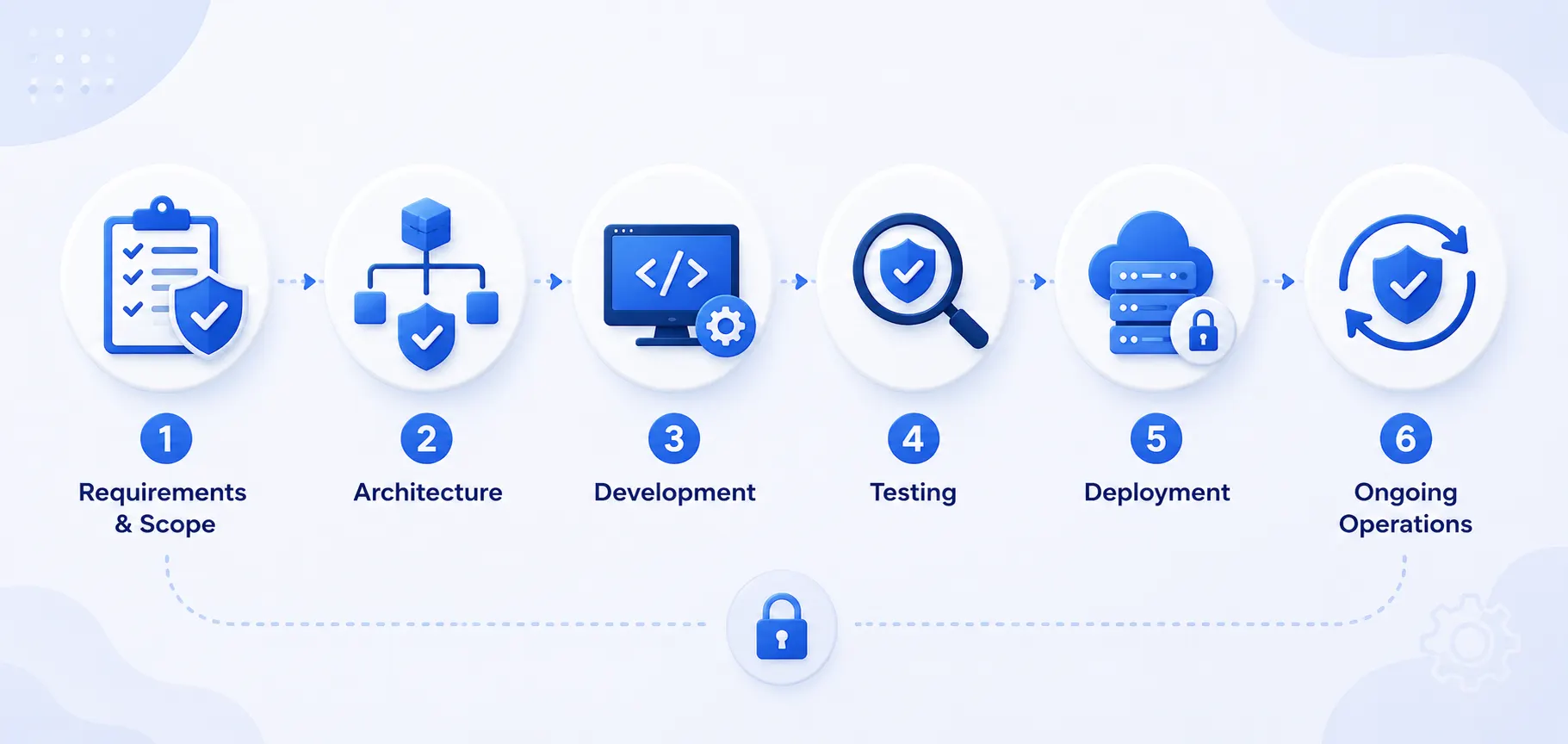
Phase 1: Requirements and Scope
Before development begins:
- Identify payment flows
- Identify cardholder data
- Determine whether PAN is required
- Identify third-party providers
- Define security responsibilities
- Establish the initial PCI DSS scope
Phase 2: Architecture
Design:
- Secure payment flows
- Tokenization where appropriate
- Encryption
- Network segmentation
- Identity and access management
- Secure APIs
- Logging and monitoring
Phase 3: Development
Apply:
- Secure coding standards
- Code review
- Dependency management
- Secrets management
- Controlled changes
- Security testing
Phase 4: Testing
Validate:
- Application security
- Infrastructure security
- Vulnerabilities
- Authentication
- Authorization
- Network controls
- Applicable penetration-testing requirements
Phase 5: Deployment
Before production:
- Harden infrastructure
- Restrict administrative access
- Verify security configurations
- Enable monitoring
- Confirm logging
- Review third-party integrations
- Resolve identified security issues
Phase 6: Ongoing Operations
PCI DSS is not something that should disappear from the team's priorities after launch.
Ongoing activities may include:
- Vulnerability management
- Access reviews
- Security monitoring
- Log reviews
- Patch management
- Security testing
- Incident-response exercises
- Third-party reviews
- Policy updates
- Compliance evidence collection
Have a FinTech Product in Mind?
Turn your idea into a secure, scalable application with the right architecture for payments, user authentication, financial data, APIs, and compliance requirements.
Share your FinTech requirements and get a technical approach for your project.
Real-World Example: Reducing PCI DSS Scope Through Payment Architecture
Imagine a digital wallet that allows customers to save a card for recurring transactions.
Architecture A: Application Stores Card Data
Customer → FinTech App → Application Database → Payment Processor
The FinTech application receives the card number and stores it in its own environment.
That creates additional systems and processes that must be protected.
Architecture B: Payment Provider Handles Card Data
Customer → Payment Provider → Token → FinTech App
The payment provider receives the card information and returns a token. The FinTech application stores the token instead of the underlying card number.
For future transactions, the application can use the token according to the provider's payment flow.
This architecture can reduce the amount of cardholder data handled directly by the FinTech environment.
It is important not to assume that using a third-party payment provider automatically removes PCI DSS responsibilities. The actual payment flow, integrations, payment pages, systems involved, and applicable validation requirements still need to be assessed based on the application's architecture.
How FinTech Development Teams Should Approach PCI DSS
PCI DSS works best when treated as an architectural and operational consideration rather than a final compliance task.
The development team should know:
- Where payment data enters the system
- Where it is transmitted
- Whether it is stored
- Who can access it
- Which third parties process it
- Which systems can affect its security
- How access is authenticated
- How activity is logged
- How vulnerabilities are identified and fixed
- How security controls are tested
- How evidence is maintained
This approach also makes it easier to identify unnecessary payment-data exposure before it becomes part of the production architecture.
For FinTech products that include payment processing, wallets, lending workflows, portfolio management, fraud detection, or other financial features, security requirements should be considered alongside functional requirements from the beginning.
Final Takeaway
PCI DSS compliance for FinTech apps starts with understanding the application's payment-data environment. Once the data flow is clear, teams can determine which systems are in scope, reduce unnecessary card-data exposure, establish appropriate access controls, protect information through transmission and storage, secure the software-development process, monitor relevant activity, and validate the required controls.
The strongest implementations do not wait for an assessment to expose architectural problems. They make payment security part of requirements, architecture, development, testing, deployment, and ongoing operations.
For businesses planning a secure FinTech product, Nyusoft provides FinTech application development capabilities covering payment and wallet solutions, portfolio management, lending platforms, fraud detection, and related financial technology products. The same development process can be structured around security requirements from the early architecture stage through production operations.
FAQs
1. What is PCI DSS compliance for FinTech apps?
PCI DSS compliance for FinTech apps means implementing security controls to protect payment card account data wherever it is stored, processed, or transmitted. The scope depends on the application's payment-data flow and the systems that can affect its security.
2. Does every FinTech app need to be PCI DSS compliant?
No. PCI DSS applies based on how an application handles payment card account data. A FinTech app that never stores, processes, or transmits cardholder data may have limited or no direct PCI DSS scope, while a payment platform handling card data will typically have greater compliance responsibilities.
3. What are the main PCI DSS requirements for a FinTech app?
The PCI DSS framework covers network security, secure configurations, protection of stored account data, encryption during transmission, malware protection, secure software development, access control, authentication, physical security, logging and monitoring, security testing, and information-security policies.
4. What is PCI DSS 4.0.1?
PCI DSS 4.0.1 is the current version of the Payment Card Industry Data Security Standard. It provides requirements for protecting payment account data and includes updated guidance around areas such as authentication, vulnerability management, secure software development, and payment-page security.
5. How can a FinTech app reduce its PCI DSS scope?
A FinTech company can often reduce PCI DSS exposure by minimizing the card data it handles, using tokenization, outsourcing appropriate payment functions to qualified providers, and designing payment flows that keep sensitive card information outside systems that do not need it. Scope still needs to be assessed based on the actual architecture.
6. Is using a third-party payment gateway enough to make a FinTech app PCI compliant?
No. A third-party payment gateway can reduce the amount of cardholder data handled by a FinTech application, but it does not automatically remove all PCI DSS responsibilities. The FinTech company remains responsible for the security of the systems and processes under its control.
7. What security practices should be included in PCI DSS-compliant FinTech app development?
A secure development approach should include data minimization, encryption, tokenization where appropriate, strong authentication, least-privilege access, secure API design, vulnerability management, code reviews, security testing, logging, monitoring, and controlled production access.
8. How can tokenization affect PCI DSS scope for a FinTech app?
Tokenization replaces sensitive card data with a token that can be used within an approved payment workflow. When a payment provider handles the underlying card information, this approach can reduce the number of systems directly handling cardholder data and may reduce PCI DSS scope. The actual impact depends on the payment architecture and applicable PCI DSS requirements.
9. How is PCI DSS compliance validated for a FinTech company?
The validation method depends on factors such as the organization's role, payment environment, transaction activity, and applicable requirements. Depending on the situation, validation may involve a Self-Assessment Questionnaire, Report on Compliance, Attestation of Compliance, Qualified Security Assessor, or Approved Scanning Vendor.
10. When should PCI DSS requirements be considered during FinTech app development?
PCI DSS requirements should be considered during the planning and architecture stage, before development begins. Defining payment-data flows, scope, access controls, encryption, third-party responsibilities, logging, and security testing early can prevent costly architectural changes before launch.
Looking for a Team to Build Your FinTech Application?
From payment platforms and digital wallets to lending, investment, and financial management applications, the technical architecture needs to support security from the start.
Tell us what you're building and discuss the right development approach for your FinTech product.